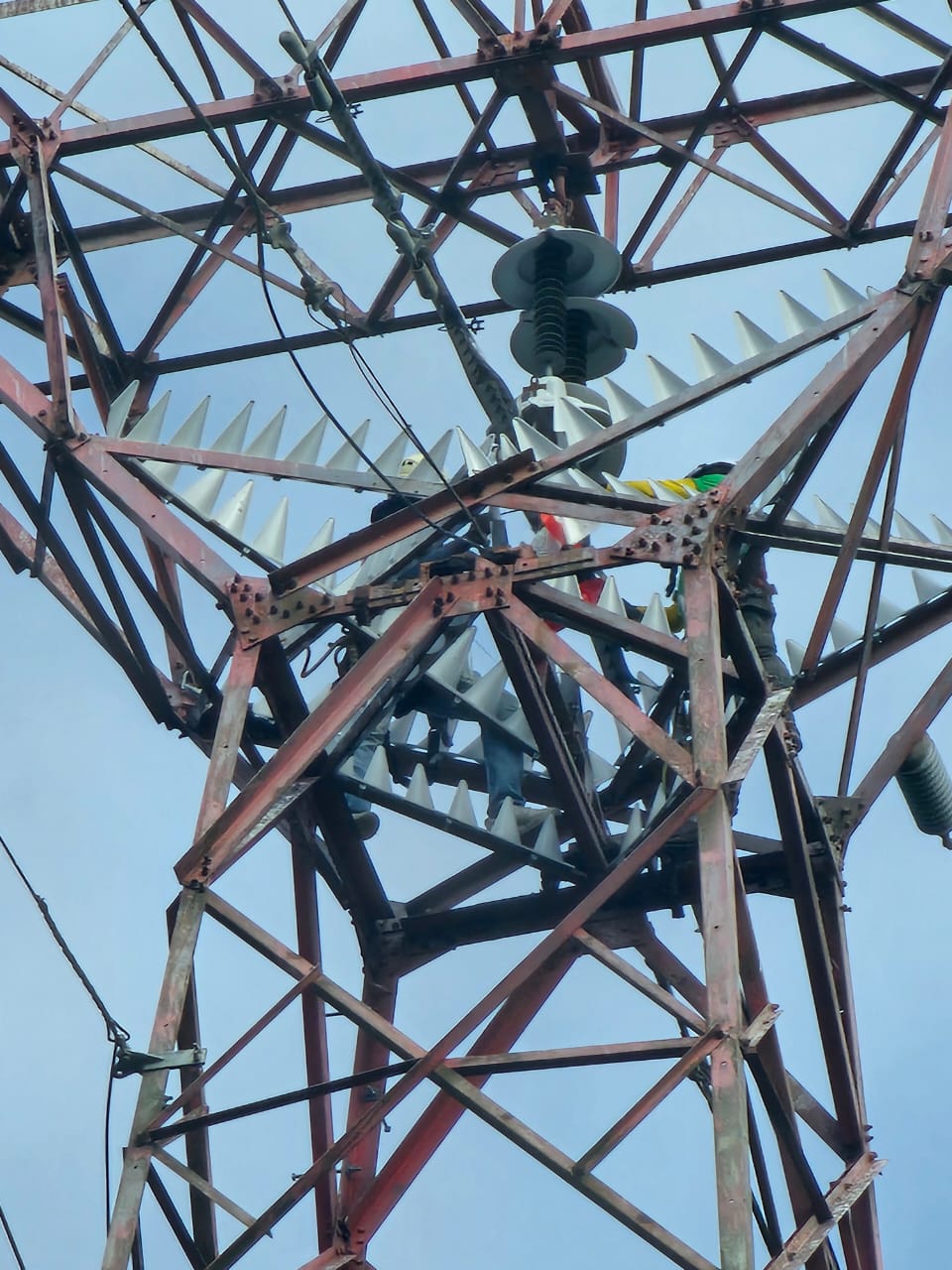
 Some of the interventions aimed at preventing wildlife-power lines interaction/Courtesy
A new initiative aimed at protecting birds from colliding
with power lines is being piloted at Soysambu Conservancy.
The project is being implemented by an international firm—Kaddas.
Kaddas enterprises President and chief executive officer Natalie Kaddas says she visited the site where they are piloting the project about a year and a half ago when they realised that a number of birds had been electrocuted.
She said martial eagles were the most affected, a move that made them look for the solution.
“We have identified four poles that are the highest risk that we could start to do a pilot on,” she said.
Kaddas said under the project, line covers are being fixed on the poles.
Experts will then start monitoring them to understand how the birds are interacting with them.
Kaddas said they can either make adjustments to the line covers or start to fill out the entire distribution line throughout Soysambu.
“It is a great place to do a test pilot to understand what the impact is on the wildlife and keeping the power on for the communities.”
She said in the past 12 months alone, 18 martial eagles were killed along the stretch where the pilot is being done due to electrocution.
Kaddas Enterprises is a second-generation family-owned business.
The company specialises in manufacturing thermoform plastic products and providing innovative, custom solutions for the energy, transportation and aerospace industries.
It is also dedicated to eliminating power outages caused by animals on a global scale and is a leader in protecting energy infrastructure against outages triggered by wildfires and wildlife, thanks to their patented BirdguarD™ designs.
Electrocution, habitat loss and poisoning are the main threats facing birds species.
As renewable energy projects expand across Africa, including wind farms, solar panels, transmission lines and geothermal facilities, the risk of conflict with wildlife is increasing.
Poorly planned infrastructure in sensitive ecosystems such as savannas, migratory corridors, wetlands and forests can fragment habitats, disrupt animal movements and cause direct wildlife mortality.
Threatened birds and bats, especially raptors, are among the most vulnerable.
Electrocution and habitat loss threaten vulnerable species, including Kenya’s rapidly declining raptors.
Wildlife–energy conflicts cause outages, equipment damage, project delays and harm reputation.
Already, the Kenyan government has committed to scaling up renewable targets and biodiversity conservation goals.
Kaddas, has together with Kenya Power and Lighting Company (KPLC) been rolling out the implementation.
Already, KPLC engineers have been trained on the new technology just like it has been embraced in other countries.
In Israel, Kaddas has been working with their covers and implemented a drone installation procedure to help save the Bonelli Eagle population.
In Mexico, the company has used its streamer shields as many raptors and vultures were getting hurt on transmission lines.
John Guda, Energy Consultant who worked with KPLC for decades, said there are economic losses when the soaring birds come into contact with power.
He said the hotspots in the country where such interaction happen have been identified and include Soysambu as well as Laikipia.
Insulated conductors are used to not only protect the birds from electrocution but also economic losses.
Some of the techniques that Kaddas will explore include insulation of power infrastructure by fitting insulating covers on jumper wires, bushings and cross-arms, use insulated conductor cables in high-risk areas, such as protected areas or migratory corridors, anti-perching devices.
Others include the installation of deterrents (angled spikes, covers, or baffles) to prevent birds from perching near live wires and retrofit existing hazardous poles with cost-effective perch management solutions.
Guda said the pilot project would cover 20km line.
“Perching protection will be put on the line to protect the birds,” he said.
An assessment carried out by Nature Kenya—the East Africa Natural History Society—between October 2022 and July 2023, revealed a shocking findings.
The assessment, which was carried out around Lake Elementaita, showed that on average, there was a 1.15 collision incidents per kilometre along high voltage transmission line.
Eight bird species were documented to have been affected with species of conservation concern—Tawny Eagle, Lesser Flamingo, Lesser Kestrel-mostly affected.
The assessment found out that power lines in high biodiversity rich areas, like protected areas, increases sensitivity of energy infrastructure to biodiversity.
The area around Lake Elementaita was designated an Important Bird Area (IBA), a site of global significance for bird and biodiversity conservation, in 1999.
The lake was designated a Ramsar site (wetland of international importance) in 2005.
It was gazetted as a National Wildlife Sanctuary in 2010 and listed together with Lakes Nakuru and Bogoria as the Kenya Lakes System in the Great Rift Valley World Heritage Site by UNESCO in 2011.
The rate at which bird species are being affected by power lines has recently been of great concern to bird lovers.
In 2021, it was estimated that more than 50 lesser flamingos were harmed by power lines in 2021.
The society says the figure could be higher, especially for the soaring birds as systematic data collection has been done in very limited areas.
Nature Kenya has been collating data on bird interactions with energy infrastructure, especially transmission lines, domestic distribution lines and wind energy turbines.
It said 25 Red-listed Kenyan species are in the ‘top 10 per cent’ of global collision risk.
Nature Kenya says domestic distribution lines are causing highest mortality of Bird of Prey, especially in Masai Mara through Electrocution.
Power outages as a result of the collision can result in substantial economic costs.
In US, it is estimated that power outages cost $25-180 billion per year, and wildlife represents an important causal factor of power outages in electricity systems.
In Portugal, white storks caused half of the outages along the electricity distribution grid while in South Africa, an estimated $65 million losses are due to vultures interacting with power-lines.
Studies show that Kenya's population of augur buzzards has plunged 91 per cent over 40 years.
Nature Kenya says there is a need to embrace avian sensitivity tool (AVISTEP) when planning for energy.
AVISTEP is designed to identify areas where renewable energy resources could impact birds and biodiversity.
This is particularly useful in planning and developing renewable energy infrastructure in the most appropriate and ideal locations.
Kaddas is, however, undertaking new innovation in latest bid to protect the birds. Kaddas say the input of the private sector into infrastructure design and operations directly influence biodiversity outcomes.
“By adopting wildlife-safe practices, companies can protect threatened species, reduce costly outages and system faults.”