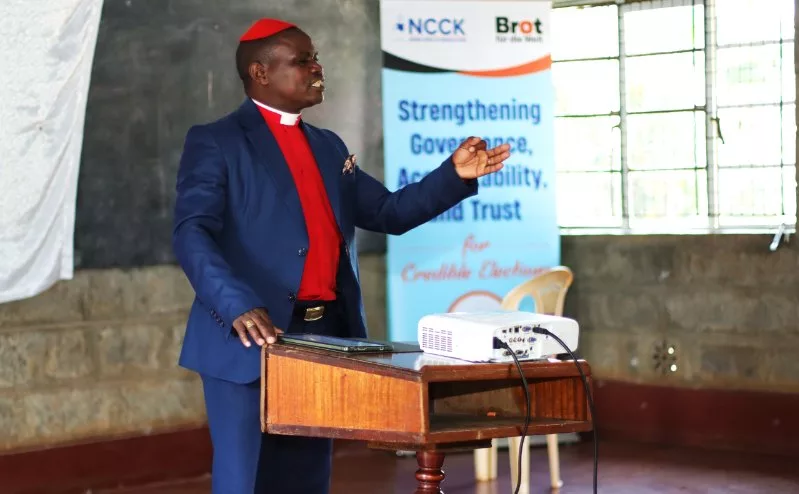
 NCCK coordinating committee secretary Bishop Joseph Ngigi addresses congregants during a governance forum at ACK St Paul Church in Kirigiti, Kiambu County, on July 22, 2026 /ALICE WAITHERA
Money politics is becoming deeply entrenched in Kenya's elections, with nine out of 10 citizens believing candidates cannot win elective seats without giving voters cash or gifts, a new survey shows.
The study by the National Council of Churches of Kenya (NCCK) was unveiled on Wednesday during a governance forum at ACK St Paul Church in Kirigiti, Kiambu county.
It shows 91 per cent of Kenyans believe money and material handouts have become a key determinant of electoral success, raising fresh concerns over voter bribery ahead of next year's general election.
"A majority of Kenyans believe money and material benefits have become an integral part of election campaigns," the report states.
The survey, conducted under the NCCK's Angaza Project, links the growing influence of money in politics to worsening economic hardship, noting that many financially struggling voters increasingly view campaign donations and gifts as an important source of support.
According to the findings, 22 per cent of Kenyans earn Sh10,000 or less per month, while another 31 per cent earn between Sh10,001 and Sh30,000. This exposes a significant proportion of the population to economic vulnerability that could make them more susceptible to political inducements.
The council argued that addressing poverty and unemployment would be critical to improving the integrity of elections, maintaining that electoral reforms alone would not eliminate the culture of vote buying.
The report also paints a picture of the soaring cost of seeking elective office, warning that the financial burden is increasingly locking out capable but less wealthy candidates from politics.
It estimates that a competitive campaign for an MCA seat requires at least Sh5 million, while parliamentary candidates spend about Sh50 million. A gubernatorial campaign is estimated to cost about Sh100 million.
At the national level, the report estimates that a presidential campaign requires about Sh12 billion, with nearly Sh7 billion going towards logistics and the remainder being spent on mobilisation and voter incentives.
"Such high campaign costs could discourage qualified Kenyans from seeking elective positions and weaken political competition," the report notes.
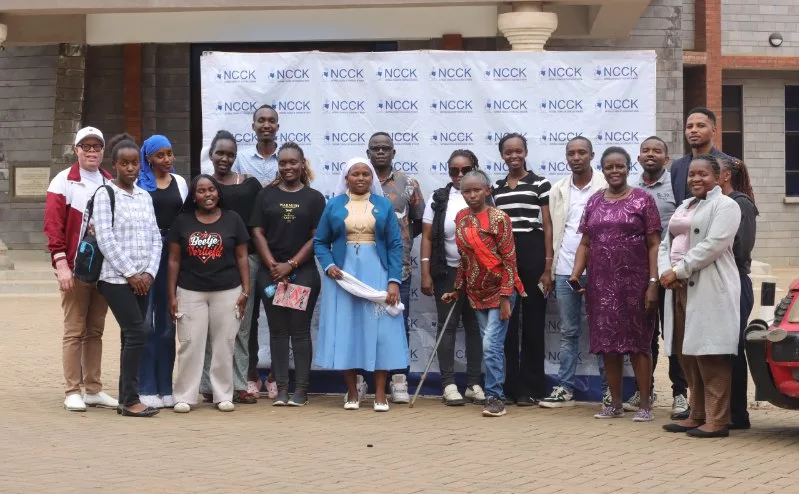
NCCK coordinating committee secretary Bishop Joseph Ngigi called for stronger accountability mechanisms to ensure elected leaders remain answerable to the public once they assume office.
"We must bring our leaders to account. They must be answerable to the people of Kenya. Sovereign power belongs to the people, as stipulated in the constitution," he said.
Ngigi also called for amendments to the legal framework governing the recall of elected representatives, saying citizens should have an effective avenue to remove legislators who fail to fulfil their responsibilities.
He further challenged churches to take a more active role in governance and civic education, saying religious institutions should not remain silent when leaders abuse public office or fail to deliver on their mandates.
"People have been saying the church played an integral role in the election of the current regime, and now the same institution has the responsibility to hold it to account," Ngigi said.
The council urged churches to use the public trust they enjoy to promote civic education, encourage ethical leadership and empower communities to demand accountability from elected leaders.
It said the NCCK was expanding governance watch programmes through churches while working with communities to strengthen public participation and oversight of public institutions.
The council also cautioned against the belief that young people alone would shape the outcome of the next election, saying every eligible voter has a responsibility to participate in the electoral process.
"Only about 33 per cent of the population falls within the 20 to 24-year age bracket. If we rely solely on this group to change the direction of the vote, we will be setting a dangerous precedent. Every Kenyan must turn out to vote," Ngigi emphasised.
To reduce young people's vulnerability to political manipulation, the NCCK is implementing the Vijana to Thrive programme, which equips young people with employability skills, mentorship and livelihood opportunities to improve their economic independence.
The programme is intended to help young people become less susceptible to political manipulation, particularly during election campaigns.
The council announced the full Angaza Project report will be released together with action guides to support churches and community groups in promoting accountable leadership and good governance.
Instant Analysis
The survey, conducted under the NCCK's Angaza Project, links the growing influence of money in politics to worsening economic hardship, noting that many financially struggling voters increasingly view campaign donations and gifts as an important source of support. The council argued that addressing poverty and unemployment would be critical to improving the integrity of elections, maintaining that electoral reforms alone would not eliminate the culture of vote buying.