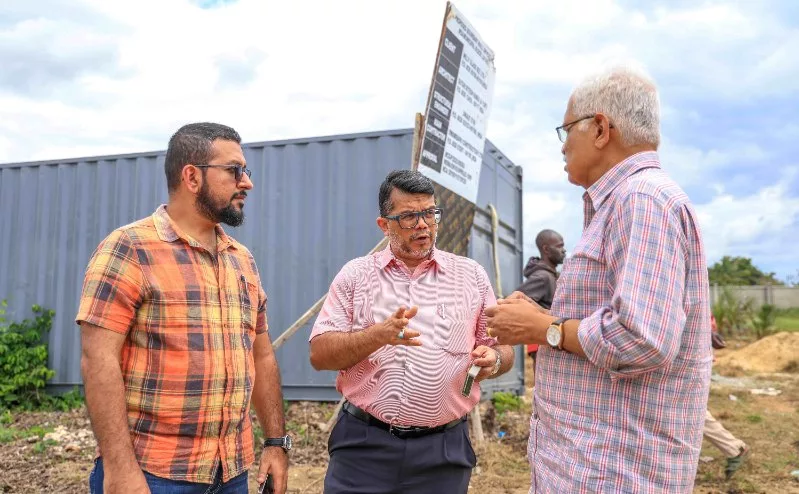
 Milly Glass SEZ’s Yusuf Khandwalla [L] and director Mohamed Rashid [C] at the Dongo Kundu SEZ factory site in Mombasa / BRIAN OTIENO
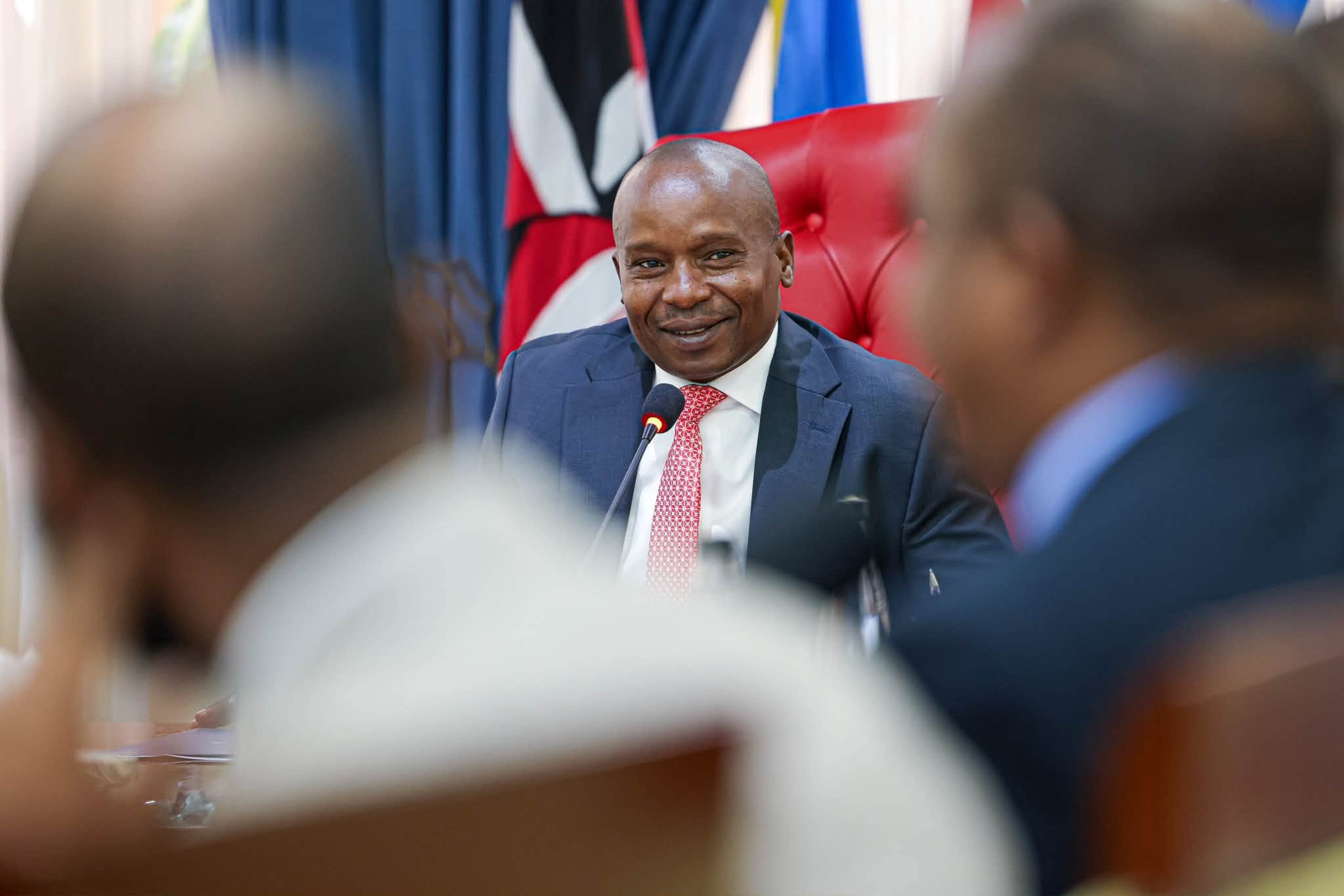
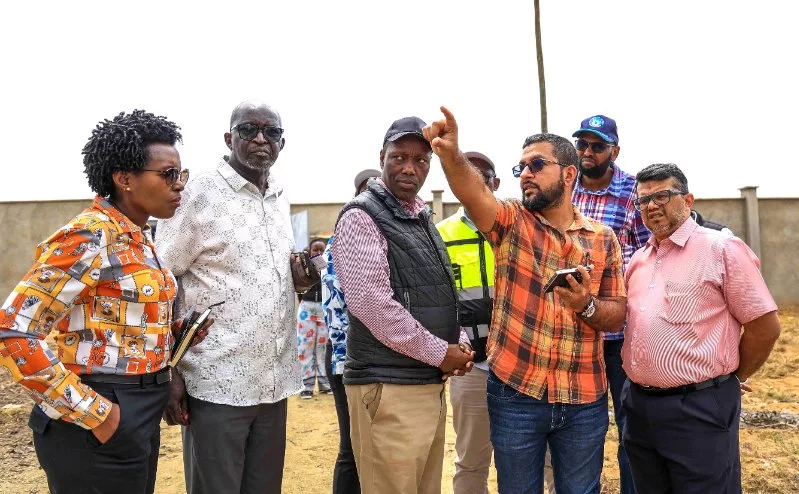 Milly Glass SEZ’s Yusuf Khandwalla explains a point to Trade CS Lee Kinyanjui [half jacket] at the Dongo Kundu SEZ factory site in Mombasa / BRIAN OTIENO
A Kenyan firm is
bidding to become the first in Africa to manufacture pharmaceutical bottles.
Milly Glass SEZ
Limited, a subsidiary of Milly Group of Companies, acquired a 15-acre piece of
land at the Dongo Kundu Special Economic Zone, where they want to set up a new 80-tonne
glass factory that would mainly manufacture pharmaceutical bottles.
Milly Glass SEZ director
Mohamed Rashid on Thursday said they hope to break ground at the end of August
2026.
“We hope to be able
to start production of amber bottles for pharmaceuticals by July 2027,” Rashid
said.
He spoke when Trade CS Lee Kinyanjui toured the area.
Presently, all bottles produced in Kenya, Tanzania and Egypt are for the soft drink and beverage industry.
“There is nobody
doing pharmaceutical bottles right now. All the pharmaceutical bottles are
coming from India and Pakistan, but mainly from India,” Rashid said.
He said all pharmaceutical
product manufacturers in Kenya have to import bottles, causesing them inconvenience
in terms of freight, cost and time lost in some instances.
“One of them
actually came and told us they were looking for pharmaceutical bottles made
locally. Can you guys start doing that?’ That’s where the idea started from
four years ago. The issue then was getting the land and we finally got the land
last year in November,” Rashid revealed.
“It is a niche
market, not being done anywhere in Africa.”
Rashid said once
the factory is set up, he is optimistic more pharmaceutical investors will come
in.
Currently, at least
25 containers with Sh16 million worth of pharmaceutical bottles come into
the country every month.
However, this is not sufficient because the pharmaceutical range is much bigger, Rashid said.
He said the new factory will be producing about 300,000 bottles for the Kenyan, Tanzanian, Ugandan, Rwandan, Burundian markets and the Comesa region.
Amber bottles are
used in pharmaceuticals to block up to 99 per cent of harmful ultraviolet (UV)
and visible light, preventing the chemical breakdown of sensitive medicines.
These bottles are
typically made from amber glass or light-filtering amber plastics like PET.
Rashid said the
factory will also be producing flint glass for other packaging needs.
The factory will be equipped with state-of-the-art European machines imported from Germany,
Italy and Switzerland.
“This factory is
expected to create employment for at least 300 people directly and another 200
indirectly because of packaging material, raw materials, chemicals needed,
drivers, among others,” Rashid said.
He noted that at
least 100 small and micro enterprises will be created or empowered by the factory.
“We are grateful to
Kenya Ports Authority, Special Economic Zone Authority and the Trade and
Industry ministry and President William Ruto for supporting industries and
making sure that industries are coming in.
“Industry is where
we have to be today because industry is where you get the jobs. You can’t
create jobs if you don’t gave industries in this country,” the Milly Glass SEZ director
said.
The factory will be
their second in the country.
The group is
involved in juice processing and opened another factory in Malindi, Kilifi
county, last month.
“As the family of Rashid, we are trying to invest more back at home, making sure that we create
jobs for fellow Kenyans,” Rashid said.
He however said the
government should create a proper access road to the factory site to enable movement of delicate materials to the site.
“The contract is ready
to start work but with no access road, it will be costly to move
materials because of the delicate nature of some of them,” Rashid said.
Trade CS Kinyanjui
said the government will ensure a proper access road is done within the next
few weeks saying such kinds of investments need government support.
He said Kenya
has actively and deliberately structured its policies to suit investors from
across the world.
Kinyanjui said the role of government is to create
the necessary incentives for private sector to be able to invest and there is
likely more investment to come from more private sector players.
“This area (Dongo Kundu) will become a major logistics site to cater for the domestic and export market,” Kinyanjui said.





![[PHOTOS] Ruto takes a jig during youth initiative launch](https://cdn.radioafrica.digital/image/2026/07/354d1b98-57b3-4a59-9fc2-c76058a4f878.jfif)