

On Kenya’s beaches and in fishing villages, daily life is marked by quiet struggles that rarely make it into national headlines.
The Makonde community, known for its artistry, carves intricate sculptures that tourists admire and buy.
Yet, as their leader, Moses Sauti explained, they often rely on middlemen because they lack designated spaces to sell their work.
“Tungefurahia wakiwa wanaweza wekewa kiwanda yao sehemu tenga, ya kuchonga na kuuza iwe North Coast, Malindi, Kwale hata Kilifi, (We would be happy if they could have their own separate workshop space for carving and selling, whether it's on the North Coast, Malindi, Kwale, or even Kilifi)” he said, voicing the frustration of a community that wants direct access to markets but finds itself sidelined.
Likewise, fishing communities face similar challenges.
Elder Doza Diza of the Awer community described how his people cannot fish beyond certain distances into the ocean.
“Most spaces in the ocean are owned by wealthy persons from larger communities,” he explained.
For the Awer, the ocean is their lifeline, yet ownership disputes and restrictions have left them struggling to sustain their livelihoods.
Restrictions on where they can fish have created tensions.
Diza explained that wealthy individuals from larger communities own much of the ocean space, limiting access for traditional fishers.
“The plan would help reduce rampant conflict among the fishing communities within the ocean space,” he said.
The Washerazi community, little known outside Kwale county, faces conflicts over small harbours used for repairing boats and fishing gear.
Halifa Omar from the Washerazi described the situation, saying even basic access to communal spaces has become contested.
“Sisi tuko na vijibandari ambavyo tunavitumia kurekebisha mitumbwi, kuundia mashua, vifaa vya uvuvi kama zile net. Zile sehemu ni za uma na kuna watu wanazimiliki hivi sasa inaleta conflict na wavuvi toka jamii zetu. (We have small harbours which we use to repair and build boats and for fishing equipment like nets. Those areas are public and there are people who own them now, causing conflict with fishermen from our community.”
Lack of clear regulation allowed powerful actors—such as hotels, conservation agencies, mining companies and seaweed farmers —to dominate spaces at the expense of indigenous users.
Babisam reinforced the cultural dimension: “Kama hata mashirika yanayotoka nje wanakuja maeneo yetu kwa miradi tofauti tofauti, sisi pia tuhusishwe… yako maeneo yale yetu ya utamaduni ambao kuanzia zamani yanatumika kwa utamaduni wetu na mila zetu, ambapo hizo mila tunaamini zisipofuatwa, huwa inaleta maafa. (“If organisations from outside come to our areas for different projects, we should also be involved… there are our cultural sites which have been used for our culture and traditions since time immemorial and we believe that if those traditions are not followed, it brings calamity.”
These everyday struggles illustrate the broader reality of indigenous communities along Kenya’s coastline, underscoring the spiritual and cultural dimensions of marine spaces.
For decades, they have lived with the ocean as their source of food, culture and identity, yet decisions about marine space have been made without their voices.
The forums revealed the daily challenges these communities face, reminding planners that the ocean is not just an economic resource but a living heritage.
Ownership disputes, inaccessible ocean spaces and competition with powerful users remain pressing issues.
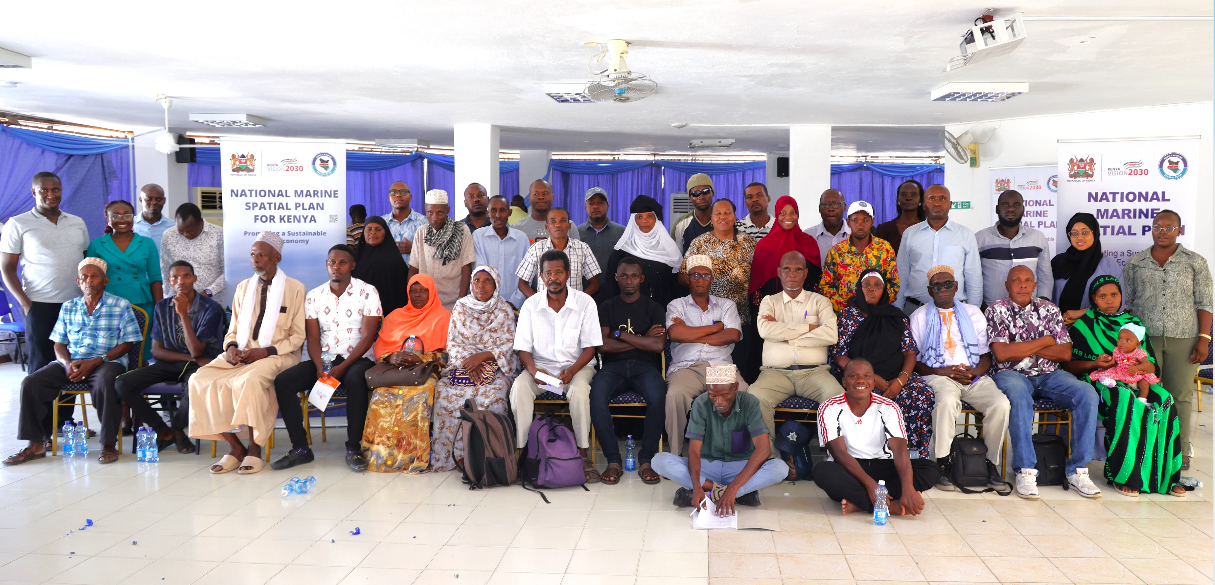
Now, for the first time, these communities are being invited to shape Kenya’s first National Marine Spatial Plan (MSP).
Supported by the government and the World Bank through the Kenya Marine Fisheries and Socio‑Economic Development project, the MSP seeks to organise Kenya’s 250,000 square‑kilometre ocean space for sustainable use.
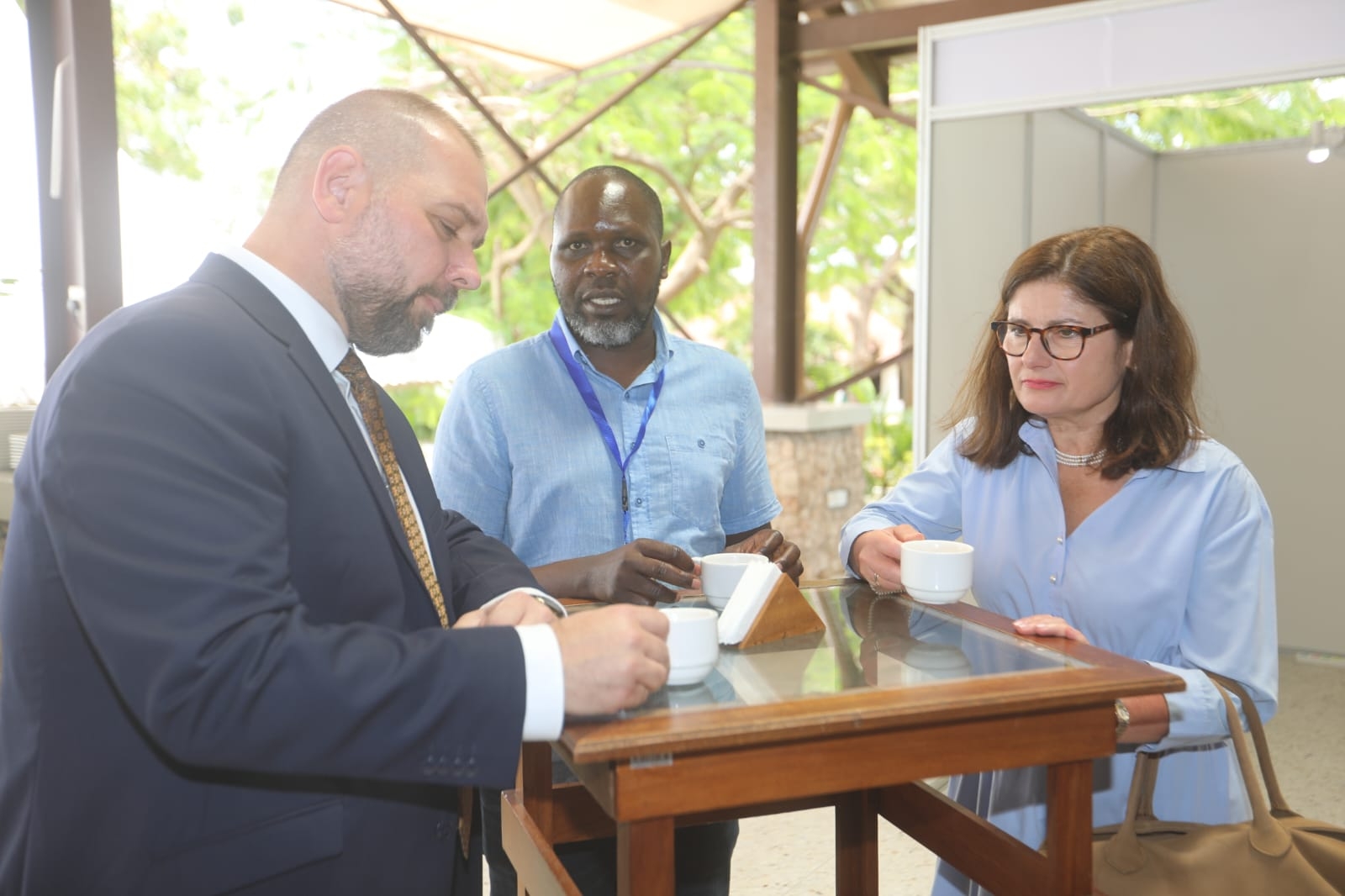
National MSP coordinator, Jacqueline Uku, explained why her team deliberately sought out vulnerable communities.
“We are meeting with the vulnerable and marginalised communities of the Coast… many of them were pushed out of their traditional lands into the margins, but they have held tight to their traditions and ways of life along the coastline,” she said.
Among those engaged are the Awer, the Watha, the Wasanye, the Malakote, the Waluiana and the Washerazi.
Uku emphasised that ignoring these voices would be a violation of the constitution and a loss of invaluable cultural insight.
“Going ahead with a Marine Spatial Plan without involving marginalised groups as traditional and cultural custodians amounts to disrespect and does not uphold the spirit of Kenya’s 2010 Constitution,” she said.
For the Waatha community in Tana River, the invitation was historic.
Chairlady Fatuma Kitole expressed her pride.
“Tangu mwanzo wametuhusisha kama jamii tengwa, hata maoni yetu tulitumana. Na sisi jamii tengwa tuko na rasilmali. Ukienda kwa bahari kuna wenzetu, so tunafurahia kuhusishwa katika hii programme ("They have involved us as a marginalised community from the start , even accepting our opinions. And we, the marginalised community, have resources. If you go to the ocean, there are our people, so we are happy to be involved in this programme."
King Ramadhan Babisam of the Waluiana echoed the sentiment, recalling how his people were once excluded from national processes.
“Mbeleni ilikuwa inatokea watu wengine hata hawako karibu na bahari, wanakuja wanatusukuma, lakini sasa tumetambulika na kupewa fursa ya sisi pia kupeana maoni (What happened in the past was that other people—who are not even close to the ocean—would come and push us, but now we have been recognised and given the opportunity to also give our opinions,” he said.
The MSP team has adopted an ecosystem‑based approach, weaving environmental and social safeguards into the planning process.
“We are running the process using several instruments and frameworks, so the inclusion of vulnerable communities is part of the environmental and social safeguard process, which means they form part of feedback within the process of marine spatial planning," Uku said.
By involving communities early, the project aims to reduce hostility and build trust.
Past government projects, from mangrove restoration to the Lamu Port, often met resistance because communities felt excluded. The MSP team said it seeks to avoid repeating those mistakes by ensuring equitable sharing of spaces and benefits.
For many, the MSP process represents a break from the past.
Babisam recalled how, before the new constitution, his people were excluded from decisions that affected their lives.
“Invitation by the MSP committee to give our contributions gives us hope as a marginalised group,” he said.
Kitole summed up the pride of being recognised.
“Na sisi jamii tengwa tuko na rasilmali… so tunafurahia kuhusishwa katika hii programme ("And we, the marginalised community, have resources… so we are happy to be involved in this programme)."”
These sentiments highlight the psychological impact of inclusion: dignity, recognition and a sense of belonging in national processes.
Kenya’s Vision 2030 identifies the Blue Economy as a driver of growth, contributing over 2.5 per cent to GDP and employing more than two million people in fisheries, tourism, shipping, trade, mining and energy.
The MSP is a cornerstone of this vision, providing a framework for integration and coordination of policies.
But for indigenous communities, the plan is more than an economic blueprint. It is a chance to reclaim their place in the nation’s story.
As elder Diza explained, the plan offers hope that conflicts over fishing grounds and ocean access will finally be addressed.
Mapping Kenya’s ocean space is more than a technical exercise. It is also a development statement about the kind of marine economy Kenya wants to create—one that is sustainable, balanced, and inclusive.
By engaging indigenous communities, the MSP process acknowledges their role as custodians of culture, heritage, and the environment.
For Kenya, the success of the MSP will benefit the government, industry, and conservation. For indigenous communities, it is about recognition, dignity and hope.
As Uku put it: “In a project like this one, we believe in inclusivity… it is important to hear the voice of every community as we plan the ocean.”




.jpg&w=3840&q=100)