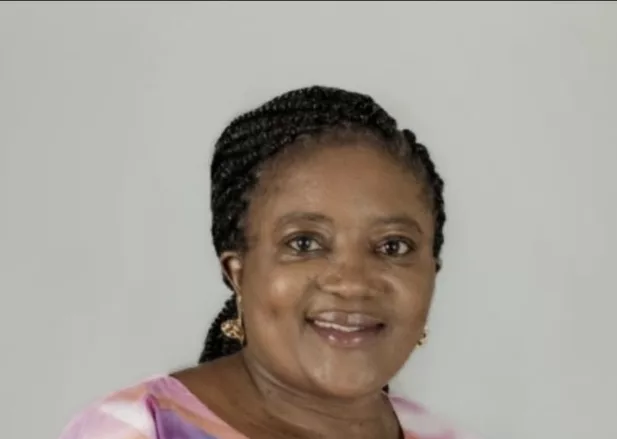
The budget implementation review report for the national government for the period ending June 30, 2023, was released by Controller of Budget Margaret Nyakang'o on Tuesday.
In the report, Nyakang'o reveals that the debt grew by Sh860 billion, from Sh9.39 trillion as at March 31, 2023, to a record Sh10.25 trillion as at June 30, 2023.
This implies that the government borrowed an average of Sh9.55 billion per day or Sh286.67 billion every month for the three months period.
Consequently, the country’s budget boss now recommends audit on the ballooning to ascertain the authenticity of the public debt.
“The Controller of Budget recommends a special audit of the existing loans and committed loans to link each loan to the funded project,” the report states.
Overall, the report shows that the debt grew the public debt stock recorded a 18.8 per cent growth from Sh8.63 trillion reported on June 30, 2022 to Sh10.25 trillion as of June 30, 2023.
It comprises Sh4.83 trillion from domestic lenders and Sh5.42 trillion from external lenders such as the International Monetary Fund and the World Bank.
Nyakang'o attributed the ballooning debt to enhanced borrowing by the state and the weakening of Kenya shilling against the major world currencies, specifically affecting external debt during the financial year.
The revelations is an indictment on Ruto who has maintained that his administration would stop the wanton borrowing.
Ruto said that his administration cut the budget by Sh300 billion that the previous administration has planned to borrow to bridge budget gap.
“I have said that I will not go to borrow, that one I will not do,” Ruto said in Kirinyaga in June.
“We have borrowed from Sh4 trillion to Sh9 trillion, we are at a point where the country can slide, I will not be the President who will take this country to the cliff because of borrowing.”
The CoB says that the huge debt was taking a heavy toll on the government’s operations as up to Sh1.39 trillion of the Sh3.67 trillion budget for the fiscal year went towards payment of debt.
It comprised Sh702.20 billion for principal redemptions and Sh682.86 billion for interest payments.
The allocation for external (foreign) debt servicing was Sh389.45 billion consisting of Sh234.51 billion for the principal redemption and Sh154.94 billion for interest payments.
The internal (domestic) debt had an allocation of Sh.995.62 billion consisting of Sh467.69 billion and Sh527.93 billion towards principal redemption and interest payments, respectively.
“Total expenditure on public debt in FY 2022/23 amounted to Sh1.15 trillion, representing 82.8 per cent of the revised annual estimates, compared to Sh847.15 billion (72.5 per cent) recorded in a similar period FY 2021/22,” the report states.
The budget controller said that the increase in the public debt is leading to a rise in the country’s debt service costs, thereby limiting the government’s fiscal space to undertake other critical policies and programmes.
“The National Treasury should explore opportunities of accessing funding in multiple currencies to hedge against intense pressure on the local currency,” the report states.
The report says that the country has a significant amount of public debt denominated in foreign currencies, which makes it vulnerable to currency fluctuations and exchange rate risks.
The exchange rate between the Kenya Shilling and the US Dollar was roughly Sh117.87 in July 2022, while in June 2023, it averaged 141.14, a difference of Sh23.27.
“The depreciation of the Kenyan Shilling caused an increase in the debt stock and debt repayments (principal and interest) in Kenya Shilling terms,” the report says.
It adds, “The continuous depreciation of the Kenya Shilling will necessitate an increase in the amount required for loan repayments."
This, the CoB says, will erode the government’s fiscal space and limit the implementation of other critical policies and programmes, resulting in budget adjustments.
Further, Nyakang'o said that the National Treasury has, over the years, acquired and absorbed loans on behalf of profitable Semi-Autonomous Government Agencies.
These loans, she said, should be reviewed with the aim of transferring payment obligations to the agencies.




![[PHOTOS] Ol Kalou residents turn out in large numbers to vote](https://cdn.radioafrica.digital/image/2026/07/fe42d51c-7f79-466e-94e8-59561f77bbe7.webp)