Kiambu own-source revenue doubles, hits a record Sh6.5 billion
The collections have risen from Sh2.8bn in 2022, with the increase attributed to tighter financial controls.
by ALICE WAITHERA
Audio By Vocalize
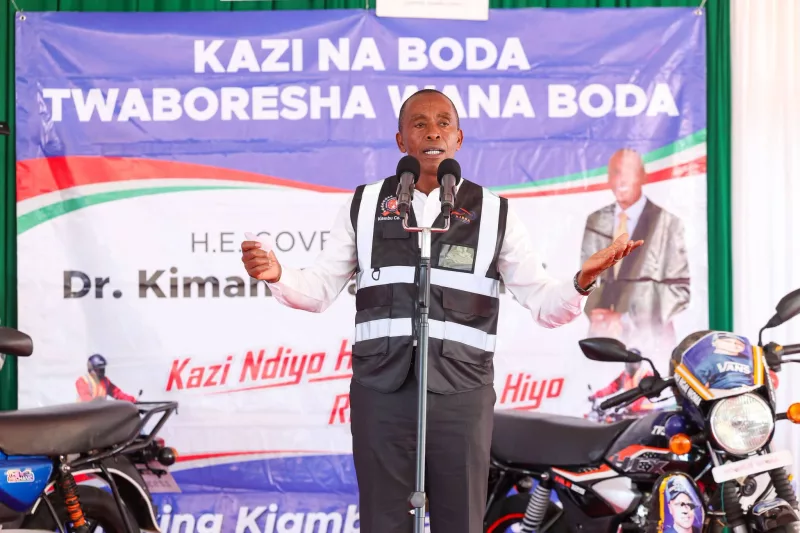
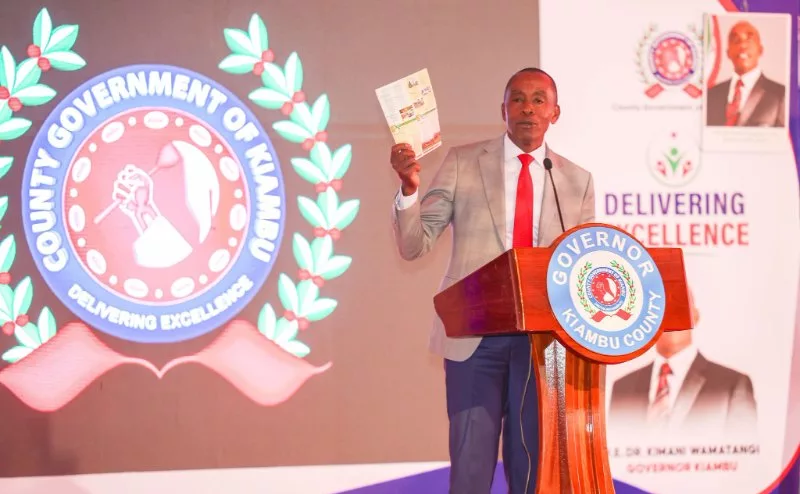
Kiambu governor Kimani Wamatangi during a staff appreciation ceremony at the county headquarters on July 22, 2026/ ALICE WAITHERA
Kiambu county has more than doubled its own-source revenue
collections over the past four years, raising them to Sh6.5 billion in the
2025–26 financial year.
The county has also unveiled an ambitious plan to match the
Sh11.5 billion it receives annually from the national government.
The latest collections mark a sharp rise from Sh2.8 billion
in 2022. Revenue increased to Sh3.59 billion in 2023, Sh4.57 billion in 2024
and Sh5.45 billion in the previous financial year.
Speaking during a ceremony to recognise county staff who
contributed to the improved performance, Governor Kimani Wamatangi attributed
the growth to tighter financial controls, automation of revenue collection, enhanced
accountability and efforts to eliminate wastage.
"We didn't do this by asking our people to pay more. We
did this by asking the administration to waste less," Wamatangi said.
The governor said the county is now targeting an additional
Sh5 billion in own-source revenue by 2028.
He argued stronger local collections would reduce dependence
on national government allocations and enable the county to finance more
development projects.
He said the sustained growth demonstrated that counties
could expand their revenue base through better financial management and
efficient systems rather than imposing additional taxes on residents.
Finance executive Nancy Kirumba said the county's revenue
performance reflected deliberate reforms, including digitisation of revenue
collection, improved management systems, enhanced accountability and
cooperation among county staff.
She noted that a 2022 assessment by the Commission on
Revenue Allocation estimated Kiambu's own-source revenue potential at Sh13.95
billion.
"The Sh13.95 billion figure is both a challenge and an
opportunity," Kirumba said, urging county officers to continue identifying
innovative ways of expanding the revenue base.
She added that the county had invested in digital platforms
to simplify payments for residents and businesses while strengthening revenue
administration and improving taxpayer compliance.
According to the governor, the increased collections have
enabled the county to finance major investments in education, healthcare,
roads, energy, transport and sports.
Among the flagship projects is the construction of 512 Early
Childhood Development Education (ECDE) centres equipped with classrooms for PP1
and PP2 learners, teachers' offices, play areas and ablution facilities.
The county has also continued providing learning materials
and implementing an ECDE feeding programme to improve school attendance.
Wamatangi said the county had completed six Level 4
hospitals with a combined capacity of more than 180 beds and was constructing
28 Level 3 health facilities to expand access to healthcare.
He added that Kiambu had introduced telemedicine services,
allowing local doctors to receive support from specialists based in the United
Kingdom during medical procedures.
The county has also improved the availability of medicines
in public health facilities.
The governor further said the county had reduced its annual
electricity bill from about Sh700 million to approximately Sh290 million after
investing in solar-powered infrastructure.
About 12,000 solar-powered streetlights have already been
installed across the county, with another 12,000 planned during the current
financial year.
On infrastructure, Wamatangi defended the county's continued
investment in road maintenance despite delays in the disbursement of funds
under the Road Maintenance Levy Fund.
He said Kiambu expects to receive about Sh400 million
annually under the programme but has so far received only Sh100 million,
despite its cumulative entitlement exceeding Sh1 billion.
"We will not sit and say that we have an excuse because
the money has not been disbursed," the governor said.
He added that the county had constructed 14 modern bus parks
designed to improve public transport while creating business opportunities
through kiosks and stalls.
Wamatangi also backed the proposed elevation of Thika to
city status, saying it would strengthen Kiambu's position as a major commercial
and industrial hub.
The governor revealed that the county was exploring the
possibility of establishing an airport to improve connectivity, facilitate
trade and support the movement of goods and services within Kiambu and
neighbouring counties.
"We believe improved infrastructure, including an
airport, will unlock greater economic opportunities for our people," he added.
Wamatangi thanked residents for complying with revenue
requirements and credited the county assembly and members of the county
executive for supporting reforms that have strengthened the county's financial
position.



 Kiambu governor Kimani Wamatangi during a staff appreciation ceremony at the county headquarters on July 22, 2026/ ALICE WAITHERA