/ALICE WAITHERA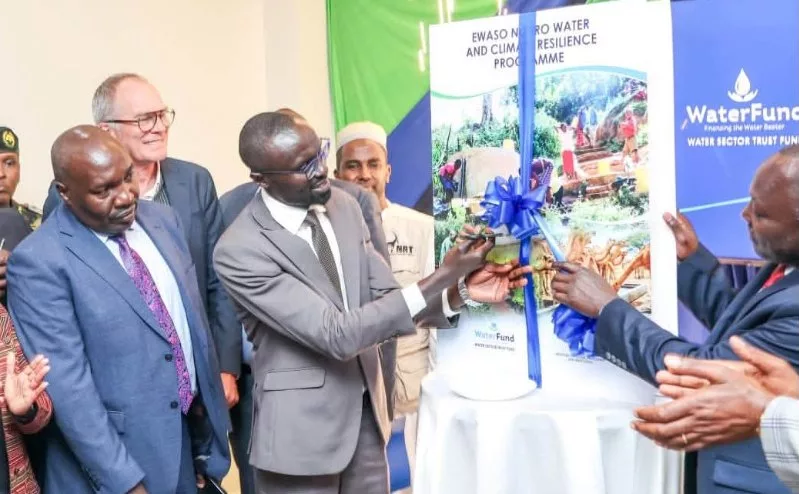 Water CS Eric Mugaa launches Ewaso Ng’iro Basin Water and Climate Resilience project in Nanyuki on July 4, 2026
Speaking during the launch of the Ewaso Ng’iro basin water and climate resilience project in Nanyuki, Water Cabinet Secretary Eric Mugaa said the programme is part of the government efforts to cushion communities against recurring drought and the effects of climate change.
The CS said the initiative aligns with the National Water and Sanitation Investment Financing Plan, which prioritises investments in rural and arid and semi-arid areas to unlock their economic potential through improved access to water and sanitation infrastructure.
The programme will finance the restoration of degraded catchments through the planting of about one million trees while protecting wetlands, riparian ecosystems and rangelands that play a critical role in sustaining river flows and biodiversity.
The project will also finance the construction of 30 water pans, 15 sand dams, protection and development of 30 water springs and other water infrastructure aimed at increasing water availability for households, livestock and agriculture across the basin.
Laikipia Governor Joshua Irungu welcomed the programme, saying it complements President William Ruto's economic transformation agenda while addressing longstanding inequalities in access to water within the basin.
“How can I watch water being drawn from here all the way to other counties, and my people don't have water? That makes me look irresponsible,” he said, while calling for balanced sharing of the resource between upstream and downstream communities.
Irungu said Laikipia county has already supported about 50,000 households to adopt rainwater harvesting technologies.
He added that increased water harvesting, enhanced fodder production and investment in high-value crops such as coffee, avocado and macadamia would reduce competition over water while boosting household incomes.
Nyandarua Governor Kiarie Badilisha described the initiative as a major breakthrough for the region, saying the investment recognised the importance of protecting water towers that sustain millions of Kenyans.
“As much as water is a social commodity that should be given to all people as a basic right, it comes from somewhere. If you forget where this water comes from, we will get to a point when we cannot provide water in this country.”
Erik Jorgen, sector counsellor for Water at the Embassy of Denmark in Kenya, said his country remains committed to supporting climate resilience, sustainable water management and peace-building.
He said that rapid population growth and increasing pressure on water resources required long-term partnerships to safeguard the basin for future generations.
Denmark will invest Sh1.97 billion while Kenyan will invest Sh492 million in the programme.