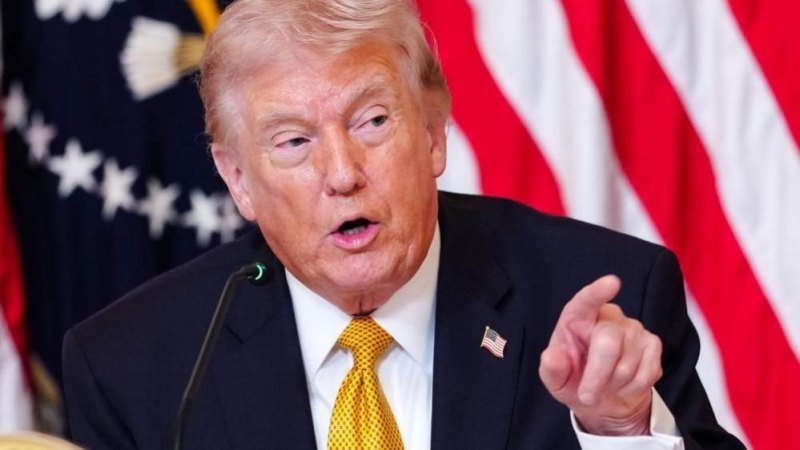
Ruto is expected to stand for re-election just like all his predecessors have done.
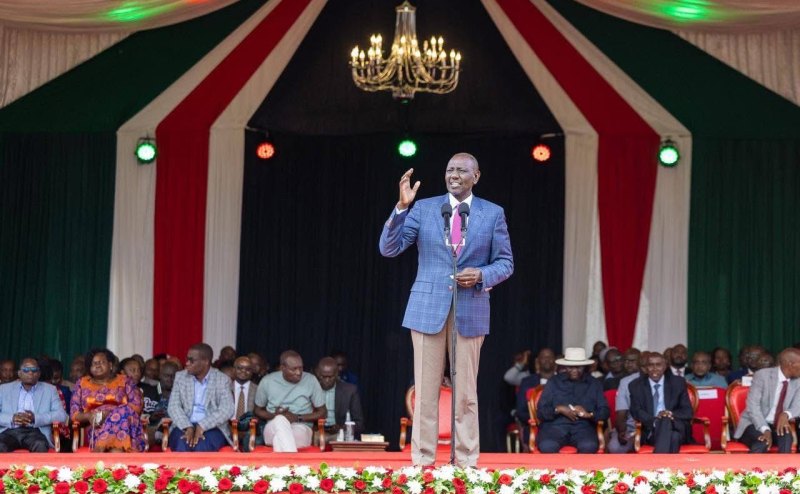
Amid public concerns over his policies, the President on May 19 said that he will continue with his tough choices to transform Kenya without 2027 re-election jitters.
"I am always challenged because when I make the right decisions, people always tell me, you have to think about your re-election and I keep reminding them that I was not elected to be re-elected. I was elected to transform the country," Ruto said.
The President spoke at the Africa CEO Forum in Rwanda, telling off critics of his radical policies that his opponents say have choked Kenyans for the last two years.
Besides Ruto’s bullish talk, a critical look at the country’s political landscape, the fast-shifting loyalties and dynamics expose the behind-the-scenes intrigues that could shape the 2027 State House race.
A growing divide in Mount Kenya region, and the President’s perceived reluctance to quell the increasing anxiety despite his deputy coming under siege, could signal a discrete game plan.
In the 2022 polls, Ruto rode to power following his overwhelming support from the now restive Mount Kenya region, his Rift Valley turf and other perceived opposition territories.
However, there are signals that his men are looking beyond his 2022 support bases to craft what is seen as an elaborate and solid re-election strategy with a national image.
Observers say that part of the strategy includes dropping Rigathi Gachagua as deputy and propping up loyalists from the region.
It has now emerged that the fissures in the region over 2027 succession politics and the alleged fallout with Gachagua have fired up the need for the President strategists to escalate the plan.
The DP's recent outbursts that some of Ruto’s Rift Valley allies are being used to divide Mount Kenya and undermine him let the cat out of the bag as tensions continue to boil over.
Critically, Gachagua’s choice of Ruto’s Uasin Gishu turf as the venue for his remarks also lifted the lid on his determination to take his critics head on amid fears of a fallout with Ruto.
“Some few politicians, who are around the President, want to meddle with Mt Kenya politics to fight me. Mt Kenya politics is so complicated, and what we hate is betrayal," he fired back last weekend.
“As Mount Kenya, we have never interfered with Rift Valley politics and we deserve respect.”
'Gen Z' Mount Kenya factor
There have been fears in Gachagua’s camp that there is a plan to elevate Kiharu MP Ndindi Nyoro as his possible replacement.
Nyoro has been traversing the country accompanied by youthful politicians from both Mount Kenya and Rift Valley, donating millions of shillings in public fundraisers in what is seen as a plan to popularise himself.
Nyeri Governor Mutahi Kahiga, a key supporter of the DP, has claimed that there is a group of youthful politicians being propelled to undermine and topple Gachagua in the region.
“It is true battlefronts have been opened against the DP, one is the 'Gen Z' group which believes that it is their time to assert themselves in leadership positions and since they don’t have the guts or muscle to take on the presidency, they opt for the seemingly weaker of the two- the DP," Kahiga said this week.
“These are operatives with close proximity to the President including his media/social media strategists. The others are his friends who have been around him for a long time, the young MPs from Mount Kenya.”
The Nyeri county boss has used the Gen Z expression figuratively to mean the politicians are not political mature enough to take on leadership positions.
According to Kahiga, the other group is made up of female governors who call themselves the “G7” and who are keen to have one of their own named Ruto's deputy in 2027.
The President has previously said that when there is a male presidential candidate, the running mate should be female.
Political analysts say the elevation of Foreign Affairs Cabinet Secretary Musalia Mudavadi to the Prime CS through Executive Order in 2023 was the beginning of Mount Kenya’s woes.
The import of the elevation, political pundits say, was to broaden Ruto’s support bases beyond Mount Kenya and Rift Valley in a delicate balancing act to win him over key regions that instrumentally sent him to power.
ANC-UDA Merger
Instructively, the Amani National Congres associated with Mudavadi has reportedly agreed to fold the party and merge with Ruto's UDA.
The merger is seen as a clear strategy to enhance Mudavadi's bargaining power for running mate in Kenya Kwanza, further expanding the Ruto's options.
The recent bromance between the President and his former political nemesis Raila Odinga has brought a new twist to the Kenya Kwanza plans. Still, it is seen as sitting well with the strategy to isolate Gachagua and broaden options.
Ruto is fronting the ODM leader for election as the next African Union Commission chairperson in 2025, a push that has excited Raila's bases and significantly reduced attacks on the Kenya Kwanza government.
The former premier needs the President's support and that of the government to successfully lobby other heads of state across the continent to support his bid.
This explains why his hitherto criticism and street protests have been muted as he gradually embraces Ruto.
After the 2022 polls in which Ruto narrowly won against Raila, there were bloody confrontations between opposition and government supporters, hurting the country’s economy.
There are fears that Raila’s standing in the Kenya Kwanza administration has been further bolstered beyond the AUC job with key government officials, including the President and Mudavadi, openly backing him.
Raila factor in Ruto-Gachagua fallout
Analysts say the ODM leader's cosy relationship with the head of state has caused a rift with Gachagua amid jitters in the DP’s camp that he could be elbowed from the centre of the succession matrix.
“It is part of the arithmetic of President Ruto’s reelection plans," political analyst Javas Bigambo said on Ruto and Raila bromance.
“Raila will no doubt show gratitude by supporting Ruto’s reelection and if this arrangement works, then Ruto would only need half support from Central, to escape the Mount Kenya blackmail.’’
Professor Gitile Naituli of Multimedia University says Raila’s entry into the government through the AUC quest has unsettled the DP and rejigged the 2027 succession matrix.
“There is a great Raila factor in the squabbling in government, pitting President Ruto’s allies and his deputy. Gachagua feels that Raila is making inroads in the Kenya Kwanza administration," the university don said.
The DP’s recent absence in at least seven crucial government functions exposed the widening rifts within government even as Raila continued to enjoy unfettered access to state events.
The cracks were further justified by sustained attacks on Gachagua by a section of Rift Valley leaders and a warning shot by UDA secretary general Cleophas Malala on Wednesday.
Malala warned that the party would take disciplinary action against MPs and CSs politicking at the expense of service delivery.
State House spies
Gachagua had initially claimed that he had set traps around State House to bar Raila from accessing the facility, but the Azimio leader’s presence last year exposed him.
Raila joined visiting King Charles and Queen Camilla during their state dinner hosted by President Ruto at State House.
“I had taken seven days away for prayers, fasting, meditation and no phones and nobody could disturb me. I had to meditate for the state of the nation and welfare of this region," the DP said recently while justifying his absence from crucial government events.
New running mate plan
Ruto can also pick his running mate from his newfound bases in western Kenya, split the Mount Kenya block and consolidate Nyanza and Northeastern.
Gachagua was subjected to a ruthless political selection process ahead of the 2022 polls with his fellow politicians from the Mount Kenya region. The choice was between him and Interior CS Kithure Kindiki.
The stormy vote at the Official Residence of the Deputy President in Karen after hours of deliberations was characterised by internal political cracks that saw UDA politicians from Mount Kenya divided right in the middle.
Political observers say Gachagua’s reign has been dogged with controversy and squabbling among leaders just as his choice was so divisive that it threatened to spoil Ruto’s victory chances ahead of the 2022 general election.
A section of leaders held a major conference in Limuru weeks ago and declared Uhuru the Mount Kenya kingpin, further denting his efforts to galvanise the region behind him.
On May 17, some leaders from region, led by Kioni and Narc Kenya leader Martha Karua, organised the Limuru III meeting bringing together political parties from the Central region.
“It is clear there are issues in Mt Kenya that President Ruto cannot wish away. The succession wars and the infighting in UDA over Ruto’s 2027 running mate is just the tip of the iceberg,” political analyst Dismus Mokua said.
Mokua said the fissures in the region could have forced him to find a strategy to woo the opposition as part of his fallback plan.
“The year 2027 is still very far off and the formations are yet to become pronounced. The political signals, however, point to how they will tilt the presidential contest,” he told the Star.
In the 2022 election, a populist campaign anchored on the hustler narrative, support from vote-rich regions, including Mt Kenya and significant inroads in rivals’ turfs, helped Ruto win the presidency.
Ruto polled 7,176,141 (50.49 per cent) to secure the 50 per cent plus one required to win in the first round, edging out his main rival Raila of Azimio la Umoja. The ODM boss got 48.85 per cent of the vote.
In this option, Ruto will embrace opposition leader Raila to penetrate his traditional turfs of Western, Nyanza and Coast regions as part of his alternative option to retain power.
Ruto's 2022 votes basket
According to the IEBC official 2022 general election results, the 10 Mt Kenya counties and the seven from the North Rift collectively handed Ruto 4.5 million votes, which translated to 63 per cent of his total votes.
Raila, who enjoyed the backing of former President Kenyatta, bagged 847,709 votes from the Mt Kenya region as Ruto upset him in his turfs like Bungoma county.
Laikipia, Tharaka-Nithi, Murang’a, Kiambu, Nyeri, Kirinyaga, Nyandarua, Embu, Meru and Nakuru collectively gave Ruto nearly three million votes.
With 2,938, 309 votes from the 10 Mt Kenya counties, the President topped up with 1.6 million votes from seven North Rift counties.
Baringo, Bomet, Elgeyo-Marakwet, Kericho, Nandi, West Pokot and Uasin Gishu collectively gave him 1, 602,807 votes.
Considering the voter turnout averaged 65.4 per cent, the lowest of the last two elections, the performance in these vote-rich counties by Ruto compared to Raila, who netted one million votes in Mt Kenya and North Rift, gave him a head start.
According to the electoral commission, the six Western region counties have a total of 2.3 million votes while Raila’s Nyanza turf has 3 million votes.
The Western region has 2,616,929 registered voters, Luo Nyanza has 2,160,439 registered voters while Gusii boasts of 960,293 registered voters, according to the IEBC’s 2022 voters register.
In 2022, Ruto garnered 629,552 votes in the Western region, close to three times the 242,000 votes UhuRuto had in 2017.
Ruto beat Raila in Ford Kenya leader Moses Wetang’ula’s Bungoma County, polling 255,907 against the Azimio boss’s 145,240.
Because of Ruto’s strategy in 2022, he dwarfed Raila at the Coast, meaning that if he worked with Raila in 2027, he would easily retain his seat.
In the 2022 polls, Ruto saw his tally shoot up at the Coast from the 287,066 they recorded in 2017 to 324,353 as Raila's tally in the region dropped from 801,031 in 2017 to 648,834.
Raila's camp considers the entire region as his voting base because of the huge support the region has accorded him in the past and despite Ruto’s inroads in the 2022 polls.
A strong combination of the three regions was instrumental in Raila’s disputed loss in the 2007 general election resulting in the formation of the Government of National Unity with then-President Mwai Kibaki.