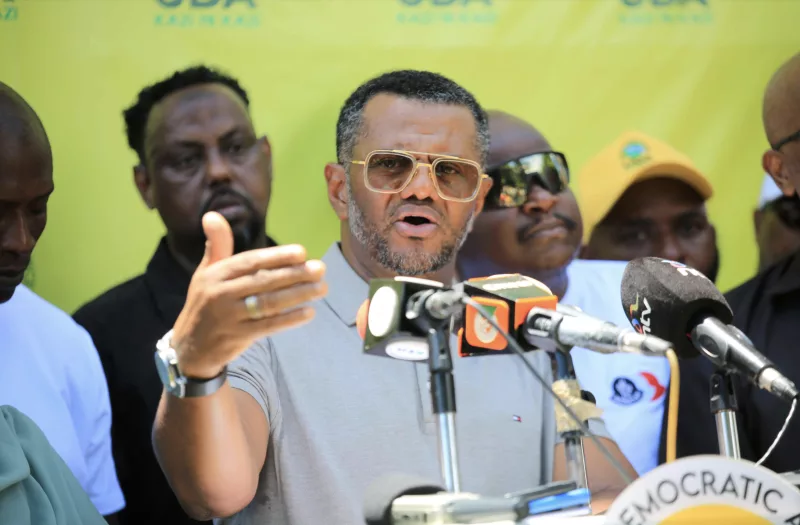
Pundits, however, observe that the opposition chief should ensure he does not make rookie mistakes in his campaign for the top job.
Already, the council of ministers and the AU have allowed the East African Community to fill the chairperson position.
“It is now clear that Raila will be in the race of AU Commission Chairperson. There are no more technical or legal hurdles preventing Kenya from submitting its candidate,” Prime Cabinet Secretary Musalia Mudavadi said recently after the council approval.
It was agreed that the Northern Africa region would front a candidate for deputy chairperson while Central, Southern and Western will compete for the six commissioner posts.
Secondly, the intervention by President William Ruto to lobby for his candidature and what appears to be a deliberate effort to consolidate the bloc has upped Raila’s chances.
The former Prime Minister also has a massive network within the continent and is said could easily get the support of allies like South Africa President Cyril Ramaphosa.
President Uhuru Kenyatta, who appears to enjoy to a good bromance among African heads of state, has also not opposed Raila's candidature despite earlier word about his interest.
Uhuru, who is serving as the peace envoy in the Great Lakes region, could come handy for the ODM leader by selling his candidature him within his networks.
Raila is also likely to enjoy state funding in his campaign across the continent, with his itinerary indicating that the voyages will be more regular from April.
Moronge Obonyo, an international trade law expert with the International Relations Society of Kenya focusing on intra-Africa trade relations, said the former premier must first acknowledge that the electorate in his case is different.
“This is not the wider Kenyan public but heads of AU member states,” he said, adding that Raila must strive to cut the image of a continental diplomat.
“Former Foreign Affairs CS (Cabinet Secretary) Amina Mohamed in her attempt was marketed as a Kenyan diplomat and this left a bitter taste in the mouths of the electorate,” Obonyo said.
Raila, he added, should avoid an instance where he would be perceived as bidding for Kenyan interests in the role.
“He must cut the image of a Kenyan ambassador but that of a citizen of the entire continent. Those are the things he should avoid and come out as a representative of the whole of Africa,” Obonyo said.
For the advocate of the High Court, Raila’s former role as AU High Representative for Agriculture is also likely to give him a launch pad.
“He is a statesman in his own right. He is not new to some of the electorates he is eying their votes in the bid.”
For the expert, the impact of the proposed candidature of Fawza Adan of Somalia is yet to be seen, further holding that the gender argument has since dissipated.
With Rwanda, Uganda and Tanzania also appearing as not keen on producing a candidate, the central argument is that the AU Commission chairman position is Raila’s to lose.
Prof Macharia Munene, while holding that Fawzia’s candidature might bring competition into the bid, said how the electorate view Raila as a person and Kenya as a country would be the determinant.
“They are likely to ask themselves whether they can work with the person who will get the job. Many of them know him [Raila] and this would guide their choices,” the USIU professor of History and International Relations said.
He added that if the heads of state have no problem with the Raila the person and Kenya the state, they will approve the candidature.
“What would matter is what image Kenya carries among the African nations. This is where the Fawzia candidature becomes an issue. And being a personal choice, a lot of factors would come into play.”
Prof Munene, however, held that central to the bid is how the presidents perceive Raila and the Somalia candidate in terms of their persona, experience and track record in the international arena.
Edward Kakumu, an international relations expert, says Raila should do a bit of shuttle and back end diplomacy to get a feel of of different presidents and ministries of Foreign Affairs positions on his candidacy.
The expert adds that the Azimio leader should engage, lobby and certainly weigh on which commitments he shall agree to with regard to the various underlying interests that may arise from conversations with the different delegations.
Agreements from such engagements shall either build or break his bid. Lastly, he advises, Raila should display proper diplomatic tact by being open-minded and approachable, to endear him self to most African delegations, while ensuring he does not espouse any strong positions on the different issues and conflicts among or between countries.
There are also concerns about a subtle rivalry between Kenya and South Africa, coming in the face of the latter taking lead role in the Democratic Republic of Congo peacekeeping mission just days after Kenya left the post.
“Each president will vote but with all these things in mind and they cannot be obligated. There is also a chance that some other names might crop up ahead of the February 25 election,” Prof Munene added.
Apparently aware of these concerns, the Azimio leader has since gone slow on local politics and is expected to begin traversing Africa to lobby heads of state to back his bid.
Raila is slated to start his visits in South Sudan, where he will hold a meeting with President Salva Kiir in Juba next month.
In the same month, the former premier will return to Dar-es-Salaam, Tanzania, to hold a meeting with President Samia Suluhu Hassan.
The ODM leader, who met Uganda President Yoweri Museveni alongside Ruto two weeks ago, is keen to solidify the East Africa voting bloc.
Last week Raila was in Kigali, Rwanda, where he met President Paul Kagame accompanied by two of his close allies.
He has also scheduled meetings in the Horn of Africa in April with stops in Djibouti and Ethiopia.
In May, Raila will head South and is lined up to meet heads of state of Zimbabwe, Malawi, Angola, Zambia and Botswana.
President Ruto is also scheduled to tour many African nations, starting with Ghana on April 2 and 3, to beef up the former Prime Minister's campaign.
The head of state is expected to hold talks with Ghana President Nana Akufo-Addo and later head to Egypt on April 15 and 16 for a meeting hosted by President Abdel Fattah el-Sisi.
Zimbabwe President Emmerson Mnangagwa will also host Ruto for a two-day state visit in Harare towards the end of April.
The Kenya Kwanza administration is also shaping Raila’s candidature by engaging with key stakeholders.
Prime Cabinet Secretary Musalia Mudavadi has taken a leadership role under instructions from President Ruto to align Raila’s candidature.
Mudavadi earlier this month hosted and secured blessings of the European Union.
EU is a key player in AU financial operations and has deliberate interests in Africa’s peace and security space as well as free trade in Africa.
Mudavadi also held a meeting with Africa diplomatic corps where he discussed Raila’s candidature in a structured setting.
The African diplomatic corps meeting is expected to set the ground for high level diplomatic engagements that will consolidate the ODM leader’s campaign.
Africa ambassadors represent African presidents in Kenya, with experts holding that having conversations is part of the winning strategy.
Sources intimated to the Star that the state’s intervention is expected to align the campaign by embracing best practices and avoiding mistakes made in prior campaigns to secure Kenya's positions in international agencies.
Political analysts opine that Raila, who has been discussing his candidature at political rallies, should stop mixing local politics with the AUC campaigns.
They hold that his pronouncements may jeopardise his candidature and maintain that his sentiments, going forward, should be consistent with the AUC role.