The move by Nyakang'o to reject some spending requests by the counties for failure to follow guidelines and scrutinise their spending, coupled with claims of threats to the CoB by governors, has triggered fierce exchanges between the two parties.
In the past two weeks, they have engaged in accusations and counter-accusations.
Last week, Nyakang'o accused the governors of threatening her office after she sought to access financial spending by the devolved units.
“My office requested to be given access to transactions happening in the counties but the CoG refused to grant access to review the payment statements,” Nyakang’o said.
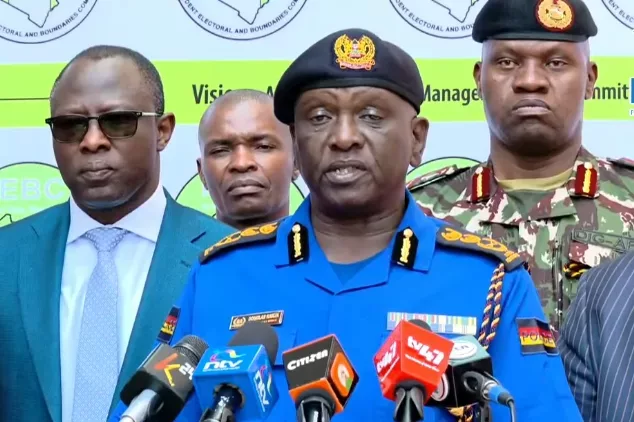
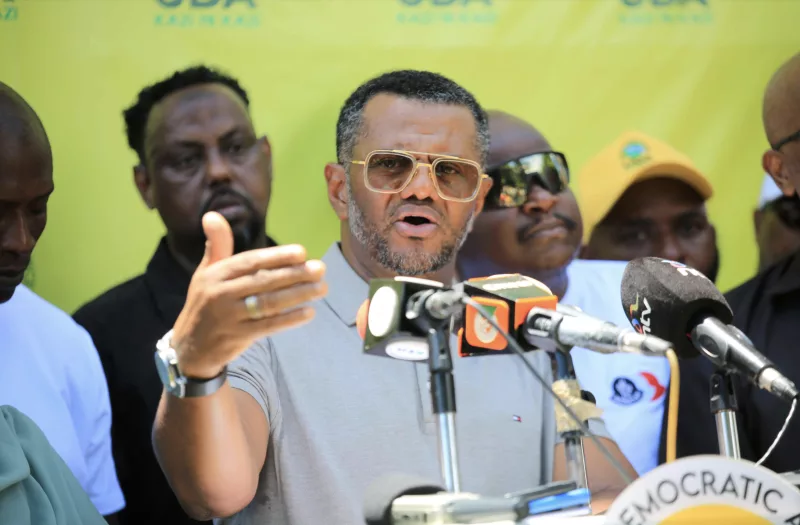
On Saturday, CoG, through its Finance Committee chairman Fernandez Barasa (Kakamega governor), accused the CoB of attempting to assume the role of the Auditor General.
“We call upon the CoB to desist assuming and acting on the role of the office of Auditor General and authorise the transfer of resources to the counties as enumerated in the Constitution,” Barasa said.
But the CoB accused some of the governors of being ignorant of the role of her office.
“In essence, the CoG, especially the new ones, should try to understand my office and its mandate,” she told the Star.
The Constitution stipulates that the Controller of Budget shall oversee the implementation of the budgets of the national and county governments by authorising withdrawals from public funds.
The controller shall not approve any withdrawal from a public fund unless satisfied that the withdrawal is authorised by law, the Constitution states.
Two weeks ago, governors accused Nyakang'o of delaying or rejecting approvals for financial requests, thus stalling programmes and projects.
The CoB has rejected acquisitions by the counties amounting to Sh3.2 billion over what she termed a failure by the devolved units to follow set guidelines to safeguard public money.
In total, the counties made withdrawal requests of Sh182.76 billion between July 1, 2022 and January 31, 2023.
Out of the amount, the CoB approved Sh179.56 billion, translating to a success rate of 98 per cent.
“The declined withdrawal requests translate to two per cent of the requisitions that were not approved due to failure to follow the guidelines,” Nyakang'o said.
Governors accused the CoB of putting ‘unrealistic’ expectations before approving the requisition made by their officers.
“This will not only affect the absorption of resources allocated to the counties but also disrupt the services being rendered by the counties,” Barasa said.
“It is a clear indication of ill motives by the Office of the Controller of Budget and or incompetence by her officers. This is also tantamount to wastage of public funds due to duplication of efforts that are ultimately rendered useless at the headquarters.”
Some counties, Nyakang'o said, are making requesting withdrawals for expenditures on foreign travel which have not been supported by authority from the Ministry of Devolution.
“Frequent requests for standing imprests for the same offices instead of replenishments, and without personal responsibility,” she said.
Nyakang'o said standing imprests are advanced on individuals and not offices, as is being done by some counties.
Some devolved units are also wrongly classifying expenditures where recurrent spending is factored under development budget.
In some cases, counties are presenting budgets whose approvals have been contested – mainly by county assemblies and other stakeholders in the approval process.
“Inappropriate budgeting for pending bills – pending bills are to be budgeted for as a first charge on the county revenue fund in line with PFM Regulations, 2015,” the report reads.