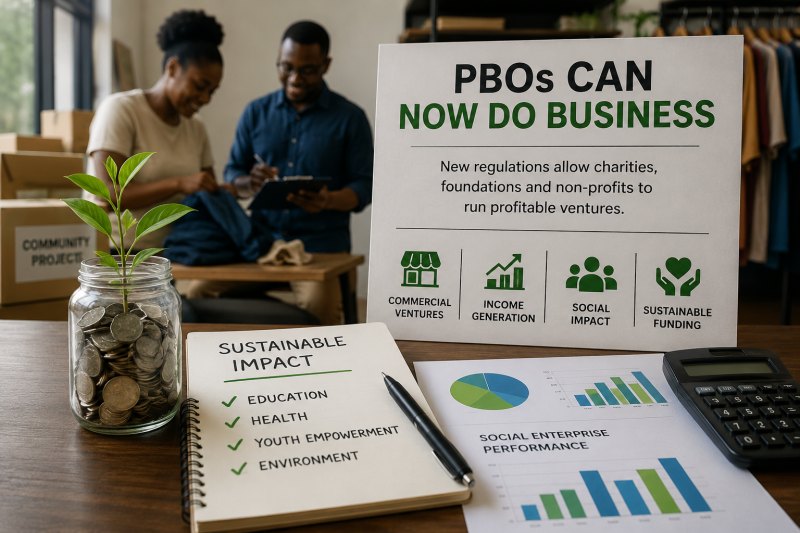
Public Benefits Organizations (formerly NGOs), corporate foundations and non-profit institutions are now free to conduct profitable businesses under Kenya's new law.
The regulations that also cover charitable trusts will see the entities gain access to tax incentives, government contracts and new funding opportunities under the new Public Benefits Organizations (PBO) framework.
These changes, the state argues, could attract more private-sector investment into social projects.
However, charities and aid agencies will also face stricter governance and reporting requirements in the new law.
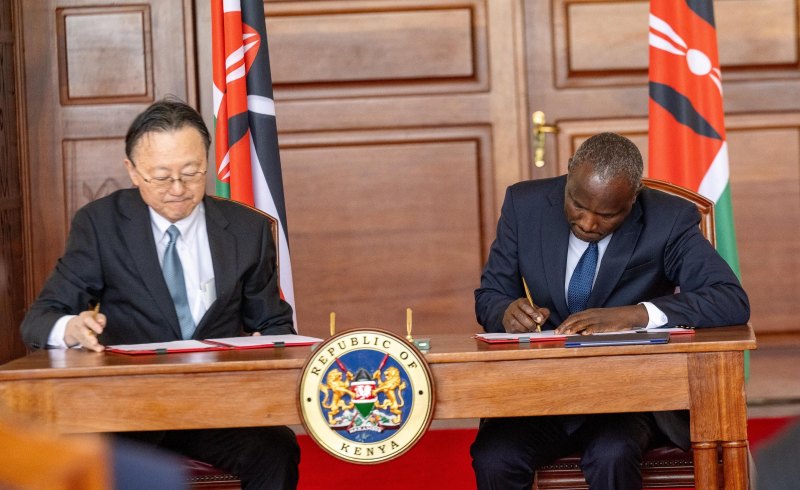
The Public Benefits Organizations Regulations, 2026, published by the Ministry of Interior, and which replaced Kenya's decades-old NGO regime, provides the first detailed framework for implementing the PBO Act.
PwC associate director for legal business solutions Caroline Wanja says that the regulations are expected to change how charities, foundations and international development organisations operate, raise income and work with government.
Among the most notable changes is explicit permission for registered PBOs to engage in lawful commercial activities, provided that any income generated is used solely to support their public-benefit objectives.
“The Act permits PBOs to engage in lawful economic activities so long as the income is used solely to support the public benefit purposes for which the organisation was established,” said Wanja.
“The income from these activities may include donations of cash, securities, and in-kind contributions, bequests, membership fees, gifts, grants, real or personal property, and income generated from any lawful activities undertaken by the PBO with its property and resources.”
The move comes at a time when development organisations globally are grappling with declining donor funding, forcing many to seek alternative and more sustainable revenue streams.
Under the new framework, charities can generate income through business activities, investments, membership fees, grants and other lawful ventures, provided the proceeds are directed towards their registered social missions.
The provision effectively legitimises business models that have increasingly emerged in the development sector, including social enterprises, NGO-owned businesses and hybrid organisations that blend commercial operations with social impact goals.
PwC analysts say the reforms could encourage organisations to become less dependent on donor grants and more financially self-sustaining.
“PBOs must now treat post-registration changes as compliance events. Internal changes that were previously managed informally will now need regulatory notification,” said PwC partner for legal business solutions, Titus Mukora.
The reforms arrive against a backdrop of heightened uncertainty in global development financing, with several major donor countries reviewing foreign aid budgets and international philanthropic funding becoming increasingly competitive.
Experts argue that
entities already incorporated under other Kenyan laws, including foundations,
trusts and non-profit companies limited by guarantee, can now apply for what is
known as "bestowment of PBO status" without having to reincorporate
as new organisations.
The designation potentially positions such entities to access incentives contained in the PBO Act, including eligibility for tax exemptions, preferential customs and VAT treatment, government grants, budget subsidies and participation in public procurement opportunities.
While the regulations clarify that such benefits are not automatic and remain subject to approval under existing tax and procurement laws, legal and governance experts say the framework creates a clearer pathway for corporate philanthropy to interact with government programmes.
For large companies operating charitable arms, the development could strengthen the business case for expanding social investment initiatives.
Corporate foundations involved in education, health, environmental conservation, youth empowerment and community development may now find themselves operating within a more structured and potentially more attractive regulatory environment.
The changes are
expected to be particularly significant as Environmental, Social and Governance
(ESG) commitments become increasingly important to investors and multinational
corporations operating in Kenya.
At the same time, however, the regulations introduce substantial compliance obligations that could increase operating costs for many organisations.
Every registered PBO will now be required to maintain audited accounts, prepare annual financial statements in accordance with accounting standards approved by the Public Benefits Organisations Authority and the Institute of Certified Public Accountants of Kenya (ICPAK), maintain detailed asset registers and submit annual reports.
“PBO must maintain up-to-date records of its audited accounts, annual financial statements prepared in accordance with accounting standards specified by the authority in consultation with ICPAK and audited by auditors in good standing with ICPAK,” said Jackline Mongare, Associate, Legal Business Solutions.
The organisations will further be required to issue a detailed inventory of assets, and an annual report on activities and programmes.
The regulations effectively move the sector from a relatively broad compliance framework to a much more structured reporting regime.
Smaller community-based organisations and local NGOs may however face the greatest burden.
Many organisations that previously relied on basic bookkeeping systems will likely need to invest in professional accounting services, external auditors, governance training and upgraded financial management systems.
The compliance costs could prove significant, particularly for grassroots organisations operating on limited budgets.
The regulations also tighten oversight of international organisations operating in Kenya, a move that could have implications for billions of shillings in donor-funded projects.
International organisations seeking registration must demonstrate that they have been legally incorporated and operational in their home countries for at least three years. They must also disclose their governance structures, funding sources and operational details.
The rules distinguish between organisations that directly implement projects in Kenya and those that merely support local partners through grants and technical assistance.
International organisations that directly implement programmes using their own staff, infrastructure or operational presence in Kenya will be subject to full registration requirements.
Those that operate indirectly through local partners may qualify for exemptions but will still be required to obtain permits and meet disclosure requirements.
The tighter
controls reflect growing regulatory attention on transparency, accountability
and anti-money laundering measures in the non-profit sector.
Kenya has in recent years faced increased scrutiny from international financial watchdogs regarding oversight of non-profit organisations and the potential misuse of charitable structures for illicit financial activities.
For international donors and development agencies, the new rules may increase administrative requirements.
The regulations further formalise the transition from the old NGO framework to the new PBO regime.
Although the Public Benefits Organisations Act came into force in May 2024, the government has now extended the transition period for existing NGOs by an additional year, giving organisations until May 2027 to complete migration into the new system.
The extension is expected to provide relief to hundreds of organisations that have yet to complete the process.
However, experts caution that the additional time should not be interpreted as a postponement of compliance obligations.
Organisations will still be required to review their governance structures, constitutions, board compositions and reporting systems to ensure they align with the new legal requirements.
Failure to comply could ultimately expose organisations to regulatory sanctions, including deregistration.
The regulations also grant authorities broader powers to oversee the sector.
Public benefit organisations can be deregistered for failing to pursue their stated public-benefit objectives, engaging in unlawful activities or repeatedly violating regulatory requirements.
The authority is also empowered to oversee the disposal of assets during dissolution or deregistration, ensuring that charitable assets remain within the public-benefit ecosystem.