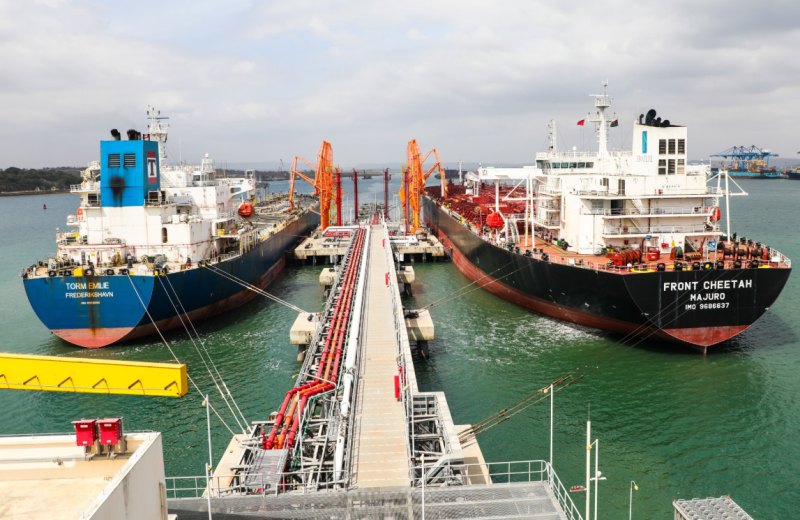
 Oil tankers at the Port of Mombasa’s Kipevu Oil Terminal /KPA
Sub-Saharan African countries, including Kenya face the prospect of higher inflation, weaker job creation and rising energy costs over the next year, the World Economic Forum (WEF) now says.
This is in the wake of geopolitical tensions in the Middle East, which continue to unsettle the global economy.
A WEF report paints a sobering picture for African economies, including Kenya, warning that the uncertainty in the Strait of Hormuz—a critical global oil shipping route—could trigger a fresh wave of inflationary pressures at a time when many countries are still recovering from previous economic shocks.
Kenya's annual inflation rate accelerated to 6.7 per cent in May, up from 5.6 per cent in April, mainly as a result of higher fuel prices driven by the Middle East Crisis.
Nearly nine in ten chief economists surveyed expect global growth to weaken
over the next 12 months, while 94 per cent anticipate higher inflation driven
largely by surging energy and food prices.
Although only 13 per cent foresee a global recession, the outlook suggests a period of slower growth and heightened uncertainty.
For Sub-Saharan Africa, the implications are particularly significant.
According to the survey, 36 per cent of respondents expect a substantial increase in energy prices across the region, while 61 per cent predict weak or very weak employment growth over the coming year.
Inflation expectations for the region are now among the highest globally. The findings come at a sensitive moment for Kenya and other African economies that rely heavily on imported fuel.
Higher oil prices could raise transport and production costs, push up food prices and place additional pressure on already strained household budgets.
"The longer the disruption lasts, the heavier the long-term cost for those who can least afford it," said Saadia Zahidi, managing director at the World Economic Forum.
For Kenya, which imports all of its petroleum requirements, prolonged disruption in global energy markets could complicate efforts to keep inflation under control.
Fuel remains a major input cost across key sectors, including transport, manufacturing, agriculture and power generation.
Economists note that while Kenya has implemented fuel stabilisation measures, sustained high international crude oil prices would eventually filter through the economy.
Many African countries are also grappling with high debt burdens, currency pressures and limited fiscal space, leaving governments with fewer options to cushion consumers and businesses from external shocks.
The WEF report indicates that chief economists view the current Strait of Hormuz disruption as potentially more damaging than the tariff-related trade tensions that rattled global markets in 2025.
Should the closure extend into the second half of the year, some economists believe its economic impact could approach the severity of disruptions experienced during the Covid-19 pandemic.
Beyond inflation, the outlook for jobs is deteriorating, with more than six out of ten economists surveyed expecting weak employment growth in Sub-Saharan Africa over the next 12 months, raising concerns about youth unemployment in a region where millions enter the labour market annually.
The warning comes despite expectations that global demand for African commodities will remain relatively stable.
Slower economic growth in major trading partners could reduce export earnings, while higher borrowing costs may discourage investment and business expansion.
Financial markets are also expected to face increased turbulence. Nearly 80 per cent of economists surveyed anticipate greater volatility in private debt markets over the coming year, while concerns are also rising over public debt and equity markets.
Despite the gloomy economic outlook, artificial intelligence remains one of the few bright spots.
The survey found that 92 per cent of chief economists expect AI adoption to accelerate over the next year. However, expectations regarding the speed of productivity gains have become more cautious.
While sectors such as information technology and education are expected to benefit relatively quickly, economists now believe meaningful productivity improvements in industries such as construction, healthcare, utilities and engineering will take longer to materialise than previously anticipated.