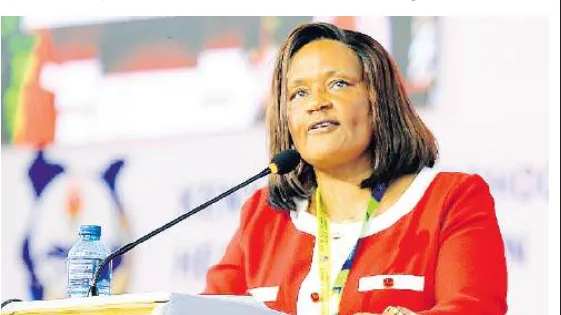
 Betting Regulatory Authority Director-General Peter Karimi /JACKTONE LAWI
Gambling Regulatory Authority is pushing for changes that will see it stop reliance on data from betting firms as it prepares to roll out a central monitoring system capable of tracking every gambling transaction in real time.
The technology platform will give the government direct access to gambling data as transactions occur, reducing dependence on figures submitted by operators and enabling regulators to independently verify industry activity.
This the regulator says will strengthen oversight of the country’s rapidly growing betting industry, which has expanded into a multi-billion-shilling sector driven by online sportsbooks, lotteries, casinos and mobile betting platforms.
The technology-driven platform, established under the Gambling Control Act, is expected to change the oversight of the multi-billion-shilling betting industry by ending reliance on operator self-reporting and allowing regulators to monitor betting activity as it happens.
GRA Director General Peter Karimi said all licensed operators including online bookmakers, casinos, lotteries and land-based gambling establishments, will be required to integrate directly with the system.
"Every single participant will integrate into the central monitoring system, and the regulator will have sight of every transaction that happens in a gambling operation in Kenya," Karimi said at the sidelines of the 2026 Gaming Tech Summit in Nairobi.
The move marks a shift from the current framework, where operators largely declare revenues and transactions to regulators and tax authorities.
Once operational, the system will provide government agencies with a live feed of industry activity, allowing regulators to track revenues, monitor compliance and detect suspicious transactions instantly.
The real-time reporting platform is expected to strengthen tax compliance across the industry at a time when gambling has become an increasingly important source of government revenue.
According to the GRA, the betting and gaming sector generated approximately Sh33 billion in taxes during the 2024-25 financial year.
With collections expected to increase to Sh40 billion this year, driven by improved compliance, predictable regulations and enhanced monitoring capabilities.
"The country will be able to predict with a high degree of accuracy the taxes that are going to be realised," Karimi said.
Industry stakeholders believe technology-based oversight could significantly reduce revenue leakages linked to underreporting and illegal operators.
During the summit, regulators were told that similar monitoring systems in other jurisdictions had delivered revenue growth of up to 350 per cent after implementation due to improved transparency and reporting.
“The adoption of technology will enhance transparency by providing regulators with better tools to monitor the industry effectively. At the same time, it will benefit operators by creating a more transparent, accountable and efficient operating environment,” said Velex Advisory managing director for East Africa David Moshi.
Beyond tax enforcement, the central monitoring system is expected to become a critical tool in the fight against illegal gambling websites, which regulators say are siphoning revenue from licensed operators and exposing consumers to fraud.
The GRA plans to use the platform alongside collaborations with the Communications Authority, Central Bank of Kenya and Financial Reporting Centre to identify unlicensed operators and track suspicious financial flows.
"We are trying to control payment mechanisms, illegal websites and rogue suppliers operating in the country," Karimi said.
The authority has repeatedly warned that gamblers using unlicensed platforms have little protection if disputes arise or funds are lost.
The system will also play a key role in Kenya's efforts to tighten anti-money laundering controls in the gambling sector.
The Financial Reporting Centre has designated the Gambling Regulatory Authority as one of the agencies responsible for enforcing anti-money laundering measures, particularly among casino operators.
Regulators argue that direct access to transaction-level data will make it easier to identify unusual betting patterns, suspicious transfers and potential money laundering activities.
"The primary intervention is visibility. Once we can see every transaction, reporting becomes accurate and enforcement becomes easier," Karimi said.