Kenya's
wealthy investors are overhauling their investment strategies, moving away from
luxury homes and increasingly channeling capital into data centres, logistics,
renewable energy and professionally managed rental housing.
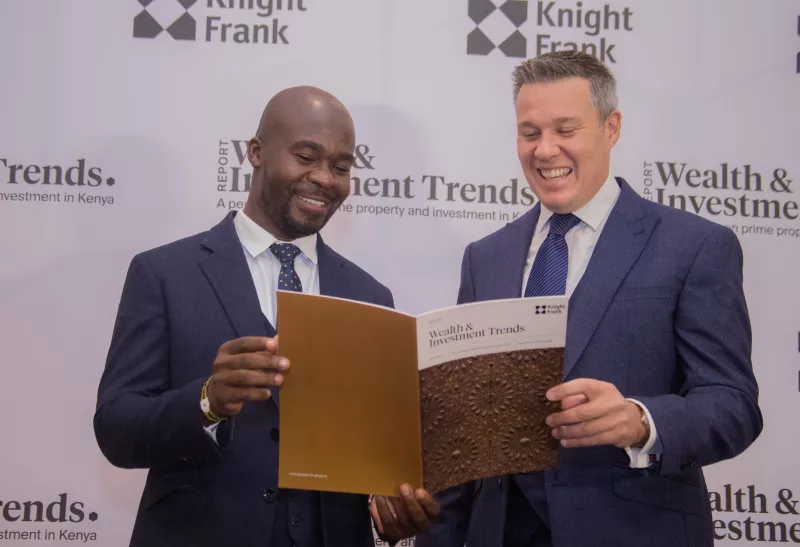
The shift, captured in the Knight Frank Wealth & Investment Trends Report 2026, signals a maturing investment landscape where affluent individuals are prioritising assets that offer stable income, stronger liquidity and long-term capital appreciation over traditional residential property.
The report shows that while primary and secondary homes remain important for wealth preservation, high-net-worth investors are steadily reducing the share of their portfolios allocated to residential real estate.
They are instead pumping money into sectors benefiting from long-term structural changes such as digitalisation, urbanisation and infrastructure expansion.
Knight Frank says the transition reflects changing priorities among wealthy investors who are increasingly seeking diversified portfolios that can better withstand economic cycles while generating predictable returns.
"The modern investor is looking beyond conventional asset classes. There is growing interest in investments that combine income, resilience and long-term growth. This reflects a more sophisticated approach to wealth creation," said Knight Frank Kenya CEO, Mark Dunford.
The report notes that Kenya's rapidly expanding digital economy is creating fresh investment opportunities, particularly in data centres, which are witnessing rising demand as businesses adopt cloud computing, artificial intelligence and digital services.
Similarly, logistics facilities continue attracting investor interest as e-commerce expands across East Africa and regional trade volumes increase, boosting demand for modern warehouses and distribution hubs.
Renewable energy has also emerged as an attractive investment destination as governments and businesses accelerate the transition towards cleaner energy sources while seeking a reliable electricity supply.
The report identifies the residential private rented sector as another emerging opportunity, driven by rapid urbanisation, changing lifestyles and growing demand for professionally managed rental housing, particularly among young urban professionals.
Knight Frank Africa Research Analyst Boniface Abudho said the trend does not signal an exit from real estate but rather a strategic repositioning of capital.
"Investors are diversifying rather than abandoning property. Capital is moving towards sectors supported by structural trends that are expected to shape the economy for many years," he said.
Besides
specialised real estate, wealthy investors are also increasing allocations to
liquid investments and fixed-income instruments as they seek portfolio
stability amid global economic uncertainty and fluctuating financial markets.
The latest findings come at a time when Kenya's investment environment continues to evolve, supported by expanding infrastructure, improving connectivity and sustained growth in technology-driven industries.
It
indicates that investors are becoming more disciplined in balancing capital
preservation with long-term wealth creation, moving beyond the traditional
focus on high-end residential property that has dominated investment portfolios
for decades.
According to Dunford, Kenya remains one of Africa's most attractive investment destinations despite global economic headwinds.
"Kenya continues to present compelling investment opportunities. The difference today is that investors are becoming more deliberate in where they deploy capital," he said.
The broader Knight Frank Wealth Report 2026 also points to changing wealth patterns in Kenya.
It shows the country's population of ultra-high-net-worth individuals, those with investable assets exceeding $30 million (about Sh3.9 billion), declined by about 3.1 per cent over the past year to 77 individuals, reflecting global market volatility and slower wealth creation.
Even so, the report projects the number will recover by around 17 percent over the next five years, underlining confidence in Kenya's long-term economic prospects.
Abudho said the changing investment preferences reflect a market that is becoming increasingly sophisticated.
"The
findings show a market that is maturing. Investors are building portfolios that
are diversified, future-focused and aligned to long-term economic
transformation," he said.








![[PHOTOS] Elderly brave cold to vote in Ol Kalou](https://cdn.radioafrica.digital/image/2026/07/d2345b9e-578f-45ff-9bb0-d7819671c165.webp)