
Large-scale infrastructure projects like the planned Rironi-Mau Summit Road, affordable housing, lower lending rates and stable shilling are key drivers of high cement consumption in the country.
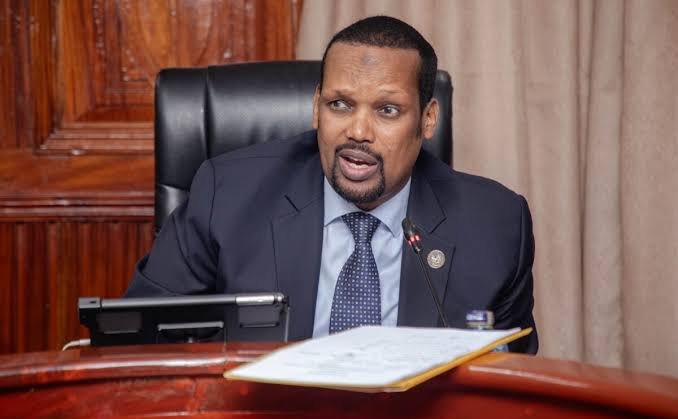
In an interview with the Star, Bamburi Cement Chief Executive Officer, Mohit Kapoor termed the industry outlook for 2025 and 2026 as promising, and stated that the sector is likely to reverse the slowdown experienced in 2024, where consumption dropped significantly.
Data from the Kenya National Bureau of Statistics (KNBS) shows that cement sales declined by 7.4 per cent to 8.47 million tonnes.
The government statistician attributes the biggest drop in more than 20 years to higher cement prices, difficulty in accessing loans, and less government spending on construction projects.
“The construction sector is back to life. At Bamburi, we have aligned our products to benefit from emerging opportunities. We have started to reap dividends of our strategic investments if our half-year results are anything to go by,’’ Kapoor said.
He revisited the firm’s progress a year after it was fully acquired by Tanzanian conglomerate, Amsons Group; Kapoor said that it has since reached the maximum clinker production capacity of a million tonnes, achieved by employing preventive maintenance and industrial excellence.
He revealed that Cement volumes have registered a double-digit growth this year, and ready-mix concrete output has increased by 40 per cent compared to the same period before the buyout.
“We have new products like DuraPlus, a durable cement solution for infrastructure projects has been a key milestone this year. We have enough capacity to meet the demand by government and private sector projects,’’ he said.
To ensure a steady supply, the firm is fast-tracking the Matuga Project, with the state-of-the-art –art plant expected to add 1.6 million tonnes of clinker production.
Kapoor revealed that since the buyout, the firm has also embarked on the modernization of digital infrastructure, with full rollout expected by year-end.
Others are energy optimization, where the company is cost-effectively sourcing fuel and power, including solar energy integration.
“This is the first year that we have a robust contribution from our solar power plants. Enhanced railway logistics have reduced logistics costs and improved delivery efficiency.”
The investments helped the firm turn a loss in the first six months of the year into a net profit of Sh865 million.
Total assets stood at Sh29.36 billion as of 30 June 2025, compared to Sh28.35 billion at the end of December 2024. Total equity attributable to owners of the company was Sh26.14 billion
Furthermore, turnover from continuing operations increased by five per cent to Sh11.4 billion, compared to Sh109 billion in the same period last year.
“The company’s premium products strategy drove this growth. Profit before tax from continuing operations reached Sh1.2 billion.”
Generally, Kenya’s cement industry registered its fastest half-year expansion since 2023, with production rising 17.3 per cent in the first six months.
Output climbed to 4.9 million metric tonnes from 4.14 million metric tonnes a year earlier, buoyed by steady demand in housing, infrastructure, and commercial construction.
Monthly production consistently exceeded 800,000 tonnes, the longest such streak since mid-2023.
Consumption mirrored the surge, growing 22.1 per cent year-on-year to 4.8 million tonnes in the first half of 2025, compared with 3.9 million in the YoY period of 2024.
Analysts note the rise reflects recovery from last year’s slump rather than an outright boom, as retail prices remain elevated at Sh780–855 per 50kg bag.
The sector is also undergoing significant restructuring, with Bamburi’s sister company, Kalahari Cement, acquiring close to 67 per cent in East Africa Portland Cement.
Local millers rescued Savannah Cement through a Sh3.8 billion deal.
Despite the upturn, Kappor notes that high-energy costs remain a drag, prompting major producers to invest in solar and captive power solutions.