
Livestock project targets youth in 15 Asal counties
The project aims to empower 300,000 young people, with 60,444 in four counties.
3mon agoSTEPHEN ASTARIKONorth-eastern
A friend missed an opportunity to get a master's degree because of a seasonal river.
In Summary

Audio By Vocalize
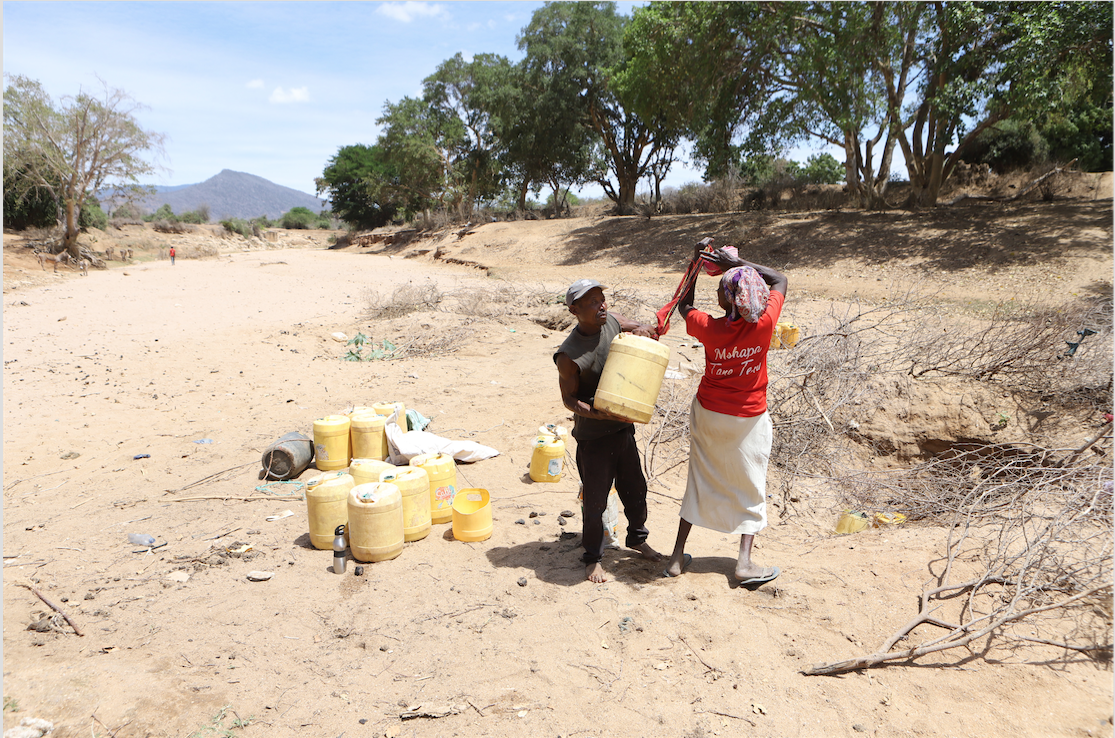
One of my favourite stories illustrating government neglect of Northern Kenya was told to me by a friend from that area about 25 years ago.
It is a story I may have used to make this very point in this column at some point, as it really is a very remarkable story.
So what happened is that my friend, an ethnic Somali from one of the Northern Kenya counties, who had long been the pride of his family as the first to get a college degree, was now preparing for the next stage of his academic journey: he had been shortlisted for a scholarship which would take him to North America, for a master’s degree.
As this second round of interviews for the scholarship was about a week away, he decided to return to his family’s rural village in Northern Kenya, to “receive blessings” from his parents. And his trip by bus up to Northern Kenya went well enough.
But on his return, the bus he was in stopped abruptly on the banks of a giant swift-flowing river that had certainly not been there when he had passed that spot a few days earlier.
What had happened was that unseasonal heavy rains in the distant hills had unleashed enough water to produce streams, which then flowed down and combined to create that tremendous river on what had up to just a few days earlier been a dry riverbank.
I could well relate to this. On a visit to the Maasai Mara Game Reserve with some American friends years ago, our group set out for a game drive one morning and crossed the Sand River when it was just that – a sandy riverbank with not a drop of water in sight. The only remarkable thing at that point was how steep the banks of the river were, but we drove down to the bottom, and then up and out without incident.
On our return from the game drive, we now found Sand River as a fast-flowing stream which there was no question of crossing, no matter how skilled the driver. We had to take a two-hour detour on those rough roads to get back to our camp.
It had taken less than five hours for the Sand River to be transformed from a waterless trough in the middle of the bush to a river flowing strongly enough to sweep all in its path.
And this is where the true tragedy lies for Northern Kenya.
I believe the Narok county government could very easily build a modern bridge across the Sand River for use when such unexpected flooding occurs. But of course, they will not. Tourists go to places like the Maasai Mara to enjoy “the full wilderness experience”.
Seeing a mighty flooding river where just a few hours ago there was nothing but sand is very much a part of “the wilderness experience”. Certainly, my American friends saw the amazing transformation this river had undergone, as one of the highlights of their safari.
But when it comes to the seasonal rivers of Northern Kenya, the absence of bridges is a matter of pure neglect and political indifference. Indeed, the infrastructure of that region has yet to reach the levels that many parts of Kenya had as far back as the early years of Independence.
It is no wonder then that the leaders of that region have at last taken a hardline stance against the government of the day and warned that they will no longer adhere to their traditional role of being a reliable source of support for whoever was in State House.
But what of my friend who got stuck on the banks of that suddenly swollen river on his way back to Nairobi?
He told me that when the bus company representatives told the passengers that it would take two days before the company could organise for a bus to come from Nairobi to pick them up on the other side of the river; and for boats to be available to take them across (and even then only if the water was no longer flowing so fast); he realised that he would not make it for the interview.
He simply sat on the banks of the river and wept.
Wycliffe Muga is a columnist
The project aims to empower 300,000 young people, with 60,444 in four counties.