

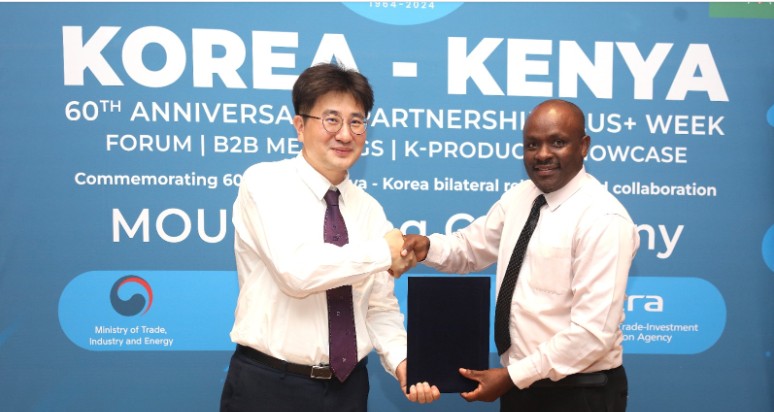
A stunning and sui generis event, which happened on
Wednesday last week at Tribe Hotel in Westlands
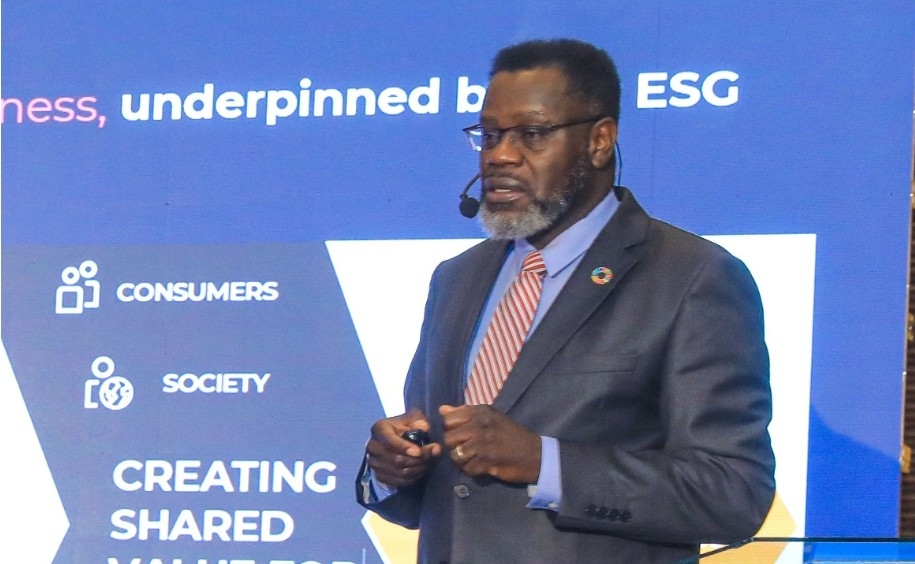
should be an eye opener to all Kenyans. Kang Hyung-shik, the Korean Ambassador to
Kenya, conducted the 2025 Korea-Kenya Partnership Seminar. The aim was to
strengthen public diplomacy and deepen mutual understanding between the two
countries.
The seminar addressed key areas of cooperation encompassing politics, economy, development, education, agriculture and healthcare sectors. Through panel discussions and open discussions, the seminar highlighted successful cases of Korea-Kenya cooperation and explored future partnership possibilities.
The seminar also highlighted the huge trade deficit in favour
of Korea. Journalists from Kenya’s mainstream media somersaulted in anger. They
demanded to know how the widening trade gap can be
narrowed. Out of the blues, the moderator requested me to address their
concerns. I froze.
Then I dropped a bombshell. The trade imbalance will continue, and the gap will further widen. The journalists were visibly disillusioned and annoyed. They engaged me outside the seminar. They demanded a substantive answer. The good news is that the trade gap can be narrowed.
To start with, Kenya needs to improve her institutional frameworks on public diplomacy in order to reduce the current structural gap between the two countries, and hence enhance bilateral synergy.
Korea enacted the Public Diplomacy Act on February 3, 2016
(Act No. 13951), which was amended on March 28, 2023 (Act No. 19272). Through
this Act, Korea decisively integrated its soft power into the national foreign
policy.
The Act defines public diplomacy as a state-led diplomatic
activity that promotes foreign nationals' understanding of, and confidence in
the Republic of Korea. Its purpose is to improve ROK’s image and prestige in
the international community.
The state's responsibility is outlined in Article 4: develop systematic and comprehensive strategies for public diplomacy; create administrative and financial support plans to implement these strategies; build domestic public consensus on the importance of public diplomacy, including through education and public relations. The government is also supposed to carry out fact-finding research on public diplomacy and establish and maintain a public diplomacy information system (Article 10–11).
Planning and strategy are covered under Article 6: The Minister of Foreign Affairs (Mofa) is tasked with creating a Master Plan for Public Diplomacy every five years. The plan is developed in consultation with central government agencies, mayors of cities and provincial governors. Comprehensive annual action plans derived from the Master Plan guide how various central agencies (19 ministries) and local governments (17 provinces/city jurisdictions) should carry out public diplomacy activities.
Article 8 establishes a Public Diplomacy Committee, which is a control tower, to coordinate and oversee public diplomacy policy and implementation. On Accountability (Article 13), Mofa must annually report to the National Assembly on public diplomacy activities.
Kenya needs to focus more on track diplomacy instead of traditional track diplomacy. Secondly, Kenya needs a control tower to coordinate and harmonise conflicting and fragmented trade policies from numerous state agencies. In the case of the ROK, the Korean foreign policy is indeed the trade policy. The Korea Trade-Investment Promotion Agency and the Korea International Cooperation Agency (Koica) are under Mofa and they both have offices in Nairobi.
In addition, Korea Eximbank, Korea Economic Innovation
Partnership Programme, Korea Overseas Infrastructure and Urban Development Corporation
(KIND Africa Office), Korea Programme on International Agriculture (Kopia) and
King Sejong Institute all have offices in Kenya for business and their good
efforts are coordinated by the Embassy of the ROK in Kenya.
In regard to additional logistical support, the Korea Customs Service has been providing monthly and annual export and import statistics for all countries and all commodities since 1956. The Korea International Trade Association, another government agency, established in 1946, is the largest business organisation in Korea with more than 77,000 member companies. It bolsters the Korean economy through global trade.
Kenyan government must invest in trade instead of leaving
critical investments to cash-poor entrepreneurs.
Finally, Kenya needs to embark on rapid industrialisation,
as laid down in the original concept paper for Kenya Advanced Institute of
Science and Technology (Kenya-AIST), at Konza Technopolis, which is modelled on
Korea Advanced Institute of Science and Technology.
Kenya-AIST is a unique collaboration between the university, the government and investors. The university conducts business research, designs industries and startups, and recruits and trains the required staff.
The government develops appropriate and supportive policies, while local investors and selected foreign investors fund and manage the industries until they are ready to spin off. This is how Samsung and other Korean chaebols (large family corporations) were created and funded. Through the Kenya-AIST arrangement, Korean chaebols like Samsung and LG can manufacture intermediate content from Kenya.
The current trade practice, where, for example, Kenya buys 10 jet fighters from Korea, at a price of about Sh13 billion apiece, hoping to sell enough bananas, at a price of US 65 cents apiece and use the proceeds to pay for the jet fighters, is illusory. Kenya must insist that, at least, 20 per cent of the jet fighters’ content must be manufactured in Kenya.
This analysis, therefore, reveals that more is required to
manage and promote Kenya’s global trade.
First Kenyan ambassador to the Republic of Korea, specialist in Korean Peninsula Studies and geopolitical analyst, [email protected], +254 722 511805