Kenya's recent gazette notice approving the duty-free import
of 500,000 tonnes of rice between August and December has ignited a fierce
debate, with policymakers claiming it will stabilise local prices.
Yet, this assertion collapses under scrutiny. With annual
rice imports nearing 1 million tonnes worth Sh160 billion, Kenya's reliance on
foreign rice strains foreign exchange reserves, currently at 4.4 months of
import cover, and undermines local farmers.
The rice farmers in Mwea, Ahero, Bunyala and other areas
decry unsold harvests while connected importers profit from duty-free licenses.
Why should the burden of price stabilisation fall on rice
farmers? Are policymakers incentivised to favour imports over primary
production?
This glaring policy failure demands a science-driven,
farmer-centric approach to rice self-sufficiency, drawing on Vietnam and
Tanzania's successes and aligning rice policies with the protections afforded
to wheat and maize farmers.
Policymakers argue that duty-free rice imports prevent price
spikes, citing consumer protection.
However, this approach shifts the burden onto rice farmers,
who face depressed prices and unsold stocks due to cheap imports. Kenya consumes
1.3 million tonnes of rice annually but produces only 264,000 tonnes, meeting
20 per cent of the demand, according to the Agriculture And Food Authority.
The Sh160 billion import bill exacerbates forex pressures,
yet farmers receive no relief.
Unlike wheat and maize, where importers must prove local
offtake under the East African Community Duty Remission Schemes, rice imports
face no such checks, allowing "fly-by-night" importers to flood
markets.
Wheat farmers benefit from a guaranteed price of Sh4,750 per
90kg bag, and maize farmers await similar support, while rice farmers receive
no price floor.
The Kenya National Trading Corporation has failed to pay for
the 2022-23 supplies, unlike the prompt payments to wheat and maize farmers via
the National Cereals and Produce Board.
This double standard suggests that price stabilisation
unfairly rests on rice farmers. The persistence of duty-free rice imports,
despite local production capacity, raises questions about policymakers'
incentives. Several factors suggest imports are prioritised over primary
production.
Political connections: Duty-free import licenses are often
awarded to politically connected entities, as seen in recurring rice import
scandals. These importers profit from tax waivers, while farmers struggle with
40 per cent post-harvest losses due to outdated milling.
Short-term gain: Imports offer quick price fixes, appealing
to urban consumers and policymakers seeking favours. Boosting primary
production requires long-term investment, which lacks immediate political
rewards.
Weak data systems: Unlike Vietnam's data-driven policies,
Kenya's contested rice stock data allows importers to justify duty-free quotas,
claiming shortages. This undermines planning for local production.
Lack of advocacy: Maize and wheat lobbies in politically
influential regions secure import bans and price support. Rice-growing regions
are less organised and fail to counter the importer influence.
These dynamics suggest that importer-driven policies may
offer policymakers alternative pay-offs and benefits, sidelining rice farmers
and stifling primary production.
Vietnam and Tanzania have demonstrated that investing in
primary production stabilises prices while empowering farmers.
Vietnam produces circa 43 million tonnes of rice annually,
exporting 8 million tonnes worth $4.6 billion.
The "One Must, Five Reductions" (IMSR) model
optimised inputs, boosting yields from 4mt/ha to 6mt/ha and cutting costs by 30
per cent. Irrigation expanded to 7.1 million hectares, enabling multiple
cropping cycles.
Cooperatives and modern milling ensured market access and
price stability, with $1 billion in R&D and climate finance supporting
farmers. Similarly, Tanzania achieved near self-sufficiency by 2023, producing
2.2 million tonnes against a 2.3 million-tonne demand.
Investments of $200 million in irrigation expanded
cultivable land to 461,000 hectares, doubling yields to 4mt/ha.
Agricultural Marketing Co-operative Societies increased
farmer profits by 30 per cent and modern milling cut losses from 30 per cent to
15 per cent, stabilising local prices without reliance on imports.
Both nations prioritised science-driven policies and farmer
empowerment, rejecting importer-driven shortcuts.
Kenya's import-heavy approach, by contrast, destabilises
farmers while failing to address long-term price volatility.
To achieve self-sufficiency by 2030, per the National Rice
Development Strategy Phase 2 (NRDS-2), Kenya must shift the burden of price
stabilisation from farmers to an equitable policy framework.
A strategy, rooted in science and primary production, can
transform the value chain.
Equitable Import Regulations: Extend EAC Duty Remission
Schemes to rice, requiring importers to prove local offtake. Ban rice imports
during harvest seasons to protect farmers, reduce imports by 30 per cent and
save circa Sh50 billion annually.
Policy-based price support: Set a minimum rice price of
Sh5,000 per 90kg bag, based on production cost data, mirroring wheat's Sh4,750.
This will stabilise incomes, encouraging production of 300,000
additional tonnes. Like maize and wheat, the support should be channelled
through NCPB and not KNTC, which is poorly resourced.
Scale climate-smart practices: Train 50,000 farmers in new
high-yielding varieties, alternate Wetting and Drying (AWD) and 1M5R,
distributing certified seeds to 80 per cent of farmers by 2028, using soil and
climate data.
There are new highland rice varieties that are regionally
versatile and require less water. This will raise yields to 4.8mt/ha, adding
300,000 tonnes. True price stability comes from boosting local production, not
flooding markets with imports.
An evidence-based policy (import controls, price support),
higher productivity through irrigation and certified seeds, increased incomes,
and value chain investments in modern milling operations and organised
cooperatives, make local rice competitive, slashing imports.
By 2030, Kenya can produce 846,000 tonnes (65 per cent of
demand, saving Sh100 billion annually) and achieve self-sufficiency by 2035,
aligning rice with wheat and maize protections.
The bias toward imports suggests policymakers may prioritise
short-term political gains or personal benefits from import licenses over
long-term agricultural transformation.
Rice-growing regions' representatives must emulate the
advocacy of maize and what lobbies, demanding uniform policies. Science-driven
data on production costs, yields and stocks modelled on Vietnam's approach can
counter importer influence.
Partnerships with the Coalition for African Rice Development
and private-sector players will strengthen value chains, as in Tanzania.
The claim that rice imports stabilise prices is a policy
failure that burdens farmers while enriching importers. Kenya must reject this
fallacy, aligning rice with wheat and maize protections: enforce EAC Duty
Remission Schemes, set a Sh5,000/90kg bag price floor, and clear KNTC arrears.
Rice-growing MPs must advocate fiercely, prioritising
farmers over importers. Vietnam and Tanzania prove that science-driven,
farmer-centric policies deliver price stability and self-sufficiency.
Kenya's rice revolution, free from importer-driven policies,
must start now.
The author is a public policy expert and former CEO at KAM.



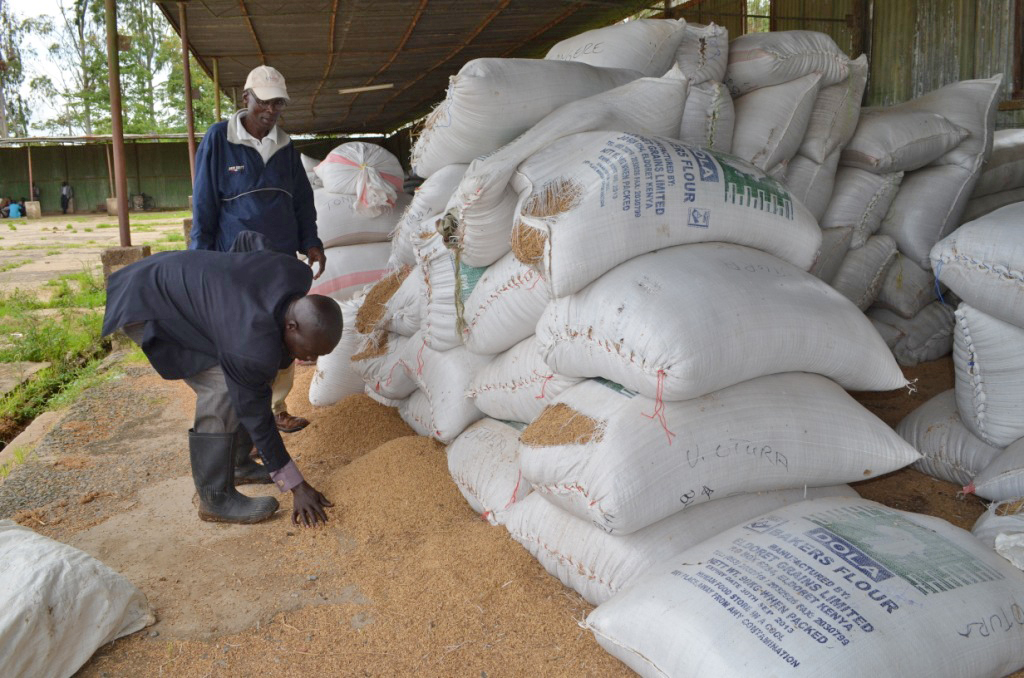
 Farmers at Ahero rice irrigation scheme in Nyando /FILE