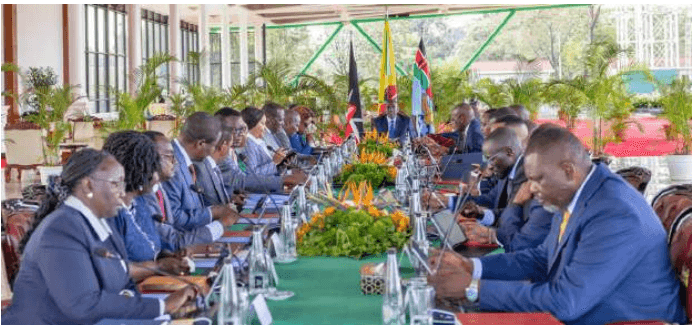


 President
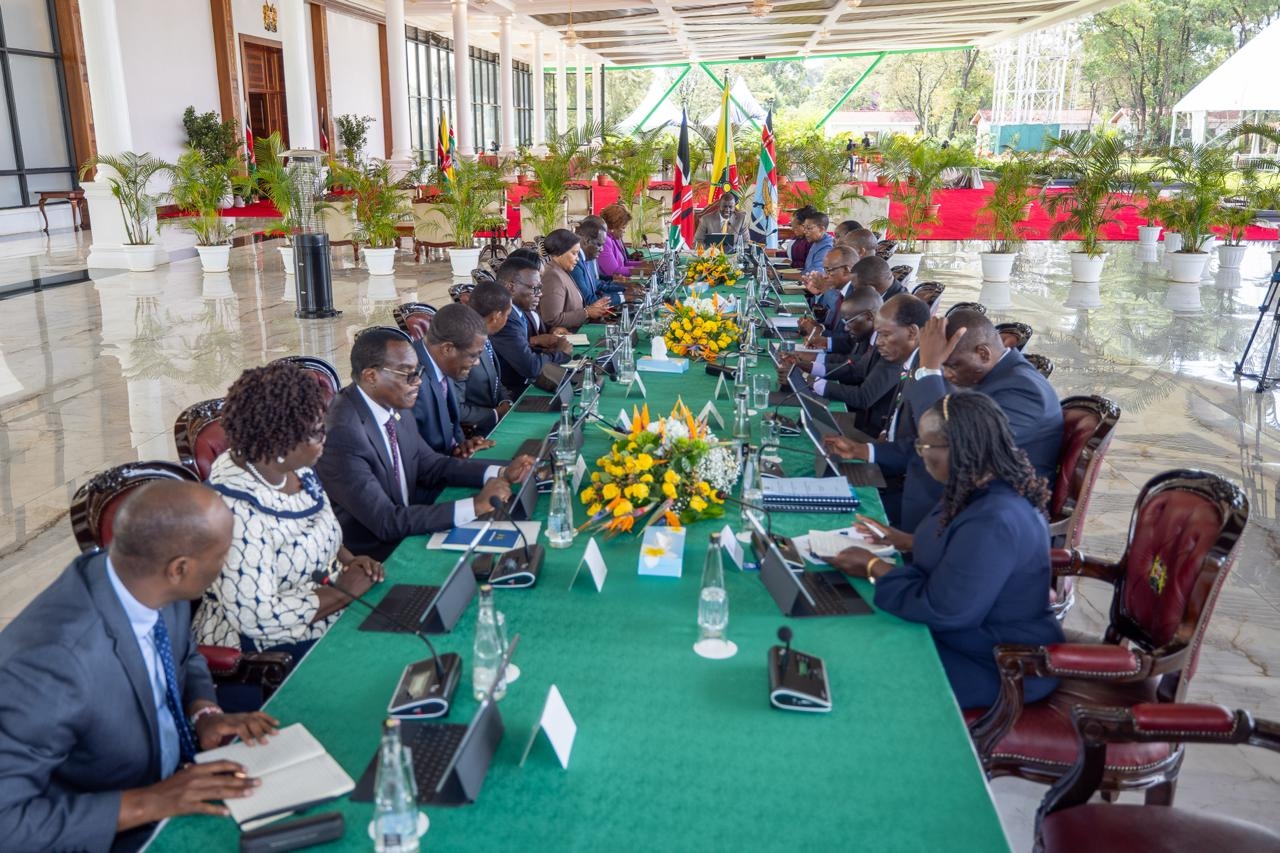
William Ruto
with the Tourism
CS Rebecca
Miano during a
recent forum
/PCS
President
William Ruto
with the Tourism
CS Rebecca
Miano during a
recent forum
/PCS
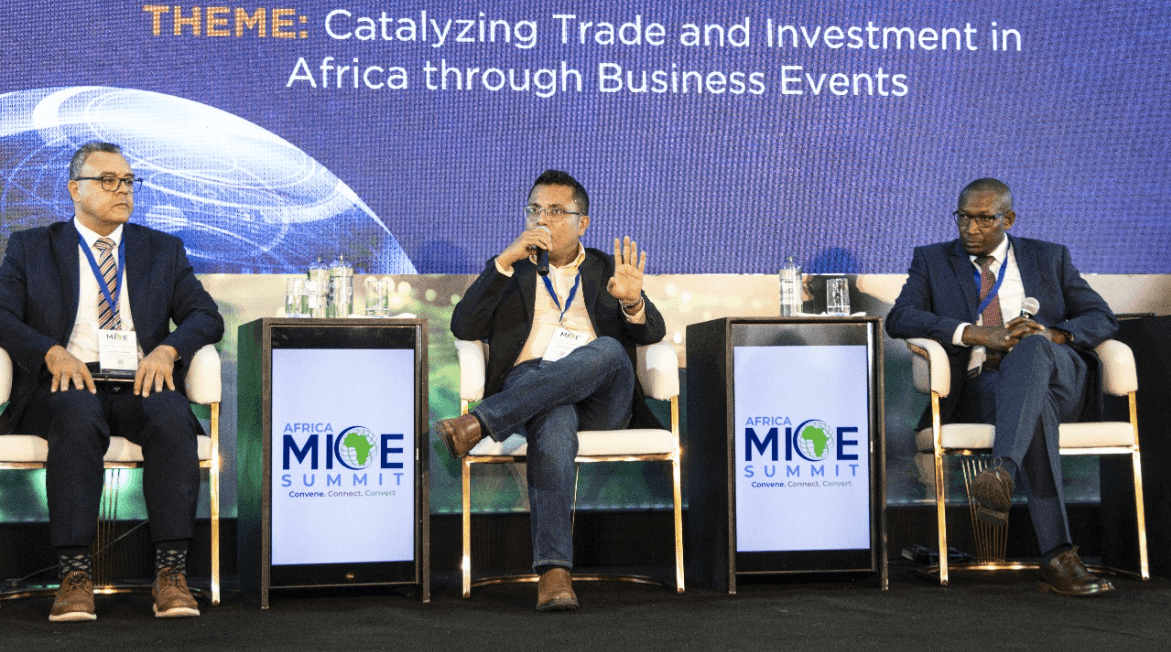
Kenya is eying to compete with key Meetings, Incentives, Conferences and Exhibitions (MICE) destinations in Africa, after the Cabinet approved the re-establishment of the country’s convention bureau.
First introduced in 2019 by the then Tourism CS Najib Balala to drive the country’s MICE agenda, the bureau faced budgetary constraints and was dissolved a year later at the height of the Covid-19 pandemic.
Cabinet on Monday gave a nod to operationalise the bureau, giving the country a second chance at taking on MICE destination giants such as Kigali (Rwanda) and Cape Town (South Africa).
According to Tourism and Wildlife CS Rebecca Miano, the Kenya National Convention Bureau (KNCB) will help cement Kenya’s position as a leading global hub for MICE.
“MICE tourism is high-value tourism that supports our local economy and our incredible wildlife conservation efforts,” Miano said following the Cabinet approval.
The move comes as Kenya targets a double-digit growth in MICE numbers as part of its drive to grow inbound international tourists’ arrivals to at least five million and Sh800 billion in earnings by 2027.
In 2024, Kenya experienced a notable increase in international tourist arrivals, recording 2.4 million visitors compared to 2.09 million in 2023.
Of these, 643,595 visitors (26.9%) came for business and conferences with the majority (44.25 %) or 1,058,026 visiting the country for leisure.
22 per cent or 526,071 were visiting friends and relatives— the top three reasons for visiting Kenya, with other purposes being sports, education, and medical, among others.
Industry data show that Kenya hosted over 3,000 business events in 2023, contributing approximately Sh11 billion to the national economy, with Nairobi accounting for 80 percent of the events.This even as Mombasa and Kisumu record a 20 per cent year-on-year growth in conference bookings, with industry numbers going up last year.
Infrastructure gaps, fragmented marketing and limited investment in event technology have however, been blamed for curtailing the growth of the MICE industry.
This has seen key MICE destinations in Africa, including Kenya, fail to maximize the potential in this sector, which last year came second to leisure as a reason for international visits to Kenya.
While the value of the global MICE industry is projected to surpass $1.78 trillion (about Sh230 trillion) by 2030, from $916 billion (Sh119 trillion) in 2019, Africa captures less than three per cent of the global MICE business share.
Only two African cities (Cape Town and Kigali) regularly rank in the top 100 global MICE destinations in ICCA (International Congress and Convention Association) rankings.
According to the Africa Tourism Monitor, hosted MICE events generate three to five times more revenue per visitor compared to leisure tourism.
KICC chief executive James Mwaura, who is also chair of the International Congress and Convention Association (ICCA Africa Chapter), said Kenya has proven ability to host continental and global events such as WTO MC13, TICAD, Africa Climate Summit among others.
The country recently hosted the COMESA Heads of State and Government Summit in Nairobi. The cabinet’s approval of the return of the national convention bureau is part of preparations to host the 4th COMESA–EAC–SADC Tripartite Summit scheduled for mid-2026.
KNCB is expected to be strategic and borrow lessons from the likes of Rwanda’s Kigali Convention Centre which hosted over 110 international events in 2023 alone, contributing over Sh10.3 billion to the local economy.
South Africa, through South Africa National Convention Bureau (SANCB) secured 66 international bids in 2022, translating to Sh588 million.
There are only five convention centers on the continent with a capacity exceeding 5,000 persons.