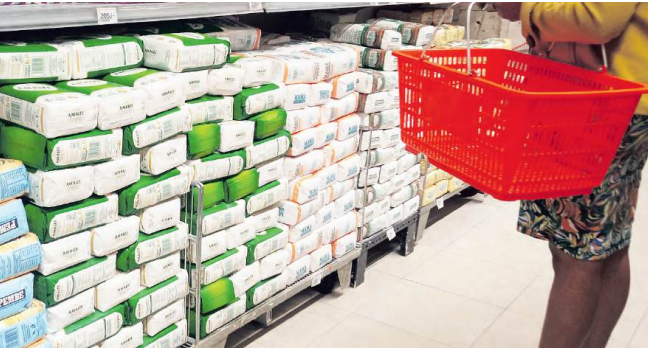
The government is monitoring market prices to institute timely remedial
measures and prevent unwarranted
price increases in a bid to further cut
the cost of living which has dropped
by almost three per cent in past 12
months.
Last week, an in-depth Star article
showed that members of public were
complaining that they were yet to
feel effects of eased inflation, with
majority struggling to place a meal
on the table.
Data from the National Treasury
shows that retail prices increased at a
slower rate of 3.5 per cent in February this year down from 6.3 per cent
same period last year, attributed to
easing prices of goods and services in
the overall basket consisting of 330
items.
According to the exchequer, the
highest decline in average retail prices was that of a litre of kerosene and the
highest increase was in hire of tents.
“Generally, there was a decline in
prices of common user goods and
services in the electricity, diesel, petrol, milk, sugar, maize grain, maize
flour and wheat flour. The price of
one litre of edible oil increased by five
per cent from Sh333.31 in February
2024 to Sh350.10 in February 2025,’’
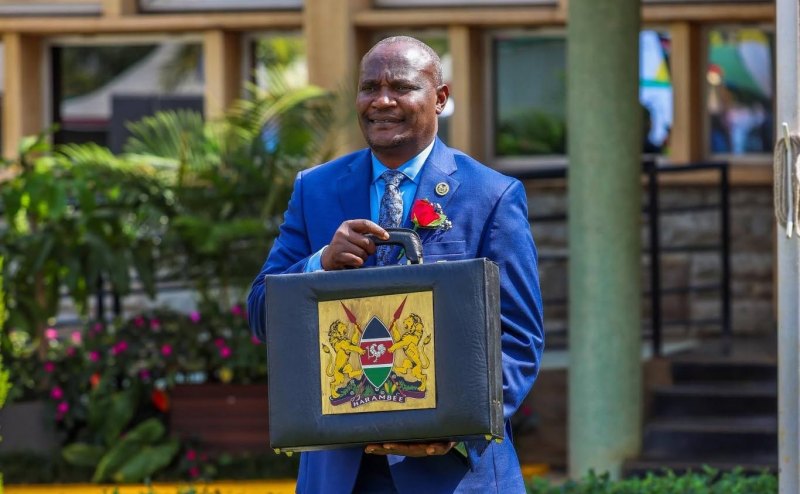
National Treasury CS John Mbadi
said in a statement.
“The reduction in prices of the key
commodities signals continuous improvement of the economy and creates optimism.”
The government monitored prices
of goods and services in four regions:
Coast, Eastern, Central and North
Eastern where it notes that there was
a general decline in prices of most of
the common commodities.
For instance, the data shows a
decline in the price of 1kg of sugar
ranged from 19.8 to 25.1 per cent.
The highest decline in absolute terms
was in North Eastern, which recorded
a decline of Sh51.84 from Sh206.7
a year ago.
“The price reductions
underscore the positive impact of
government interventions and market stabilization efforts, ultimately
enhancing affordability of goods
and services while easing the financial burden on households across the
country,’’ Mbadi said.
It attributes the overall drop in the
cost of living to various policy directives including the stability of the local currency against the US dollar.
On Thursday, the shilling closed the
market at 129.22, down from 160.8
units same period in 2024.
It added that given the outcome of
inflation, CBK has gradually eased
monetary policy by lowering the Central Bank Rate (CBR from 13 per cent
in August 2024 to 11.25 per cent in
December 2024 and down further
to 10.75 per cent in February 2025.
This move is expected to lower
production and import costs, with
the benefits going to consumers in
form of cheaper goods and services.
In addition, CBK in the February
2025 MPC meeting reduced the Cash
Reserve Ratio (CRR) by 100 basis
points to 3.25 from 4.25 per cent
to lower the cost of funds for banks.
This will further support lowering of
lending rates and support growth of
credit to the private sector.
“The reduction of interest rates
charged by banks to the private sector
is likely to expand credit to private
sector, encouraging investment, creating jobs and improving the general
liquidity in the economy.’’
In order to lower the cost of living,
the exchequer says President William
Ruto’s government production subsidies, particularly in fertiliser and
seeds, has led to improved agricultural output and food supply, which
in turn drove down food prices.