Kenya's licensed auctioneers are demanding urgent legal and institutional reforms, warning that escalating violence, political interference, inconsistent court decisions, and unlawful competition from financial institutions and legal practitioners threaten the effective enforcement of court orders and weaken the country's justice system.
In a joint memorandum presented to the Auctioneers Licensing Board (ALB), the Kenya Bankers Association (KBA), the Association of Kenya Insurers (AKI) and the Law Society of Kenya (LSK), the National Association of Kenya Auctioneers (NAKA) and the Kenya National Society for Professional Auctioneers (KENSAP) called for comprehensive amendments to the Auctioneers Act (Cap 526) and the Auctioneers Rules of 1997.
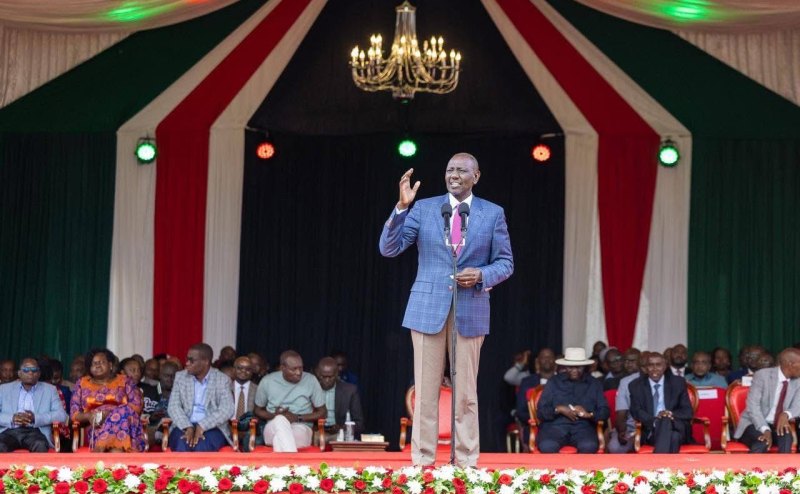
The proposed reforms follow President William Ruto's directive issued in Mombasa in May 2026, which gave stakeholders in the auctioneering sector three months to submit recommendations to modernise the legal framework governing the profession.
The two associations argue that although licensed auctioneers are legally mandated to execute court decrees, they increasingly face serious obstacles that prevent them from carrying out lawful assignments.
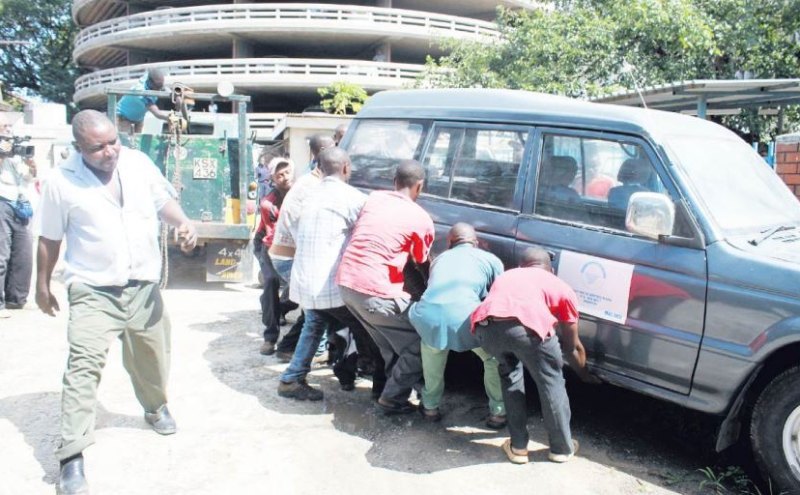
They say auctioneers are routinely subjected to violent attacks by private security guards, hired gangs and debtors resisting repossession of property.
According to the memorandum, some politically connected individuals have also used their influence to frustrate lawful court executions by allegedly directing police officers to withdraw from enforcement operations.
In other cases, police officers are accused of delaying or refusing to provide security during executions unless unofficial payments are made, despite the law requiring police assistance when court orders are being enforced.
"Obstruction of an auctioneer executing a lawful court warrant is not merely interference with an individual officer, it is an obstruction of justice itself," the memorandum states, warning that repeated attacks have left auctioneers injured, financially exposed and increasingly reluctant to undertake high-risk assignments.
The associations further accuse some insurance companies of frustrating the execution of court judgments by deliberately delaying settlement of decrees through lengthy payment plans, obtaining stay orders after execution has already commenced or shielding assets from attachment by permanently fixing office equipment and deploying security personnel to block auctioneers.
They also note that the collapse or receivership of insurance firms such as Invesco, Xplico, Corporate Insurance and Trident left many successful litigants unable to recover court-awarded compensation because the companies had no attachable assets.
Another major concern is the growing inconsistency in judicial decisions affecting execution proceedings. The memorandum states that courts occasionally issue stay orders after auctioneers have already incurred substantial costs in tracing, attaching and securing assets, but fail to provide reimbursement for those expenses. Conflicting court interpretations on auctioneers' fees have also created uncertainty within the profession, underscoring the need for legislative clarity.
According to the memorandum, some financial institutions have established internal debt recovery units that bypass licensed auctioneers by assigning repossession duties to employees or outsourcing only portions of the legally prescribed recovery process.
They further allege that some banks issue partial instructions to licensed auctioneers to attach assets before proceeding to advertise and sell those assets themselves, denying auctioneers their lawful role and statutory fees.
The associations also accused some advocates of encroaching on the auctioneering profession by undertaking functions reserved exclusively for licensed auctioneers.
During consultations with the Law Society of Kenya, they specifically raised concerns over what they described as increasing interference by advocates in debt recovery processes, citing the issue as one that requires urgent regulatory attention.
Speaking on behalf of the industry, NAKA Chairman Maurice Osundwa said auctioneers remain a critical pillar in Kenya's justice system and deserve stronger institutional support.
"Licensed auctioneers are officers of the court entrusted with enforcing valid judicial orders. When they are assaulted, obstructed or denied police protection, it is not only the profession that suffers but the authority and credibility of the courts themselves. Stronger legal safeguards and better coordination among stakeholders are urgently needed."
KENSAP representative Isaac Mutiso said the proposed reforms should also eliminate unlicensed operators who continue to infiltrate the profession.
"Licensed auctioneers operate within a well-regulated legal framework. Allowing unlicensed individuals to conduct repossessions or public auctions creates unnecessary disputes, exposes parties to litigation and erodes public confidence in the justice system. The law must clearly define responsibilities and protect legitimate practitioners."
During stakeholder engagements, NAKA and KENSAP also reached an important agreement with the Auctioneers Licensing Board to establish an ALB Users Committee comprising representatives from all stakeholders in the sector.
The committee will provide a permanent platform for addressing operational and regulatory challenges affecting the industry.
Among the priority issues identified are the failure by some practitioners to properly serve proclamations, the use of excessive force during executions, overcharging of statutory fees and the continued use of unlicensed individuals in auctioneering activities.
The committee is expected to strengthen accountability, improve professional standards and foster dialogue among regulators and industry players.
The associations are also proposing the establishment of a permanent consultative forum bringing together the Judiciary, National Police Service, Insurance Regulatory Authority, Kenya Bankers Association, Law Society of Kenya, microfinance institutions and other stakeholders to standardize enforcement procedures, resolve recurring disputes and improve compliance with court orders.
They maintain that meaningful reforms cannot be achieved while auctioneers continue to face violence, delayed police support, inconsistent legal interpretations, illegal competition and financial losses arising from frustrated executions.
The recommendations are expected to play a central role in the government's ongoing review of Kenya's auctioneering laws, with stakeholders hoping the reforms will strengthen judicial enforcement, protect licensed professionals and restore confidence in the country's debt recovery and justice systems.