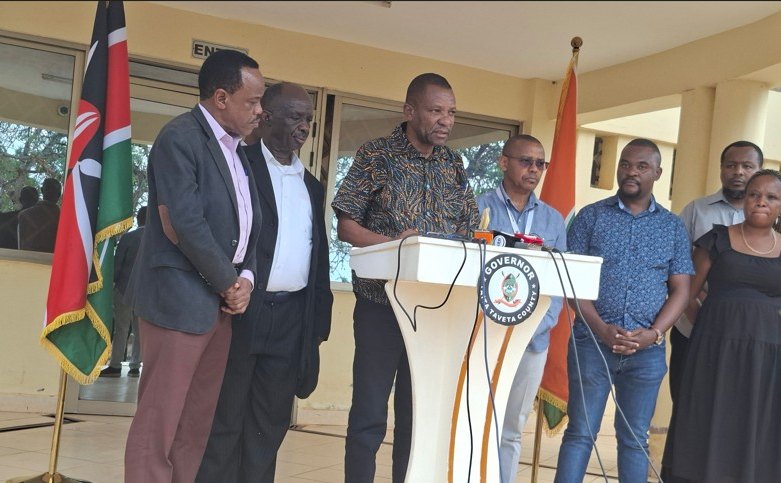
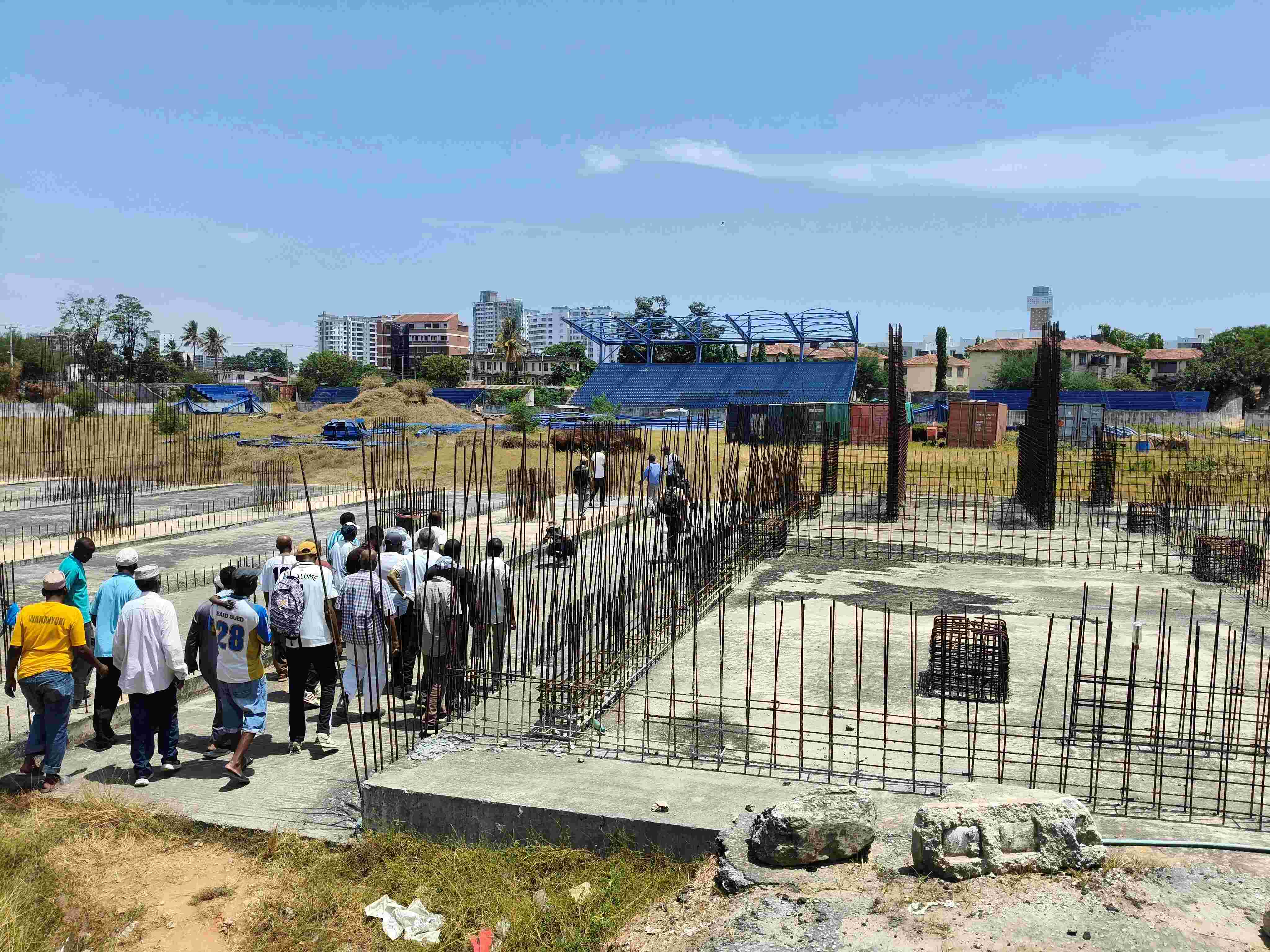
 Mombasa football stakeholders inspect the Mombasa county stadium on Monday / BRIAN OTIENO
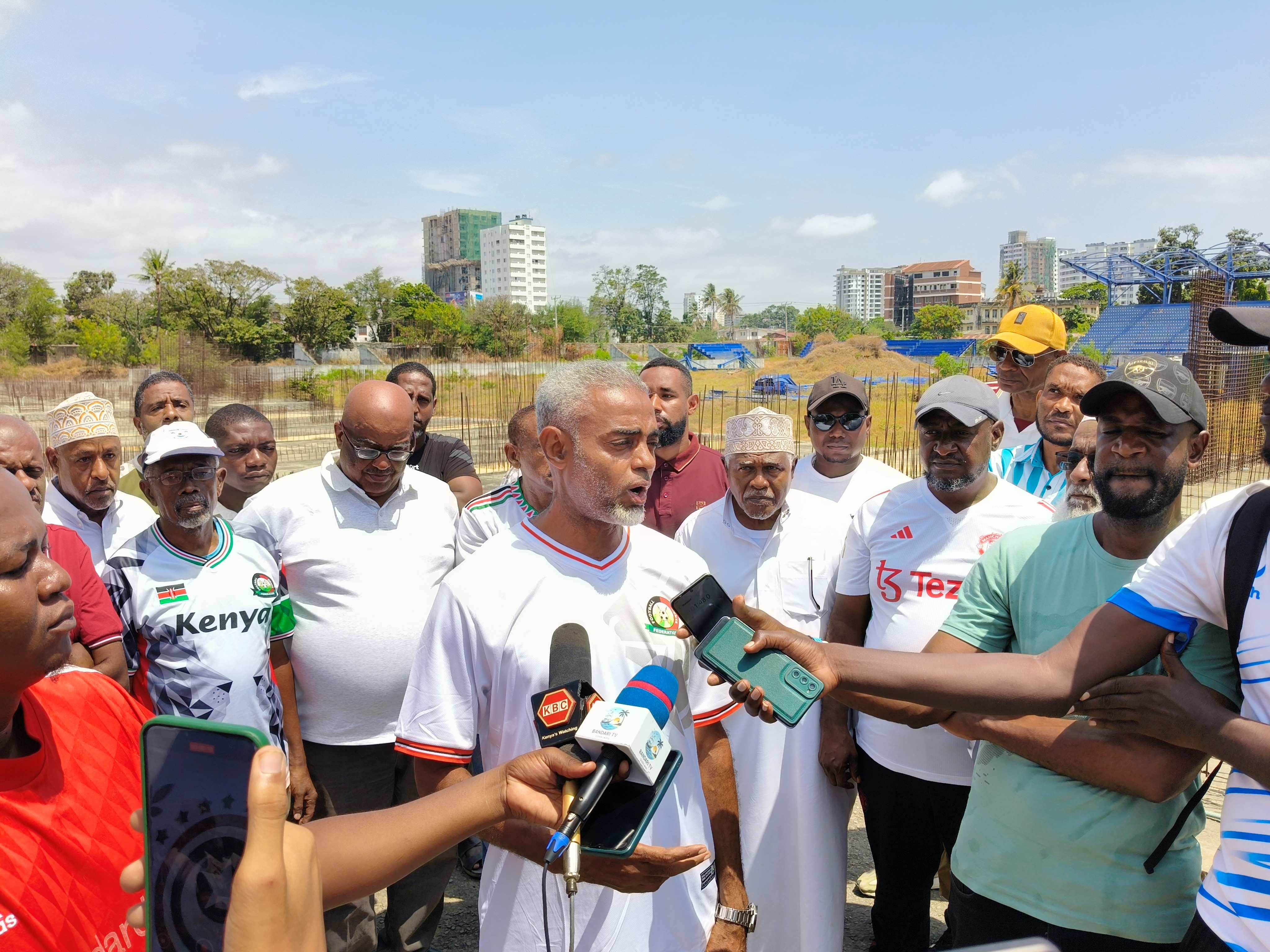 FKF Mombasa county chair Alamin Abdallah at the
Mombasa county stadium on Monday / BRIAN OTIENO
FKF Mombasa county chair Alamin Abdallah at the
Mombasa county stadium on Monday / BRIAN OTIENOFootball stakeholders in Mombasa have welcomed the
commitment from the national government to take over the reconstruction of the
Mombasa county stadium.
Led by FKF Mombasa county chair Alamin Abdallah,
the stakeholders linked some of the insecurity incidents in Mombasa to the
closure of the stadium.
Abdallah said Mombasa was peaceful and the bedrock
of football in the country but after the closure of the stadium, in 2015, and
the prolonged delay in its re-opening, most footballers lost hope and began
going astray.
“Some got into drugs, others got into crime, and
most are now six feet under having been lynched by the mob or gunned down by
police. We have lost potential footballers because of the closure of this
stadium,” the FKF Mombasa chair said.
He said when the stadium was in operation, cases
of drug and alcohol abuse and juvenile crime were little or unheard of.
He said youth were not idle as football offered
them a safe space to vent their frustrations and the county stadium was
available for them.
“In the whole of Kenya, the first stadium to be
constructed was the Mombasa stadium,” he said.
However, there is usually debate about this
statement as some quarters say the Bukhungu Stadium in Kakamega county, built
in the 1950s, is older.
However, the Mombasa Stadium
is highlighted as the only low-altitude, coastal, international-standard
facility in the country.
The iconic stadium was first closed for renovation
in 2013, with planned renovations stalling from time to time.
Following the initial
closure, there have been multiple failed attempts to rehabilitate the facility.
In 2015, it was
further closed and later neglected.
In 2018, then Mombasa
governor announced a Sh1.2 billion project to rebuild the stadium but this also
stalled before any meaningful rehabilitation was done.
So far, more than Sh1.7 billion has been gobbled
up by the stadium in renovation works whose results are yet to be seen over the
years.
On Wednesday, Governor Abdulswamad Nassir hosted Sports PS Elijah Mwangi and his Defence counterpart
Patrick Mariru and inspected the stadium, whose renovation stalled at about 35
per cent.
President William Ruto on Friday said his administration
has allocated Sh1 billion for the reconstruction of the stadium, whose
contractor will be on site in two weeks’ time.
He said the stadium will be ready for operation in
December.
On Monday, Abdallah
led coaches, referees and former players in hailing both the national and the
county government for agreeing to work together on the project.
“As Mombasa
residents, leaders of Mombasa and football players, we are happy with this
move. Millions of people have stepped on this stadium and to finally see light
at the end of the tunnel is something we are proud of,” Abdallah, a former
player, said.
Awadh Barafa, a
former football referee, said he has officiated more than 100 matches at the
iconic Mombasa stadium.
“I have also refereed
many matches across the country. The closure of this stadium hurt us so much
because many of our children got lost after that,” Barafa said.
He said many talents
have been lost to muguka and drugs following the stadium’s closure.
“After the President on Friday spoke about it, is
when we had belief that truly, this stadium will be revived,” the former match
official said.
He said they felt neglected whenever stadia were
either renovated or constructed across the country.
“We really thank President Ruto and Governor
Nassir that we have seen that truly this stadium is being done. But we hope it
is completed by December as promised so we can see our children go back to the
football pitch from the drug dens,” he said.
He said the bulk of the Harambee Stars players and
referees in the past were from Mombasa, but today, only about two or one are
usually from Mombasa.
Ali Kubo, a youth leader, said it is heartening to
see former players, referees and coaches happy about the potential roaring back
of the iconic Mombasa stadium.
“They are happier than the youth because they are
the ones who played in this stadium the most and are nostalgic about its
renovation,” Kubo said.
He called on the youth to now drop the muguka and
the hard drugs and get back to the football pitch.
“We had given up hope of ever seeing this stadium
function again. But now we see light at the end of the tunnel,” he said.
He said the renovation of the Mombasa stadium,
plus the planned construction of the Bububu Stadium in Likoni also by the
national government, and that of the Ziwani Stadium in Mvita and Mwahima
stadium in Likoni by the county government will ensure football talent is not
lost but nurtured.
Already, the county has advertised tenders for the
construction of the Ziwani stadium and the reconstruction of the Mwahima
stadium.
Khamis Baghazal, a former player and referee, and
now a youth football coach, said it is delight to see that the county and the
national government have heeded their cry after a long time.
“We were crying every day for this stadium, which
is not right. Our children should not see us cry, but they did. And when a grown
man cries, it is dangerous for the youth,” Baghazal said.
He said a good deed is always rewarded by another
good deed.
He said a playing ground is the most important
thing in football.
“In the 17 laws of the game, Law number one is the playing field, not even the football,” Baghazal said.