Today, the waitress in Melbourne and the
dockworker in Sydney own stakes in airports, ports and toll roads worth more
than 200 billion Australian dollars, outperforming the banks retail products.
In 1900, Canadian Alphonse Desjardins
opened the first caisse populaire using the savings of ordinary working
people.
A caisse populaire is a member-owned cooperative financial
institution, similar to a Sacco. From that modest beginning grew a cooperative
financial network that now anchors Quebec’s economy where the Caisse de dépôt, built
and operates the modern automated Montreal metro.
The worker’s dollar did not
remain forever trapped in passbooks and short-term loans but became railway
stations, rolling stock, fares and urban transformation.
Consider our own history. This country’s
schools, cattle dips, churches and dispensaries were built by harambee. Ordinary
people pooled their savings for infrastructure that the banks would not touch.
Therefore, the cooperative movement financing the nation’s hard assets is
certainly not a new phenomenon.
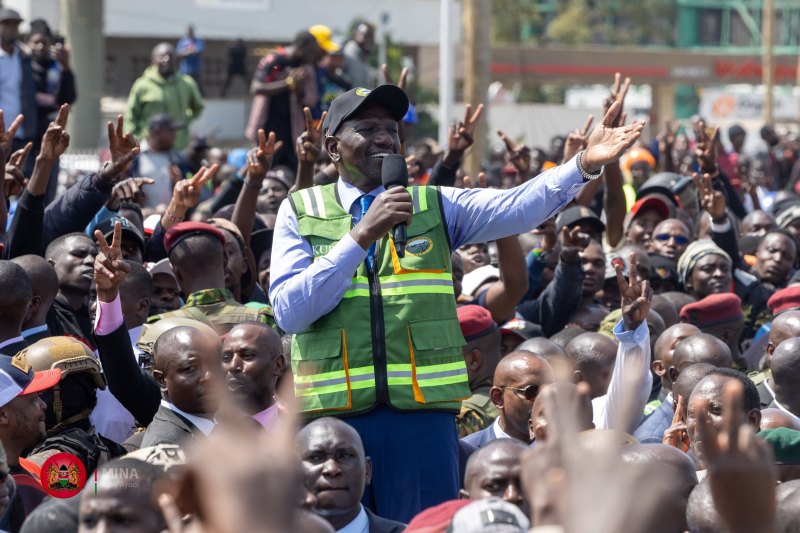
Last week, the Deputy President Kithure
Kindiki while speaking at the 104th National Ushirika Day celebrations, praised
the sector's milestone of surpassing Sh1 trillion balance sheet.
He stated that
cooperatives are strategically placed to support the government's flagship programmes
such as affordable housing and infrastructure.
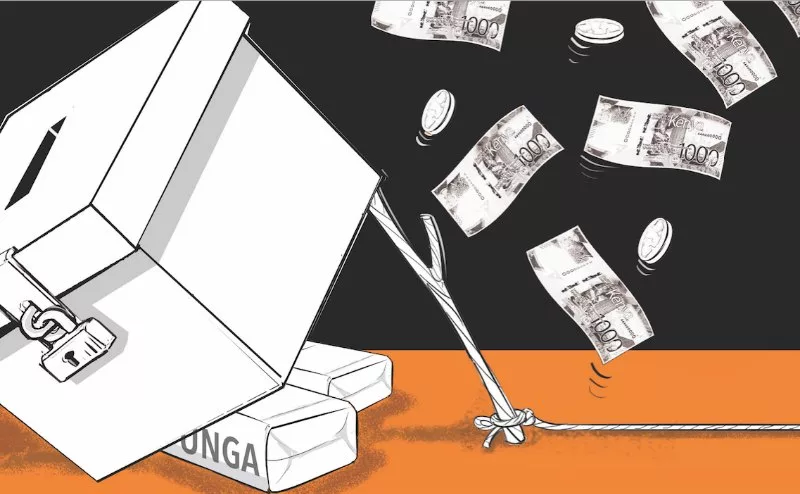
Soon after Kindiki’s remarks, a wave of
public anxiety spread across social media and Whatsapp groups, with claims that
the government intended to raid Sacco deposits to finance the National Infrastructure
Fund (NIF).
That claim has since been formally denied by the National Treasury,
the State Department for Cooperatives and NTV issued a public apology for
misreporting which contributed to the panic.
That clarification matters and is
precisely why this debate must be rescued from public panic. The debate should
no longer be whether the state can take Sacco deposits.
It cannot, and it
should not. It should be, can be cooperative capital, under voluntary, legally
protected and professionally governed arrangements, become part of Kenya’s
long-term infrastructure ownership model?
This underlying tension is easy to state
but equally dangerous to ignore. On one hand, the state increasingly sees
long-term domestic capital as national muscle that can help build the next
generation of hard assets.
On the other hand, the cooperative movement rightly
sees members’ savings as a sacred and liquid lifeline of the ordinary citizen,
not money to be gambled on state-led infrastructure.
Begs the question. Which side is right?
I submit that both are. The country should
not only rely on taxation, Eurobonds and donor benevolence for its development.
Equally, Sacco money is not idle cash nor abstract capital. It is the teacher’s
emergency loan, the nurse’s school fees, the police officer’s land deposit and mama
mboga’s working capital.
The cooperative movement must therefore not
simply hand over its money, but neither should it reject the idea outright. It should
first ask for clear rules.
First is consent. No Sacco deposit should
be compulsorily diverted into the NIF. Saccos are member-owned institutions and
their legitimacy rests on trust, liquidity and democratic control.
Any
participation in infrastructure must be voluntary and approved through proper
governance, investment policy, member representation and prudential regulation.
Second is liquidity. Sacco money responds
to life’s realities. A child falls sick. Fees are due. A business needs stock.
A farmer needs inputs before the rain.
Infrastructure, by contrast, is
long-term, illiquid and slow to mature. Hence, Saccos should only invest in
infrastructure through clearly defined investment funds, not from members’
short-term savings needed for loans.
Saccos are required by law to ensure a
strict firewall between the money needed to meet members’ immediate needs and
the money that may be used for long-term investments.
Consequently, they maintain
a minimum liquidity ratio of 15 per cent as pure cash or liquid bank accounts.
Third is commercial discipline. Not every
project called strategic is investable, and the fact that it is national does
not make it prudent because not every road is bankable, not every airport
expansion will pay for itself, and not every power project has predictable cash
flows.
A project suitable for Sacco-linked investment must have independent feasibility
studies, clear revenue streams, credible counterparties, enforceable contracts
and transparent risk allocation.
Fourth is insulation from the budget. The NIF
must not become a side door through which the state borrows from citizens savings
after exhausting other doors. Saccos must participate as investors, not as
lenders of last resort to a hungry Exchequer.
Their money must go into
ring-fenced projects, not recurrent expenditure or plugging holes.
The state must
put real skin in the game by transparently absorbing early risk through disclosure
of privatisation proceeds, development finance, guarantees, first-loss capital
and project preparation funds.
Fifth is transparency. The cooperative
movement should demand a public project pipeline, published expected returns,
exposure limits and independent valuation.
It should know whether it is
financing a road, a power line, a water system, or a port facility. It should
know the tariff, the off-taker, the concession period, the construction risk,
the operator and the exit option. In infrastructure, secrecy is usually the
beginning of loss.
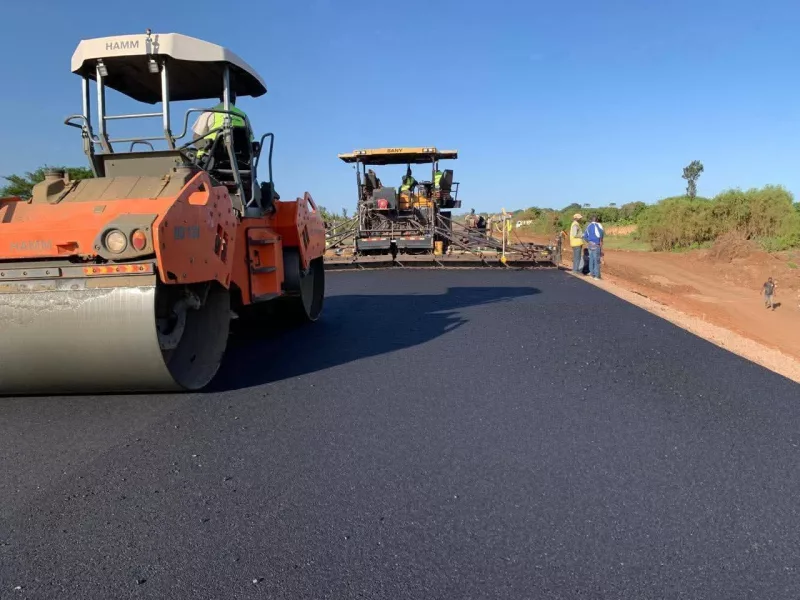
Sixth is representation. If cooperative
capital is to help build national infrastructure, the cooperative movement must
not be treated as a passive wallet. It needs a seat at the table where
investment policy is shaped, risk is priced and performance is reviewed.
Saccos
should not only be summoned when money is needed and dismissed when decisions
are made. However, representation
must also come with capacity and accountability.
Cooperative leaders who make
these decisions must be properly trained by accredited and recognized
institutions in investment appraisal, risk management and fiduciary
responsibility, and there must be clear accountability measures to ensure that
financial decisions are made prudently and transparently.
Seventh is fairness of return. Sacco
members should not be asked to accept lower returns because the project is
patriotic. Patriotism does not pay dividends.
Cash flow does. If infrastructure
is productive, it should reward those who financed it, and if it cannot, it
should not be sold to them as an investment.
This has been the missing language in much
of our public debate. We speak as though domestic capital is either a cow to be
milked or a child to be protected from all risk.
It is neither. Domestic capital
is a national instrument that must be professionally governed. The morality
lies not in the shilling but in the structure.
But there is a deeper point in all these. Citizens’
savings already finance the state indirectly when banks buy government securities,
pension funds buy government paper and insurance companies invest in public
instruments.
The difference with the NIF, if designed properly, is that the
citizen’s money would not merely finance debt. It would own productive assets
and move from passive lending to active participation in national wealth
creation.
Done properly, this could become one of
the most important ownership reforms in Kenya’s history. Imagine matatu and
boda boda Saccos owning 25 per cent equity stake in the express way. For
context, for the financial year ending June 30, 2024, it generated Sh4.6
billion in gross revenue.
At 25 per cent, that translates to Sh1.15 billion gross
revenue and about Sh575 million net profit. This would not be the state raiding
savings.
It would be citizens converting savings into productive assets that
serve their own lives. This is why the cooperative movement should not run away
from this conversation.
And it would change politics too, because
ownership changes the citizen’s relationship with public assets. A citizen who
owns part of a road through a Sacco no longer sees that road only as something
government has built somewhere far away.
They see it as an asset whose
condition affects their own returns. They therefore care whether it is
maintained, whether tolls are fairly collected, whether contracts are honoured
and whether corruption is eating into value.
In this way, ownership disciplines
citizenship because the success or failure of the asset is no longer abstract.
It touches their own pocket.
I concede that the danger must not be
minimised. Kenya has a long habit of taking noble ideas and feeding them into
weak institutions where funds become slush funds, boards become reward centres,
public participation becomes theatre, contracts become secrets, losses become
public, while gains become private. This is why the NIF must be more
transparent than required, more conservative than expected and more accountable
than politically convenient. When its oversight and governance is credible, Saccos
will not need to be bullied or seduced with slogans. Money is shy. Member money
is even shyer. It follows confidence, not command.
Finally, my unsolicited advice is to the Saccos.
You must grow beyond the comfort of short-term lending alone.
Your historic
mission was never simply to circulate small loans among the excluded. It was to
give ordinary people economic power. In the 20th century, that meant
school fees, land, houses, dairy coolers and farm inputs.
In the 21st
century, it must also mean energy, logistics, digital infrastructure, housing and
water assets. The poor do not become wealthy by saving forever in low ambition,
but when their pooled capital enters the commanding assets of the economy.
It
always seems impossible until it is done – Nelson Mandela


 Trans County Illasit-Njukini -Taveta Road. If cooperative capital is to help build national infrastructure, the cooperative movement must not be treated as a passive wallet /FILE