My pet area revolves around democracy, governance, and alleged police
excesses - so-to-speak.
Every day, or now and then, we are treated to media comparisons on how
Kenya is “denigrating” democratically. And of recent, on how exercising our
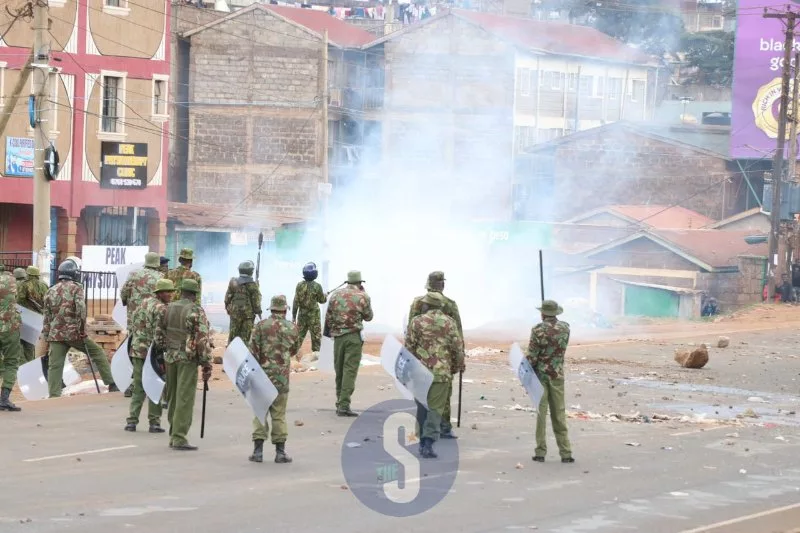
Article 37 still showcases tough policing tactics.
And then we readily draw comparisons, both globally and regionally, on
how badly we are sliding down south.
But we forget about the hard facts. Truth or facts, anyways, is, and
remains stubborn!
Just a day or two prior to the demos, one of our opposition politicians
made her way to a neighbouring country, not to tour, or just any other meeting, but in pursuit of
a human rights obligation in support of a top political figure in that country
facing criminal charges.
Outcome? No entry. In fact, a possible ejection, if not outright
deportation was a possibility. She was treated as a persona-non-grata for pursuing
the very basics of rights enjoyed here: right to representation.
A day or two later, the very politician, back home - Kenya, was seen
happily, and gleeful on television in company of compatriots, and under
friendly police escort, to fulfill yet another local human rights obligation
under our constitution. This was in exercise of Article 37.
No ejection. No police harassment. Even wreaths were laid. The very
leader even congratulated the police publicly for not only providing her with
security, but having allowed her pass through a road barrier the very morning
on her way to take place in a public demonstration.
Such only happens in not only functional democracies, but in beacons of
one.
And that’s what Kenya is, fortunately.
Then a day or two later, I went through the print media. All the
headlines screamed: ‘Gen Z, Roadblocks, Arrests and Tears’ - (Weekend Star), ‘Total Lockdown’ - (The Standard - Friday), ‘Brutal Police’ - (The Saturday Standard), Lockdown’ - (Daily Nation - Friday).
I was confounded! I wasn’t sure if what I had seen on TV the previous
day was a reflection of what the very media was later reporting in print! And
if it also compared - remotely - to our regional geopolitics, or even beyond?
No mainstream coverage was even given to the CS for Interior’s presser the same evening,
accounting for the day’s events. Also various positive TV coverage on positive
police response were ignored. Even assertions by opposition political leaders
who were happy with police performance were berthed clear.
This simply fell short of objective reporting. In academia, it was
polemic, a cardinal sin in critical writing!
I have had the privilege of serving at the UN headquarters within its police docket as a policy expert
supporting fragile countries. And in all failure stories, or those emerging from conflict or even
still under fragility, the bare minimum was and remains the role of effective
police institutions and policing function as a whole, and its targeted
contribution towards effective governance for a healthy and prosperous
nation.
On this, there is no compromise.
Many lessons were drawn and learned from my then work experience. But
chiefly, that police agencies aren’t perfect. And won’t either be, or pretend
to be altogether. Why? Because police are collectively a direct image, or a
mirror of general society, which unfortunately, remains imperfect, too.
“Garbage in; garbage out” is the fitting mantra.
Secondly, weak and undermined police governance leads to lawlessness and
eventual anarchy. This leads to either fragility or outright conflict
situations. But strong policing holds the centre of governance tight, hence
peace and prosperity.
Police are modelled, just like other institutions. And by and large, by the people and
societies that they police, not just the governments, conventions, laws or
rules. The latter are all important, but form just part of the equation. You
don’t simply hate the police - bearing in mind the complexity of their role -
and then expect them to play Angel Michael. Something must give!
And you also don’t simply exercise a fundamental right to demonstrate
under Article 37 at the expense of others, and expect police to be clueless, or
even cheerleaders or bystanders. They too got a constitutional obligation to
fulfill for their paycheck.
Indeed, what the police do as intervenors in conflict situations is
exactly what every citizen ought to do: defend themselves, and others lives and
properties collectively within their communes.
But since not everyone can
dedicate their resourceful time to this tasking due to pressures and realities
of life, they therefore willingly donate the responsibility with commensurate
resources to a select few - police - as their agents of peace and order on
their behalf.
This is basic science of police studies. It’s where police derive their
powers to not only keep the peace, but utilise coercive power, including utility
of violence.
Police must be designed, build and supported too by all to be strong and
effective.
We all live for live. And we all live to own property. Threaten these
two cardinal objectives, and you challenge the very fabric of mankind: right to
live and right to own property.
Meaning, no further motivation will be there to live for; no inspiration
and aspiration towards property ownership.
Some countries know this - just too well - and take it a notch higher to
defend and safeguard their statehood from decay caused by impunity and
ignorance. That’s why you won’t be given ingress into such countries, once
profiled as a rabble rouser - whatever their definition of such - or even when perceived
a threat to their national security. Every state has its own past security
history and experiences, after all, and consciously design befitting measures
for its preservation into the future.
This is well reinforced by a Kenyan on social media who recently vowed
never to travel abroad again. Reason? Due to a bad experience he encountered
when he travelled abroad.
Upon entry, he was picked from the line, isolated,
manhandled, and humiliated. Why? Just for the simple reason that his passport
had visa entries to other countries ‘perceived’ as “unfriendly” to the one
being visited.
These are some of the tough law enforcement security measures -
uncomfortable as they may appear - but understandable nonetheless for being of
national security necessity to individual countries and based on their security
realities and corresponding countermeasures.
They form part of universal
policing doctrine. And the overriding factor here is intelligence on hand to
guide law enforcement interventions and tactics applied.
This therefore speaks of one thing: that security is key, paramount, and
a baseline feature on how a state either succeeds or fails. It’s the very
cornerstone of statehood.
It thus calls for a public reflection on our Kenyan security regime with
sobriety and patriotism for a fuller appreciation of our security needs and
measures. Ours, comparatively is the best regionally, and measures well
globally, if not hopeful, and progressive in the future.
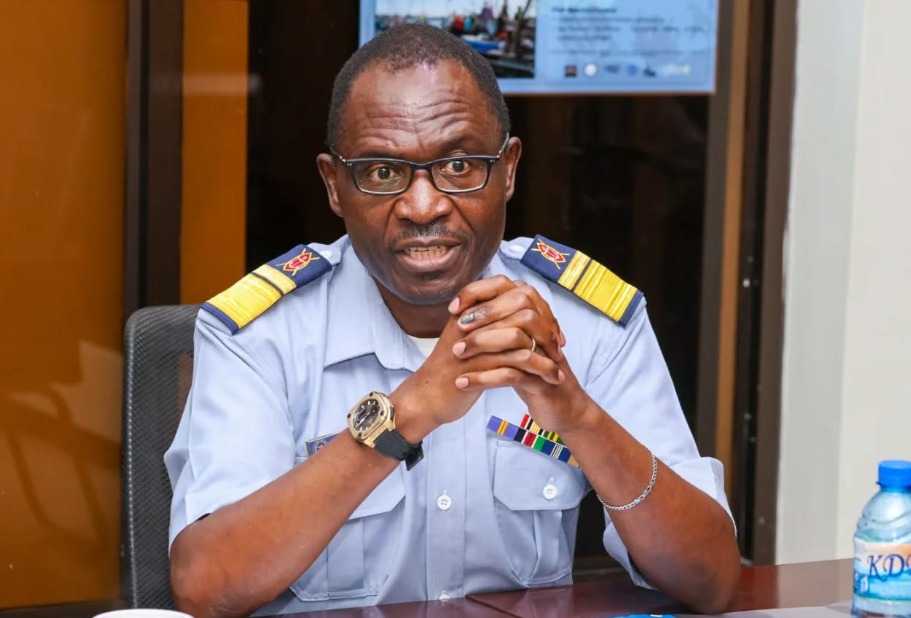
The writer is the director-general of Kenya Coast Guard Services and former
coordinator - Serious and Organised Crime Team, UN Police headquarters