Where
I come from, there is a common saying that goes something like “when the entire
village consistently brands you a witch, you must work on the habits that make
them see you as such, rather than going door to door trying to prove innocence”.
Public perception, as it turns out, isn’t something one can beat out of people,
without finding moments for introspection and self-assessment, so as to
confront the difficult questions of character flaws and failures.
The
media has never been a very good friend of political leadership, since time
immemorial. It has to do with the fact that the media will tell the stories
that the court jesters and palace sycophants who surround powerful leaders
wouldn’t.
When the king is naked, trust the media to report it. It is not for
nothing that celebrated British war-time leader, Winston Churchill, once
remarked that “A free press is the unsleeping guardian of every other right
that free men prize; it is the most dangerous foe of tyranny”.
Within
the past two weeks, two incidents within the East African region have shone
focus on the continued difficult relationship between political power and the
press.
The first was a bizarre exchange between President William Ruto and one
of the leading media houses in the region, the Standard Group.
Using his X
handle, the President castigated the media house for constantly running
sensational headlines against him and his administration, daring the group to
“do its worst”.
As
if to ensure he added a touch of politics to the matter, Ruto tagged former
Baringo Senator Gideon Moi, the supposed majority shareholder of the Standard
Group, to the controversial tweet, in which he asked the media house to go
ahead and graduate from mentioning seven days a week to “eight days a week”.
The group promptly responded by taunting the head of state with an “eight days
a week” headlines’ notice on their social media pages.
The
head of state had obviously been stung by the Standard Group’s two-day
documentary earlier in the week, in which it had exposed a long catalogue of
Ruto’s undelivered promises over the period of his presidency.
As with that
saying from my village about being branded a witch, I expected that the
President and his communication team would pick each item from the documentary,
proceed to explain to the public the genesis of each promise and give an
overview of where each project mentioned was “at the time of going to press”.
Instead, Ruto reacted as if these accusations were not already within the
realms of public discourse, or as if they would just go away on their own.
Before
we could process that one fully, news broke that Uganda’s military chief, and
President Museveni’s son, Muhoozi Kainerugaba, had sent a military detachment
to shut down Nation Media Group’s Kampala operations.
I consider myself some
sort of military historian, but I have never taken Gen Muhoozi seriously.
Indeed, the mere fact that he attended Royal Military Academy, Sandhurst, which
holds absolute place of pride for any officer who has had the privilege of being
commissioned there, and is one of the finest officer cadet schools in the
world, is a serious disconnect from the temperament and manners of the UPDF
chief.
No
military worth its salt targets civilians. It is universally acknowledged that
the more any military delves into politics, or uses force on unarmed civilian
populations, the more there is a psychological degradation of its moral and
ethical standings, as well as its discipline.
In recent months, the UPDF, under
the leadership of the “tweeting General”, has degenerated into a force whose
special forces are seen chasing unarmed politicians and now, the press. It can
only be downhill from here.
You would be forgiven if you expected President
Museveni, an avowed revolutionary and typical military man, to do more to
improve the image of his army as a professional outfit, among the community of
nations.
There
is growing evidence of discomfort, among the leaders of the East African
Community, with the emerging generation of young, enlightened voters who do not
easily bend to the whims of authority.
Recent electoral processes in Kenya,
Uganda and Tanzania, point to the rise of an axis of repression, which seeks to
manipulate public view, limit freedoms and determine the destiny of the nations
from within tiny rooms. And the press, since it is the watchman who never
slumbers, isn’t a partner they fancy much.
Interestingly,
there is not much that mainstream media says these days that you wouldn’t find
already trending on social media.
Besides, liberalisation freed the people from
the echo chambers created by state broadcasters, nearly a lifetime ago, when
national media houses like the Kenya Broadcasting Corporation, would have their
premises heavily guarded by elite police units, because they represented the
only voice that the folks in power wanted all of us to hear.
To imagine that
one can influence public perception by shutting down media houses or beating
citizens into submission, in the year of our lord 2026, is rather naïve.
In
June last year, the government of Kenya temporarily disabled the transmission
signals of at least four independent media houses in the country, to prevent
live coverage of anti-government protests marking the first anniversary of the
June 2024 Gen Z riots.
Before that, in January 2018, the state had also moved
to shut down the transmission signals of several media stations, to stop the
live coverage of the “swearing-in” of then opposition leader, Raila Odinga, who
had disputed the 2017 election and moved to swear himself in as the “people’s
president”.
The
idea behind shutting live transmission is based on a belief within government
networks that the 2008 post-election violence, which ravaged the country
following the disputed 2007 election, was inflamed in no small measure by live
coverage of events across the nation.
However, the school of thought that
relies on “not seeing” as perceived cover for citizens’ ignorance, doesn’t
address the gap caused by information gaps that may unwisely be filled by large
scale misinformation, creating the exact same scenario it intended to avoid in
the first place.
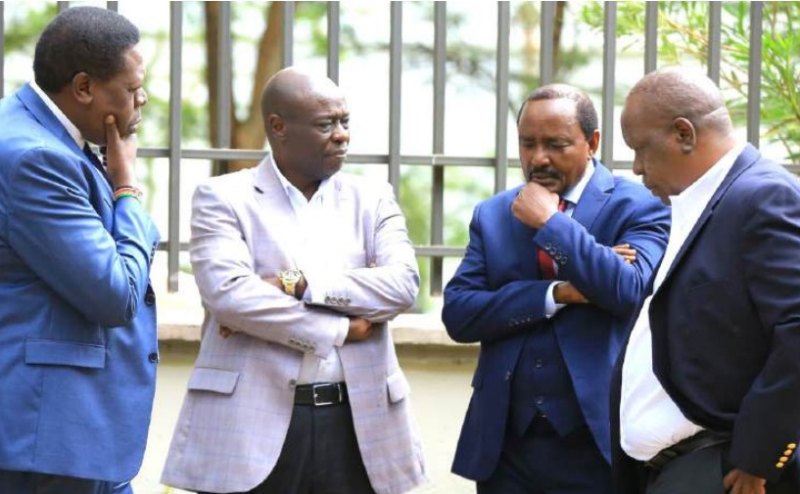
The
leadership in the region lives in the past. The days when freedoms were
curtailed and press freedom a mere mirage are fast coming to an end. What the
leadership needs to do is to be accountable over the accusations levelled
against them in the press.
That shouldn’t be that hard. Repression of the press
amounts to failure to acknowledge the democratic gains, however little, made in
all the said countries.
Additionally, the young people who now protest on the
streets are not beholden to our parents’ virtue of patience and will not
necessarily be intimidated into silence.
As
for President Ruto, I still hold the view that he makes it easy to be a target
of media attacks by being everywhere all the time, making unending decrees and
promises.
Any Kenyan with a smartphone can simply revisit any of his past
functions and speeches and run into some random promise to the electorate,
which remains unfulfilled.
Perhaps it is time State House itself compiled an
entire list of all public promises of development made by the President and
updated each, detailing the progress and completion status of each.
It would
advance the regime’s course more than vicious exchanges with media houses or
subtle threats.
The problem is not the media. The guys in power just need to
invest in mirrors.

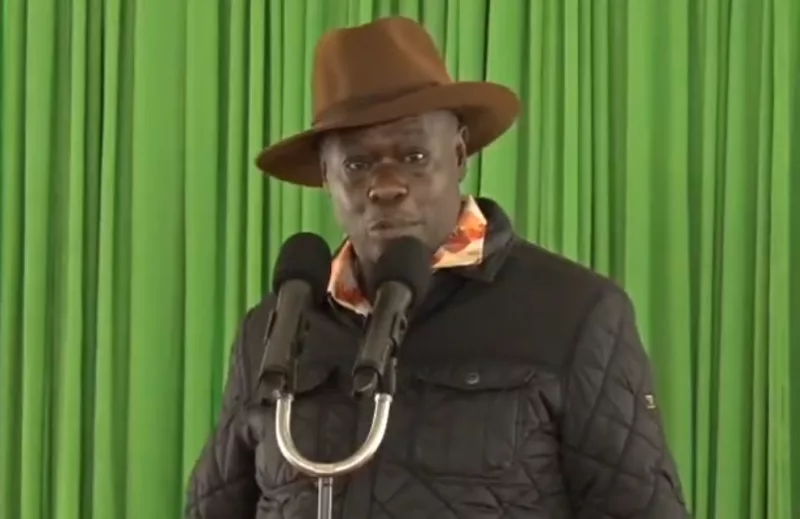
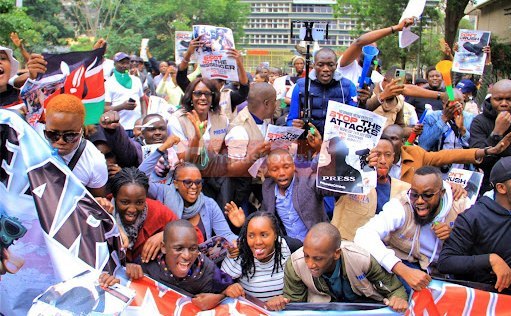 The leadership in the region lives in the past. The days when freedoms were curtailed and press freedom a mere mirage are fast coming to an end /FILE