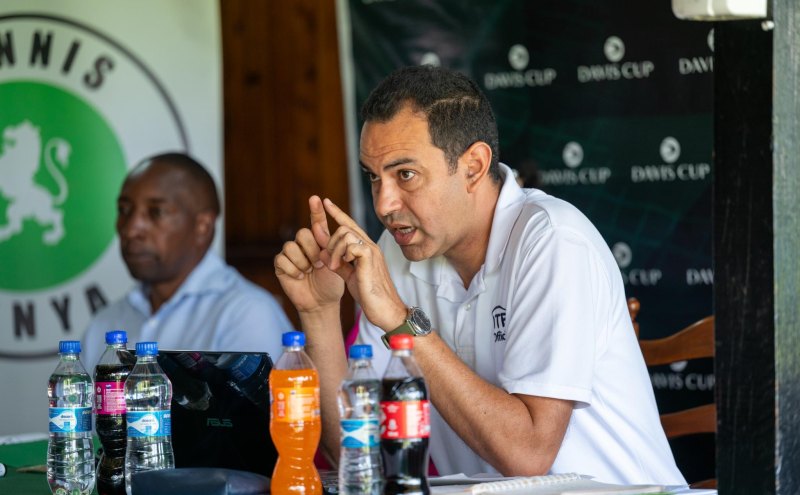
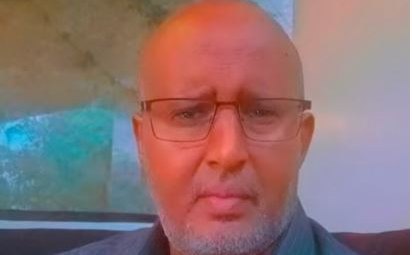
 Hon Hajir Dahiye, governance and political analyst, former CEC Garissa County and current MCA for Abakhaile ward./HANDOUT
When talk turns to the Somali-inhabited lands of the Horn of Africa, the conversation has too often been dominated by conflict, clan feuds and instability. But nestled within the federal structure of Ethiopia lies a territory quietly rewriting that narrative: the Somali Regional State.
This region, the second largest in Ethiopia after Oromia, is nearly half the size of Somalia. It is larger than Djibouti and larger than Kenya's northeastern region, where Somalis predominantly live. Its central geography bordering Somalia, Djibouti, Somalia proper and Kenya means that whatever happens here inevitably ripples across the entire Somali-speaking world.
For decades, that influence was negative. This territory was a tinderbox: a hotspot for conflicts among Somalis and between Somalia and Ethiopia and a source of cross-border instability that spilt into Kenya. Today, that same territory is emerging as an unexpected anchor of peace, development and self-governance – a shining beacon of hope for Somalis everywhere.
A region transformed
Having visited the Somali Regional State eight times between 2003 to 2025, I have witnessed the change firsthand. The dusty, tense frontier town of Jigjiga is now a bustling hub of tarmacked roads, booming tourism and diaspora-led investment. Well-educated Somalis from Europe, North America and the Gulf are returning in droves, bringing capital and vision.
At the heart of this transformation
is His Excellency Mustafa Mohammed Omer, the regional president. I have met him
three times. Twice at his presidential palace in Jigjiga and once in Nairobi
during an official visit. I have also hosted the region's vice president and
ministers here in Nairobi, where they promoted Shabelle Bank, a regional
state-owned financial institution.
A student of pragmatic federalism
President Mustafa's approach to governance did not emerge in a vacuum. He is a clear product of Ethiopia's new political era under Prime Minister Abiy Ahmed, the 2019 Nobel Peace Prize laureate whose vision of "Medemer" (synergy) has sought to hold Ethiopia together through devolved power, dialogue and economic pragmatism.
Where Abiy has championed a federal system that grants regions significant autonomy while maintaining a strong national framework, Mustafa has applied that philosophy directly to the Somali context. He is, in many ways, a diligent student of the prime minister's model taking the tools of cooperative federalism and using them to heal one of Ethiopia's most historically restive regions.
Mustafa is widely read, globally exposed and deeply strategic. His approach to peace is consultative, not coercive. He has assembled a young, educated, visionary cabinet moving away from the old politics of conflict mobilisation toward service delivery, transparency and economic development. This mirrors Abiy's own emphasis on replacing confrontation with conversation.
What self-government looks like
The Somali Regional State does not control its own currency, defence, foreign affairs, or national airports. Those remain with Ethiopia's federal government. Passports, birth certificates and ID cards are also issued by national authorities, though regional offices facilitate the process. Under Ethiopia's 1995 Constitution, regional states have powers over internal security, police, economic development, land administration and education, among others.
Beyond those federal reserves, however, the Somali region governs itself. Ministries publish their budgets, projects and programmes on public boards, a level of transparency rare even in many wealthier jurisdictions. Major roads are being paved. Agriculture is expanding, including large-scale irrigation projects along the Shabelle River. Mining is underway. Under a plan announced by President William Ruto in February 2026, Mandera and Wajir are set to be connected to Ethiopia's national grid. This will be a long-term solution for lack of connectivity to Kenya’s national grid and is expected to bring cheaper, reliable electricity to the border region and potentially power new industries, including those owned by Kenyan Somalis.
Peace has ripple effects
The stability of Ethiopia's Somali region has directly calmed Kenya's northeastern frontier. For years, instability in this area fueled cross-border raids, arms flows and refugee movements into Mandera, Wajir and Garissa. Today, that dynamic has reversed. According to the UN Office for the Coordination of Humanitarian Affairs (OCHA), cross-border conflict incidents between Ethiopia's Somali region and Kenya dropped by over 60 percent between 2018 and 2024, correlating with the peace initiatives led by both Addis Ababa and Jigjiga.
As one Kenyan security official told me privately: "When Jigjiga is quiet, Mandera sleeps well."
The death of the five-star dream
For generations, Somali nationalism was animated by the "five-star flag" representing British
Somaliland, Italian Somalia, French Djibouti, the Ethiopian Somali region and Kenya's Northern Frontier District. The goal was political unification. That dream, I argue, is now not only unrealistic but counterproductive.
Instead of chasing a unified Somali state that no external power will accept, Somalis should embrace economic integration, peaceful coexistence and full participation in the countries they live in. The African Union's border protocol maintains the inviolability of colonial borders (uti possidetis juris). No AU member state has shown any appetite for redrawing the Horn's boundaries.
I strongly disagree with those still advocating for the five-star dream. It is dead. Let us respect the borders we have, however unfair they may seem and build on what exists. Let us integrate fully and lead.
A future of somali presidents in kenya and ethiopia?
That may sound audacious. But consider the Somali Regional State has shown that a federal unit can be stable, transparent and economically dynamic under Ethiopia's existing constitution. In Kenya, President William Ruto's administration has shown increasing responsiveness to Somali community interests. The recent developments in northern Kenya signal that Somalis are no longer marginal players.
Why not a Somali president in Ethiopia within 10 or 20 years? Why not in Kenya? These are questions Somalis must ask themselves — and prepare for through education, benchmarking and political engagement. After all, Prime Minister Abiy Ahmed has already demonstrated that Ethiopia is ready to elevate leaders based on competence and vision, not origin. President Mustafa's rising profile within the ruling Prosperity Party suggests the same path is open to Somalis at the federal level.
I have met all three governors of Kenya's northeastern counties. They have visited Jigjiga. But have they taken their executives and MCAs to learn how the Somali Regional State manages internal self-governance, resource allocation and public transparency? That is the next step and I strongly advocate for such exchange visits.
The Somali Regional State is no longer a source of war; it is a source of lessons. From the banks of the Shabelle to the streets of Jigjiga, a new Somali story is being written. It is not a story of breaking countries apart, but of building communities within them. It is not a story of flags and irredentism, but of electricity, agriculture, industry and accountability.
Credit is due not only to President Mustafa but also to the federal framework created by Prime Minister Abiy Ahmed; a pragmatic leader who has empowered regional states to succeed or fail on their own governance. Mustafa has proven himself an apt student of that model. The results speak for themselves.
Let other Somalis in Kenya, in Somalia itself and in Djibouti come and see. The beacon is lit. The question is who will follow its light.
The writer is a governance and political analyst, former CEC Garissa County and current MCA for Abakhaile ward.