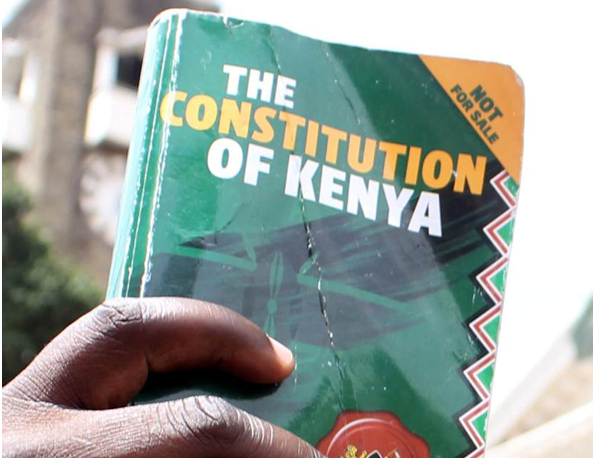
I have pointed out how the constitution tries to ensure that certain institutions and officers are independent, particularly of political influence. The techniques include clear statements that agencies must be independent, prescribed methods of appointment and protection from dismissal except for serious offences and by a strict process. Judges’ benefits cannot be reduced while they hold office. And the Judiciary is supposed to have more control than most institutions over its own finances.
We know that Kenyans do not greatly trust public institutions. Corruption is a main cause of lack of trust rather than lack of the constitutionally required independence. One recent Afrobarometer survey found that about 44 per cent of Kenyans trusted Parliament to some extent, 50 per cent trust the courts,and 36 per cent the police – and the same percentage trusted the IEBC.
I want to explore why independence is not fully realised.
Financial independence
To require that Parliament allocate “adequate funds” to commissions and independent offices is one thing – to ensure it happens is another.
Who is to determine what is adequate? Courts are not best equipped to make such a decision. It is normal here, as in most countries, for agencies not to get everything they ask for, except, here, for State House, and Parliament - which makes the final decision. And agencies also no doubt ask for more than they know they will get.
Interestingly the Institute of Certified Public Accountants of Kenya has said, “the [Auditor General’s] office's budget is negotiated with officials of the National Treasury. [T]his could lead to unwarranted pressure on the office and result in the withholding of necessary funds thus comprising its independence.” They recommended that the Auditor General’s budget estimates go straight to Parliament, as with our Judiciary.
In 2024-5 the Auditor General’s office says it, “was allocated Sh8.2 billion against our requirement of Sh10 billion, translating to a funding gap of Sh1.8 billion. This, together with delays in exchequer release affected the implementation of planned activities.”
And the Judiciary, in the same year, “was allocated Sh22.78 billion against a requirement of Sh44.90 billion, leaving a funding gap of Sh22.12 billion (49 per cent). … The funding deficits …had a far-reaching implication on the Judiciary’s ability to deliver on its constitutional mandate.” So even going directly to Parliament does not guarantee adequate funding.
Weak appointment processes
The main example
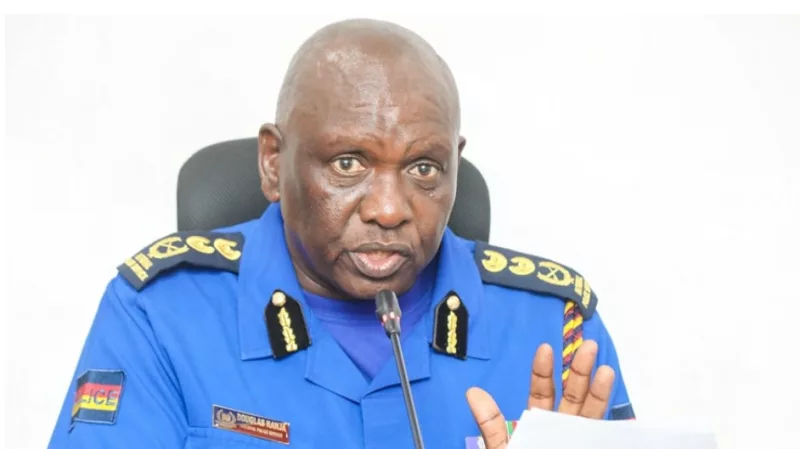
here is the appointment of the Inspector-General of Police who is “appointed by
the president with the approval of Parliament”. Yet he is supposed to exercise
“independent command” of the police. This is the weakest of all constitutional
appointment systems. Appointment to the (independent) National Police Service
Commission is similar; however, the relevant Act requires a separate nominating
panel, but still appointed by the president.
This takes us to another issue.
Parliament as a weak link
Parliament (here meaning the National Assembly only) must approve every budget allocation – except for charges on the consolidated fund. And they approve various appointments including of members of independent commissions and independent officers (the Auditor-General and the Controller of Budget and the Director of Public Prosecutions and the IGP) as well as certain non-independent offices like Cabinet Secretaries and ambassadors.
They are clearly
supposed to represent us, the people. But all too often they seem to represent
themselves. They are supposed to be a counter-weight to the president – but
tend to be too subservient to the president. This idea of the legislature
approving appointments comes from the US Constitution. It belongs to a time
when parties in the modern sense did not exist.
Yet Parliament finds a lot of money to allocate itself. In 2012-13 the allocation to the Judiciary was Sh12.16 billion and to Parliament was Sh14.54 billion. Ten years later the Judiciary got Sh18.9 billion while Parliament was allocated Sh50.2 billion (admittedly the Senate which came into effect in 2013 would have added to Parliament’s expenses – but the Judiciary has enormously expanded, too).
The hostility to others’ independence, and the self-interestedness of at least some MPs, was shown when one said of Sarah Serem, former chairperson of the Salaries and Remuneration Commission, after she had been vetted to be an ambassador, “I am happy today that she knows the role of an MP - that an MP can give or deny you a job.”
Political pressure
Of all the constitutional commissions the IEBC has the least public confidence in its independence. We know why. In his 2019 study of ‘State Capture: Inside Kenya’s Inability to Fight Corruption’, Wachira Maina said: “ensure that the electoral management body is compromised” as the first “capture technique”.
I don’t want to indulge in speculation or accusation about the commission. The current commission must have already begun to experience the huge pressure they will be under from now until August next year. It is arguably unfortunate that the appointment process has twice led to the chairs being the object of suspicion before even taking office. The last because he was the second choice of the nominating panel but chosen by the President to chair, and the current one because he has been an associate of the current President. It’s said “Justice must not only be done but must manifestly be seen to be done”. The same is true of independence and the trust it is supposed to generate.
Executive actions
In various ways the Executive arm of government has undermined independence or at least the appearance of independence. Uhuru Kenyatta did when he appointed a Director of Public Prosecutions, Keriako Tobiko, to be a CS about a year before his existing job came to an end. How could future holders of independent offices not think “maybe if I please the President, I shall have a nice job when this one comes to an end.”
Another deal has undermined the notion “independent office or body”: when the IEBC was persuaded to resign en masse in return for a generous retirement package, in 2016.
The Executive’s refusal to recognise the limits of their powers over the police is another example. In a case last year about the Gen Z protests, the judge found it necessary to say “Any action by the [IGP] at the direction of the [CS Interior] or any other person …, is a gross violation of the express provisions of the constitution that would make him liable for removal from office under Article 245(7).”
Resentment
between bodies
The creation of the National Land Commission (an “independent body”) was intended to limit political interferences – or interference by politicians - with land. Relations between the NLC and the Ministry of Lands over who had power to do what became so fraught that a case went to the Supreme Court.
Sometimes the relationship between the two “independent” organisations, the Ethics and Anti-Corruption Commission and the ODPP - that should be working together to deal with the scourge of corruption - has deteriorated into a slanging match over who is doing a good job of investigating and preparing cases for court.
The NPSC was modelled on an agency in the independence constitution that appointed the police – even the Inspector General. Yet last year the police and the commission locked horns in court over who appointed police officers as such. This case is currently before the Court of Appeal.
Whose responsibility?
The people whose interference was supposedly excluded by constitutional independence of others have no interest in respecting the constitution. The main responsibility must rest on those who have that independence.
It was particularly sad, therefore, to read that the National Assembly Speaker has said he has been given appointment letters by the Teachers Service Commission and the NPSC to distribute. This is a clear abdication by these constitutional bodies of their constitutional duties.
Jill is a retired law teacher and member of the Katiba Institute Board. The author writes in her personal capacity