When analysts speak of the war between the United States and Israel
against Iran, they often speak the language of
deterrence, nuclear thresholds, missile ranges and regime change.
They debate
red lines, strategic depth and regional balance of power. But beyond the
strategic maps and televised briefings lies another reality: the lived experience of ordinary
Iranians whose daily struggles rarely make global headlines.
Long before the first missiles flew in this latest escalation, ordinary
Iranians were living under the weight of
sanctions and economic isolation. After the unravelling of the 2015 nuclear
deal - the Joint Comprehensive Plan of Action - the
reimposition of American sanctions deepened Iran’s financial crisis. Oil
exports, once the backbone of state revenue, plummeted. Access to international
banking systems shrank. Foreign investment evaporated.
The effects were felt in the marketplace rather than in policy rooms.
The Iranian currency, the rial, lost much of its value. Inflation surged, often reaching punishing
levels. Prices of bread, meat, rice and cooking oil rose faster than salaries. Young
professionals found their degrees worth little in a
shrinking job market. Families sold possessions to make ends meet. War compounds this
fragile economic reality.
Military escalation narrows whatever limited channels for trade
still exist. Insurance premiums rise. Shipping routes grow uncertain. Sanctions tighten further.
For the state, defence spending becomes urgent; for citizens, wages lag farther behind living
costs. The macroeconomic consequences translate quickly into micro-level pain.
Iran is not a passive society. It is a country with a deep civilisational
history and a strong sense of national pride. Many Iranians, even those critical of their
government, resent foreign attacks on their soil.
Bombs that fall in Tehran or near nuclear facilities are not seen as abstract
strategic gestures but as humiliations and violations of sovereignty.
At the same time, there exists a parallel sentiment - quiet but
powerful - of frustration toward domestic
leadership. Over recent years, protests have erupted over fuel prices, women’s
rights, corruption and economic hardship. Many demonstrators have argued that
the state invests too heavily in regional proxy conflicts while neglecting domestic welfare.
This duality defines much of the Iranian public mood: opposition to
foreign intervention alongside dissatisfaction with internal governance. In times of war,
however, these strands can intertwine in complicated ways. External attack often triggers a
rally-around-the-flag effect. Criticism does not disappear, but it becomes muted, more cautious, sometimes
postponed.
Iranian society is already accustomed to constraints: internet
filtering, political monitoring and restrictions on
assembly. War intensifies surveillance. Governments facing external threats typically tighten
internal control in the name of national security. For ordinary citizens, this
can mean fewer freedoms, stricter enforcement and harsher consequences for
dissent.
Yet fear is not uniform. In some neighbourhoods, life continues with a
stubborn normalcy - weddings still take
place, markets are still open, conversations continue over tea. The resilience
of society coexists with anxiety.
The killing of Ayatollah Ali Khamenei marked a historic rupture. As
Supreme Leader, he embodied ultimate authority over military, judicial and executive
institutions. His death is not merely symbolic; it introduces a period of political uncertainty.
For ordinary Iranians, succession debates are less about ideological
direction and more about stability. Who will lead? Will power be consolidated in the hands of
hardline security elements, particularly the Revolutionary Guard? Will there be internal
fragmentation? Political uncertainty often translates
into economic volatility ¾ currency fluctuations,
capital flight and administrative paralysis.
In societies facing external threats, transitions can either create
reformist openings or entrench securitised governance. Much depends on elite bargaining behind closed
doors - processes that ordinary citizens neither see nor control.
The war sharpens existing divisions. Some Iranians view resistance to
the United States and Israel as an existential defence of sovereignty and independence. Others
see prolonged hostility as a trap that isolates the country from global opportunity.
Younger generations, connected digitally to global culture, often
express fatigue with isolation. They aspire to travel, to participate in global markets, to innovate
without sanctions barriers. For them, endless confrontation feels like a ceiling on possibility. Older
or more conservative segments may prioritise ideological steadfastness and resistance.
Neither perspective is monolithic. What unites them is uncertainty about
the future. Ultimately, the Iranian public does not experience the conflict in
theoretical terms of deterrence or nuclear doctrine. It experiences war in grocery receipts, currency
exchange rates, internet outages and worried conversations at family tables.
There exists among many Iranians a desire neither for domination nor
capitulation, but for normalcy: an economy integrated enough to function, governance
accountable enough to inspire trust and a foreign policy stable enough to reduce existential tension.
Whether this war moves the country closer to that aspiration or farther
from it will depend not only on military outcomes but on political choices made in Tehran,
Washington and Tel Aviv. For now, ordinary Iranians remain suspended between national pride,
economic strain and a profound longing for a future defined less by confrontation and more by
possibility.

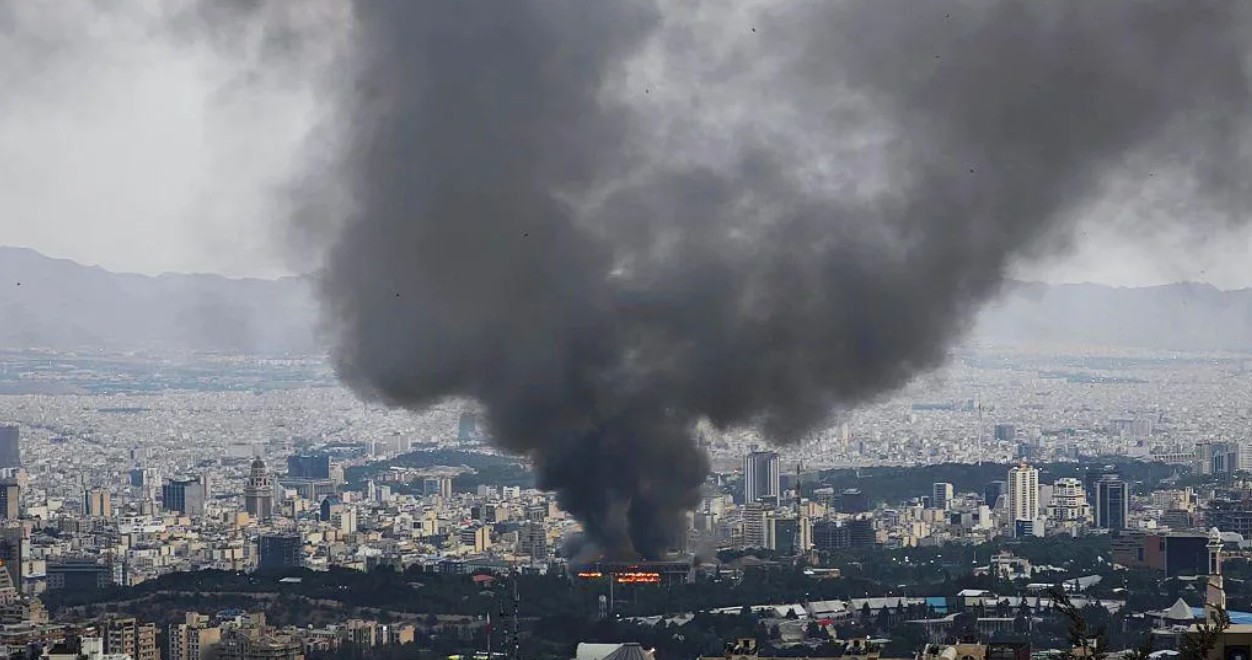 Long before the first missiles flew in this latest escalation, ordinary Iranians were living under the weight of sanctions and economic isolation /FILE