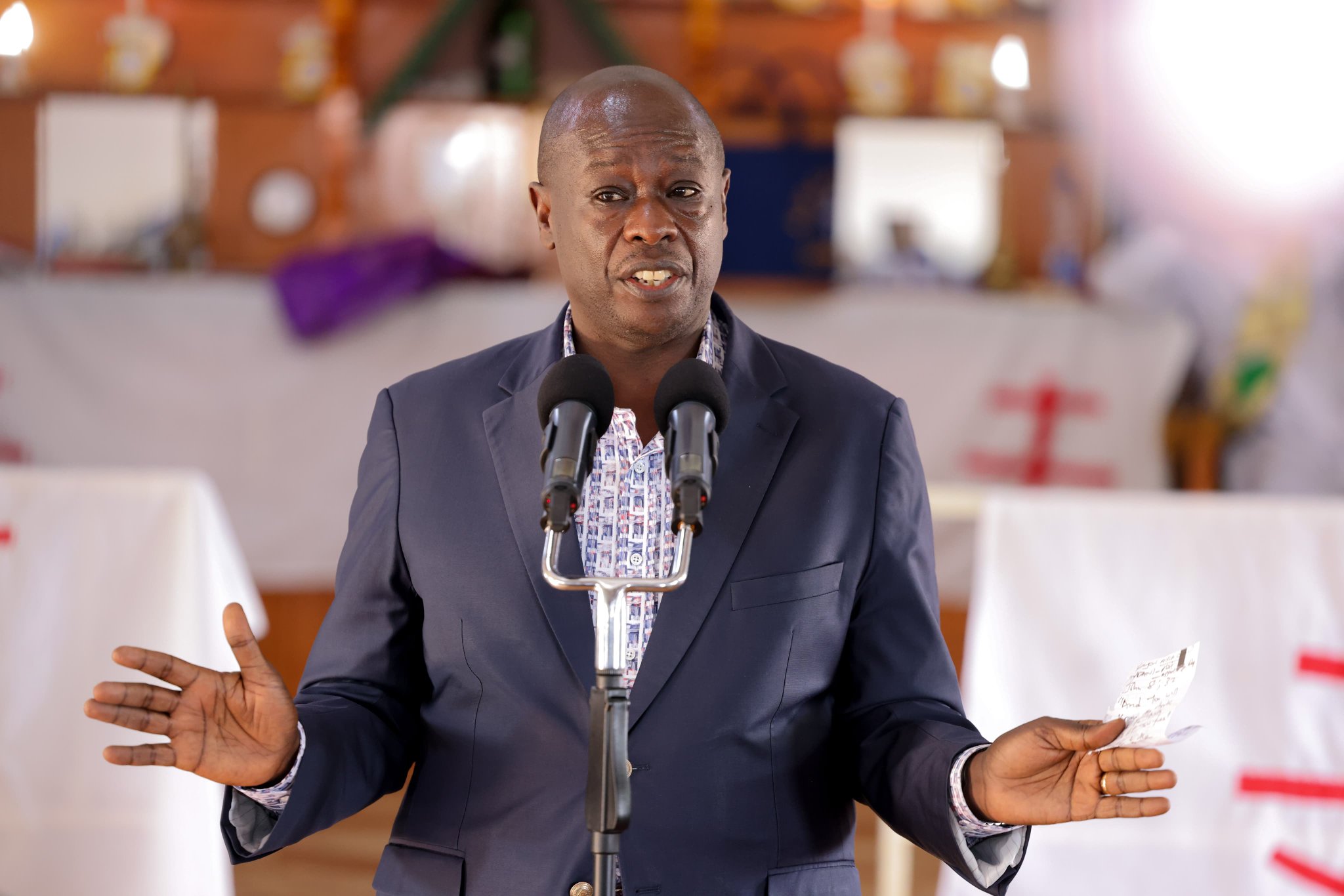
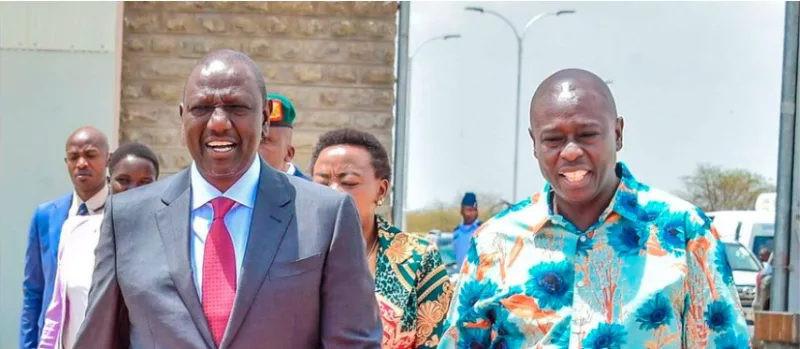
 DCP leader Rigathi Gachagua /FILE
The National Cohesion and Integration Commission plays a vital role in
promoting peaceful coexistence, national unity, and reconciliation across Kenya by
addressing ethnic conflicts, fostering dialogue and building
social harmony.
The commission was borne
out of the realisation that long-lasting peace, sustainable
development and harmonious coexistence require deliberate normative,
institutional and attitudinal processes of constructing nationhood, national cohesion
and integration.
As a statutory
institution, it draws its existence from the
National Dialogue and Reconciliation Agreement signed in
Nairobi on February 1, 2008, by the government, Party of National Unity and
Orange Democratic Movement delegations, and
witnessed by Kofi Annan for the Panel of Eminent African
Personalities.
This agreement formed the
basis of the National Accord that President Mwai Kibaki and the Prime Minister Raila
Odinga signed on February 28, 2008 when the dialogue was officially launched.
The country had just witnessed one of its worst violent civil conflicts
in its history since Independence. The 2007
presidential elections had been run on the mantra of one against 47 and,
unfortunately, the results were disputed.
Coming hot in the heels of the 2005 constitutional referendum, the
nation was highly polarised along ethnic lines. In
the grassroots and local communities, there were organised criminal gangs that
operated on mafia principles.
Aggrieved political leaders took advantage of these
ragtag thugs to rain terror on their opponents. It
became messier and uglier when the elections benefited from inflammatory
remarks by tribal bigots.
Aware that Kenyans are human beings, the threat of
recurrence of such was envisaged and that is the reason
the commission was established. This was to forestall the same horrors by
establishing proactive unity programmes and taking criminal discipline against
perpetrators.
When the government rolled out the placement of KJSEA candidates into Grade
10 at senior secondary schools, many challenges arose. As a new system, this was not
unexpected. It will be recalled that when the Kenya Kwanza
administration took over, the Competency-Based Curriculum was still reeling
from its teething problems.
Efforts were made through
the presidential working committee to align it to the overall education policy.
But the challenges remained embedded since it had been rushed in its implementation
and some of the difficulties could not be addressed administratively. It is therefore
not surprising that parents and ministry officials found themselves faced with inconsistencies in
outcomes of the placement of the Grade 10 students.
Many parents complained that their children did not get the schools they
chose during the examinations. After deep analysis, it happens the stories were only half
true. While most candidates did not get into their schools of top choice, the facts are that most placements
were based on other choices made.
The disappointment was largely because many failed to be placed in
the schools of their first choice. The government responded promptly by allowing the candidates to
revise their choices, where chances allowed and to be admitted to the schools of their choice.
Parents thronged schools to seek admission for their children in their
preferred institutions. The confusion caused a
lot of pressure and stress for school principals and lasted until Friday when
the release of KCSE exam results partially shifted public attention. Certain
members of the public took advantage of the crisis to make social capital.
Where others offered
suggestions and constructive criticism to improve the
system, some chose to focus on the shortcomings to crucify the government. The opposition forces
found a perfect opportunity to extract their pound of flesh. The worrying part
is that some key leaders chose to drag negative politics into a serious national
development agenda.
As the parents struggled to settle their children in schools across the
country, some political leaders decided to make inflammatory
remarks aimed at inciting tribal animosity among the citizens. These public pronouncements, if
left unchallenged, risk making the country ungovernable and resulting in civil
strife.
The logical consequence of these reckless utterances would be
catastrophic impact not only on the education sector
but also on national stability.
The worst of these remarks have been associated
with former Deputy President Rigathi Gachagua. Gachagua has been
associated with two controversial public statements. In the first instance, he
claimed that non-residents were being brought
to their better, Mt Kenya schools,
thereby denying opportunities to their sons and daughters of the mountain.
He claimed the Ministry of Education was intentionally
allocating their Mt Kenya children
placement in schools in far-flung and least developed regions.
He called this a deliberate policy by the government to disinherit them Mt Kenya parents and
children from their investments made painstakingly over the years.
The second
bit is when he sought to blame the leaders of the Northeastern region for
the relative underdevelopment of the area. He particularly
demanded that their students should attend schools exclusively in their region
and not outside.
Derisively, he said that Kenyans of Somali extraction should vacate
Eastleigh and South C and relocate their business investments to Mandera,
Wajir, Garissa and Marsabit. He blames the governors and MPs for lack of good
educational institutions for their children. He rightly points
out that Mt Kenya region has some of the best schools in the country.
However,
he conveniently avoids telling the true story of how the schools came to
be. Most of these schools are public and have long been
categorised as national. This status demanded and allowed the government to
accord these schools preferential treatment. They were given extraordinary
resources in terms of infrastructure, human and financial
assets.
Their budgetary allocation in annual capitation has been way above the
extra-county schools and below. None of them ever complained of inadequate
teaching and support staffing.
Low staffing is a perennial challenge always raised by the teachers’
unions. The national government has therefore
deliberately made disproportionate investment in these institutions compared to
others offering similar services. Kenyans must not forget that strategy fell in place
with the previous government development policies that focused on investing in high-potential
economic zones.
It was anticipated there would be
trickle down effects, as aptly elucidated in the 1965 Sessional Paper No. 1.
This policy, together with the existence of the colonial white highlands, ended up
concentrating the highest number of national schools in
the Mt Kenya region.
The national schools, including those outside central Kenya, were
expected to foster national integration and patriotism.
Thus, a policy was established that demanded that they admit students from each of the country’s
districts at the time. This was to ensure that the ethnic heritages of the
young men and women from different areas were showcased as pillars of national unity
and strength and not bastions of tribal chauvinism.
It should be noted that even the extra-county schools were demanded to admit
certain quotas from outside their county of establishment. That explains why
although Nyanza for a long time had only Maseno and Kisii as national schools, there are many prominent
people from outside that region who attended high school in the second- and
third-tier schools in the region. The successive independent
Kenya governments consciously made education a critical tool for
national unity. It is for this reason that many ordinary
Kenyans in public and private service would ignore the tensions among the
political leaders and proceed with their daily chores unbothered.
In the same
vein, business ventures would be conceived and
conducted by people from different ethnic backgrounds without much fuss.
Gachagua is rewinding the hand of clock and taking us back to the
historical ruckus that brought down Ambrose Ofafa in
1953 through brutal assassination. Gachagua’s statements
are intended for political mobilisation but are reckless. They must
be seen for what they truly are: tribal incitement that
will logically lead to civil strife. If he does not demobilise his
tribal armies, then Kenyans should prepare to confront the
worst ever atrocities committed against children.
They will wake up one morning
during the election period to find that schools in central Kenya were invaded
in the middle of the night by hooded gangsters. That students had been earlier on neatly profiled in
terms of tribe and bed occupation.
Specific horrendous assaults would have been targeted at non-Kikuyus and
the perpetrators majestically walked away. It would be too late to redeem any shame except to soothe
the wounds through anaesthetic truth, compensation and justice committees.
Yet the drums are being
beaten early enough. It is only logical that the conceivers of this plan are making the necessary
arrangements and corresponding logistics.
The NCIC stands accused of abdicating their most important
responsibility for the children of this country.
However, if there are concrete steps that they have taken to stop the vengeful
political mobilisation by Gachagua through regional balkanisation, then they must
publicly share what they have done and the actions they plan to negate his dangerous undermining of
national unity.






![[PHOTOS] Elderly brave cold to vote in Ol Kalou](https://cdn.radioafrica.digital/image/2026/07/d2345b9e-578f-45ff-9bb0-d7819671c165.webp)

![[PHOTOS] Ol Kalou residents turn out in large numbers to vote](https://cdn.radioafrica.digital/image/2026/07/fe42d51c-7f79-466e-94e8-59561f77bbe7.webp)