The
Lake Region Economic Blueprint, subtitled "A Better Life," represents
an ambitious attempt to harness the potential of 10 Kenyan counties surrounding
Lake Victoria—Bungoma, Busia, Homa Bay, Kakamega, Kisii, Kisumu, Migori,
Nyamira, Siaya and Vihiga—into a cohesive regional development strategy.
Developed
with support from Deloitte East Africa and the Ford Foundation and aligned with
Kenya's Vision 2030, the document emerged in the mid-2010s as a response to the
devolution ushered in by the 2010 Constitution.
The
blueprint seeks to leverage shared resources like Lake Victoria, fertile lands
and a youthful population of over 10 million to drive growth through seven key
sectors: agriculture, tourism, education, health, financial services, ICT and
infrastructure.
This
regional bloc approach is commendable, as it recognises that isolated county
efforts often fall short in tapping into broader opportunities, such as access
to Comesa and SADC markets via proximity to Uganda, Tanzania and Rwanda.
One
of the blueprint's strengths lies in its structured analysis of the region's
features and challenges. It vividly outlines the physical assets—arable land,
reliable rainfall and natural wonders—against socioeconomic hurdles like high
population density, subsistence farming and poor infrastructure.
The
document methodically explores each sector, detailing the current state, key
challenges, economic opportunities, resource mobilisation strategies and
potential socioeconomic impacts.
In
agriculture, which anchors the region's economy with crops like sugarcane, tea and
maize, it highlights issues such as post-harvest losses and low irrigation
uptake, proposing an Agricultural Commodities Exchange as a flagship project to
transform trading.
This
could empower farmers with better prices and market access, potentially
reducing dependency ratios.
The
tourism section taps into untapped potentials in nature, cultural heritage and
water sports, with a proposed Lake Region Tourism Circuit aiming to boost
hospitality and jobs. Social sectors like education and health address dismal
enrollment rates (below 40 per cent in secondary schools) and health crises
(doctor-patient ratio of 1:40,000), with flagship ideas for Centres of
Excellence and specialist hospitals.
Enabling
sectors, including a regional bank, ICT platforms and a Lake Victoria Ring
Road, round out a holistic vision.
The
inclusion of cross-cutting themes—women and girls, youth, persons with
disabilities and the environment—adds inclusivity. It tackles vulnerabilities,
such as women’s limited financial access or youth’s disinterest in agriculture,
with interventions like rebranding farming and adaptive ICT for PWDs.
The
environmental focus, though present, suggests guidelines rather than robust
action plans. A section on risks, like political instability and mitigation
strategies shows foresight, urging stable governance.
However,
viewed from August 2025, the blueprint’s age—drafted around 2014-15 with 2009
census data—undermines its relevance.
Population
projections may no longer hold, and climate change’s impact on rainfall
patterns demands more than the current environmental measures.
Resource
mobilisation strategies are overly vague, relying on generic calls for
public-private partnerships and donor funding without timelines or cost
estimates.
For
instance, building a ring road or regional bank sounds transformative, but how
will counties overcome bureaucratic hurdles or funding gaps in today’s
debt-strained economy? Socioeconomic impact projections—job creation, poverty
reduction—lack metrics for tracking progress, making them feel aspirational
rather than actionable.
The
regional focus risks exacerbating inter-county disparities, with urban Kisumu
potentially overshadowing rural Nyamira.
Political
instability, a noted risk, has persisted in Kenya’s devolved system,
potentially stalling collaboration. Implementation details are
thin—interventions for youth or women are listed but lack budgets or pilots.
With
Vision 2030 nearing its end, the blueprint’s real-world impact remains unclear.
Have
the proposed exchanges or hospitals materialised? Without evident follow-up, it
risks joining Kenya’s shelf of grand but unexecuted plans.
Ultimately,
the Lake Region Economic Blueprint is a well-intentioned roadmap capturing the
region’s promise and fostering unity. Its holistic approach could inspire
similar initiatives.
Yet,
its lack of specificity, outdated data and weak execution feasibility dilute
its impact.
To
deliver "a better life," stakeholders must update it with current
data, leverage digital tools for transparency, and pilot community-led
projects.
Only
then can this blueprint steer the region’s 10 million residents toward tangible
prosperity, rather than leaving them adrift in unfulfilled potential.
The author is a policy
analyst specialising in maritime governance and blue economy development.


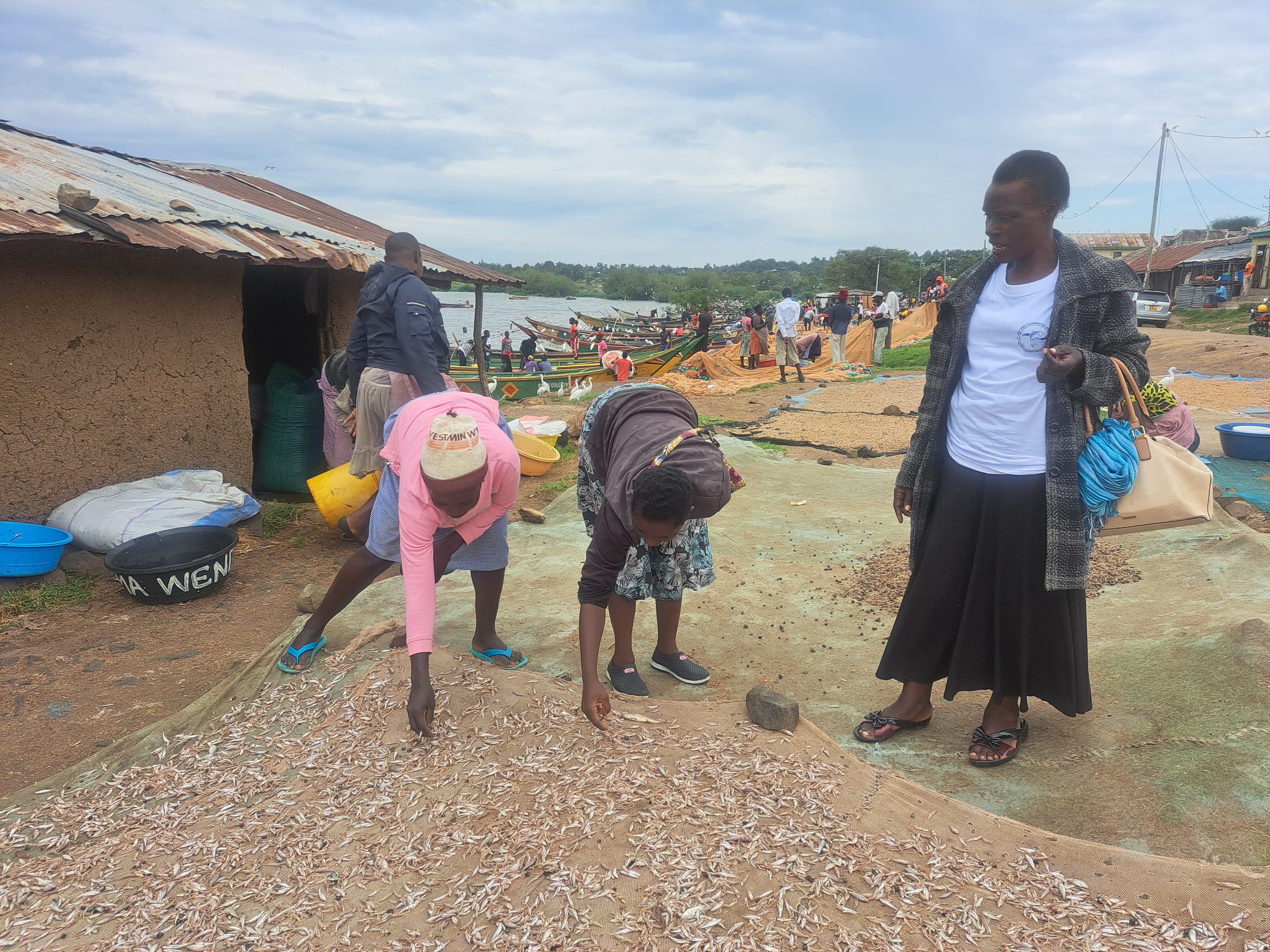 Women on the shores of Lake Victoria./FAITH MATETE




![[PHOTOS] Obado Leaves court in handcuffs](https://cdn.radioafrica.digital/image/2026/07/efc75d55-2eb9-4019-bb24-937dc4fc4f56.webp)