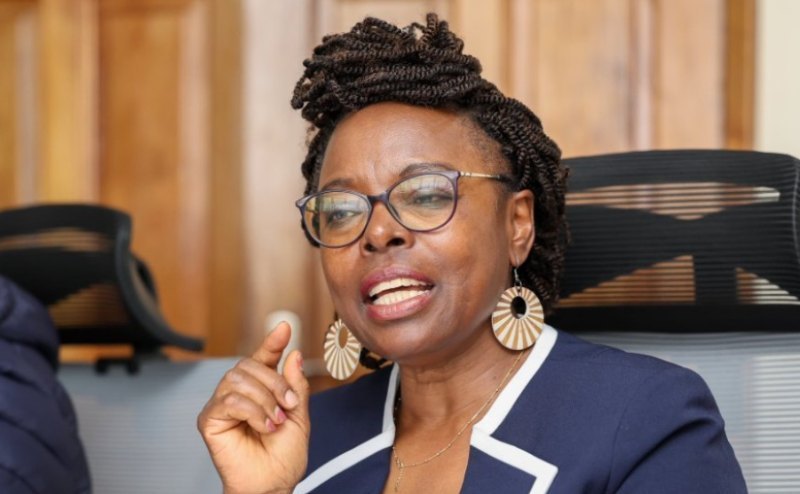
She describes a meeting she hosted at her home after the death and burial of the doyen of Kenyan politics, and Luo kingpin, Jaramogi Oginga Odinga.
At the meeting, all 21 elected Luo MPs gathered to agree on who would be fronted as the new Ford Kenya vice chairman, after the incumbent, Wamalwa Kijana, had just risen unopposed to chairman to fill the vacancy created by Jaramogi’s death.
Lan’gata MP Raila Odinga arrived late for the gathering at the Asiyos’ Wikondiek home in Karachuonyo constituency and was accompanied by someone who wasn’t supposed to be there; Ford Kenya activist and now Luo Ker, Odungi Randa.
A vote was taken and all present MPs, bar one, voted for then Ugenya MP James Orengo to run for the seat of Ford Kenya vice chairman. Asiyo says she abstained. Raila got one vote, supposedly his own. His sidekick Odungi left the meeting. The assumption was that the matter was settled.
But exercising his democratic right, Raila decided to run against Orengo for the vice chairman’s position. There was a gentleman’s agreement with Wamalwa, the new chairman, to stay off the matter. However, he never honoured it and instead supported Orengo, who beat Raila by one vote to become the new Ford Kenya vice chairman. The fierce contest was presumed to have ended there, and Raila apparently returned to his old position as the party’s director of elections. Except that in politics, nothing is ever what it seems.
As fate would have it, the peace that was envisaged to prevail in the party, after Raila shook Orengo’s hand in congratulation, would soon be disrupted. Party chairman, who was also the new chairman of Parliament’s Public Accounts Committee, soon released a report that practically sanitised the Goldenberg scam, Kenya’s monumental fraud.
Raila drew a red line on this, demanding Wamalwa step down as Ford Kenya chair.
The Lang’ata MP in fact made a go for the seat. Violent scenes reigned at a meeting called to settle the issue at Thika Stadium, forcing the mediator, Anglican Archbishop Manasses Kuria, to resign.
When the party wars threated to become a long drawn-out political distraction, Raila resigned from the party and from his Lang’ata parliamentary seat, joined the little-known National Development Party (NDP). He ran in the by-election occasioned by his resignation and won back the seat.
When the 1997 elections arrived, Luoland was at a crossroads. Aspirants had the difficult choice of picking either NDP, then with just one seat in Parliament, or Jaramogi’s former party, Ford Kenya on which all other sitting Luo MPs enjoyed incumbency. But by the time election results were out, NDP had swept the board in Luo Nyanza, leaving only Orengo in.
Ugenya and Joe Donde in Gem made it to Parliament on the Ford Kenya ticket, the latter surviving only because his NDP opponent had been barred from running on a technicality.
As far as the political leadership of the Luo community was concerned, the scene had undergone a full transformation. It is worth noting that among those swept aside by Raila’s NDP wave in that 1997 election was legendary freedom fighter, Ramogi Achieng’ Oneko. He was defeated
in the Rarieda parliamentary contest by the George Odeny
Ngure. In every sense, Oneko had been Jaramogi’s equal, and should have been a shoo-in as the undisputed Luo leader after Jaramogi’s death.
I narrate this story, first, because that was the last time the unofficial title of Luo Kingpin changed hands, but more importantly, because it did so within political parties’ frameworks.
The latter point is important because the person who emerges to claim this title has to be either the leader or the most senior official in the dominant political party of the community. Perhaps we can add, from the 1997 experience, that the title is not bestowed or given as a favour but is grabbed in the manner that Raila did. You only need to revisit the meeting at the Asiyo home in 1994, where Raila garnered just one vote among the MPs, to appreciate that in succession politics, the tail has a way of becoming the head on a very short notice.
In recent times, especially as it emerges that Azimio boss Raila Odinga may not be on the ballot in 2027, the most prevalent talk revolves around the identity of who looks likely to be the political kingpin of the Luo community. Several names are routinely mentioned: ODM chairman John Mbadi, National Assembly Minority leader Opiyo Wandayi, Homa Bay Governor Gladys Wanga and Embakasi East MP Babu Owino.
The Luo already have a cultural leader in the form of Ker. But the supposed political kingpin enjoys the luxury of commanding a huge and dependable voting bloc, which translates into juicy trappings, including the national attention that comes in the form of an unending queue of suitors from other communities seeking electoral deals.
Those who hear things like to say the suitors are not known to come empty-handed.
There are two ways to look at this interesting impending transition. The first is if it happens while Raila is still alive and therefore pulling the strings in favour of his preferred candidate, in which case he could easily elevate this person to the apex of community politics. The second, of course, is if, as in the Jaramogi succession, it happens without Raila being around. All those who seek leadership are thrown into the deep end and have to swim their way out amidst marauding sharks.
I have looked at the cast of those who are angling to succeed Raila, both within the community and within ODM, the land’s dominant party. At this time, I think we can safely narrow them down to ODM chairman Mbadi and Minority leader Wandayi. If we place the two within the scenarios described above, Wandayi would most likely clinch it in a Raila-controlled process, while Mbadi, the more experienced and more lethal political operator, would eat his opponents for breakfast if this happened in Raila’s absence.
Which is to say that even if Raila manages to determine his political successor within the community, that luxury would last only while he lives, after which the wolves would come out in full force for the kill. But being the ODM chairman also means that Mbadi will enjoy the unique access of being in the room where many of these decisions will be made.
Let us not forget there are also pretenders to the throne from the Luo community within the Kenya Kwanza civil service and political networks, who seek their proverbial pound of flesh after Raila. Many of them carry grievances about their exclusion from the mainstream of Raila’s parties. I have bad news for this variety.
The betrayal tag in Luo politics never quite leaves. Which is to say that anyone perceived to have dined with the enemies of the community in the past will likely not feature highly when the kingpin space becomes available. Those who eye the position of Luo kingpin but are sitting pretty within government will walk away empty-handed!
Political commentator