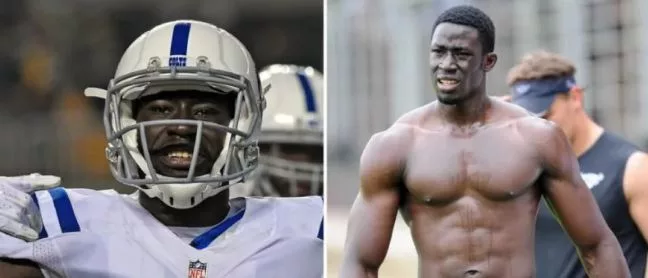
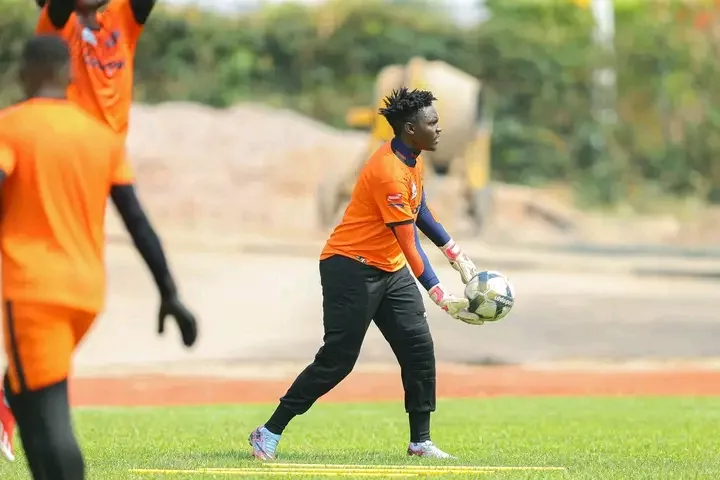
As with all serious functions, this year’s version in Eldoret began with a friendly match between the Council of Governors and the Senate. I was a little surprised by how good the Senate football team was, captained by their midfield marshal, Senator Mohamed.
His ball distribution prowess, to colleagues around him, like that of senators John Methu, Nderitu Kinyua and Raphael Chimera, was top-notch. After the Senators blew away the Governors 3-0 in regular time and 4-1 in penalties, the county chiefs were understandably heard complaining the Senate had unleashed a professional team on them.
But once they got down to the serious conference business, you could always tell controversy wasn’t too far away. The first was what remained unsaid. For some reason, despite the role of the Senate in the devolution journey, the CoG seemed to have structured the conference to minimise any mention of this.
In contrast, speaker after speaker appeared to pander to the whims of the county assemblies, with each pushing for greater financial freedom and better remuneration for county assemblies. MCAs, making up the larger portion of the attendance cast, cheered themselves hoarse.
Quite interestingly, the CoG also decided to push to the back burner routine devolution challenges like perennial delays in disbursements from Treasury to counties, the continued holding onto key devolved functions by the national government and the unwelcome spectre of ‘devolved corruption’.
Instead, governors opted to sing the praises of President William Ruto for his benevolence in the full disbursement for the end of the financial year 2022 and the prompt remittance of July 2023 disbursements. A casual observer would have imagined that it was and has been all rosy with the devolved units.
The biggest controversy was however generated from rather unexpected quarters. US Ambassador Meg Whitman made a powerful presentation on ‘Why Kenya?’, delivering the most compelling pitch ever for Kenya as an investment destination. Quite incredibly, the President and half of his Cabinet, enjoying front-row seats, appeared shocked that the items on Ambassador Whitman’s colourful show were actually about Kenya.
Speaker after speaker thanked her profusely for pitching for Kenya in such a profound way.
However, by once again quoting unnamed commentators as having declared Kenya’s 2022 general election as the freest and fairest ever, the envoy waded right into the murky waters of Kenya’s divisive electoral and tribal fault lines.
It is curious that Ambassador Whitman sees the need to consistently put a stamp of validation on last year’s polls. Kenya’s and most of Africa’s elections, unlike American ones, are not party and ideological affairs, but tribal interests masked in political party garb.
For a big brother like the US, the long-term stability of both its relationship with and interests in an important ally like Kenya, lies in carefully navigating these delicate tribal fault lines and, where possible, playing neutral arbitrator.
But through Whitman, the new US policy on these shores is strangely geared towards being the Ruto regime’s biggest choir of praise. There may be many commercial interests at play here, but ultimately, these shenanigans paint the US as just another third party willing to look away from perceived injustices and governance issues as long as its trade interests are secure.
Anyway, as fate would have it, a day after Ambassador Whitman’s captivating delivery at the conference, Azimio boss Raila Odinga came calling. Throwing diplomacy out the window, he told the US envoy to “shut your mouth or we will call for your recall”. The governors shifted uneasily in their seats.
Raila had barely left the podium when Kenya Kwanza governors, senators and MPs scrambled for TV cameras to answer him.
Initially, each of them seemed to be running towards a camera when someone had the good sense to restore some order, whereupon Nakuru Governor Susan Kahoka spoke for all.
It beats me what the CoG was expecting when they invited Raila to their function. He is not the type to be kept in a political cage, so he was always going to respond to the ambassador’s comments the previous day.
To be fair to him, his speech on the devolution journey appeared the most spot-on during the entire conference but it was predictably obscured by his hard-hitting words at the ambassador, and the controversy they generated. But in labelling the US envoy a “rogue ambassador”, Raila wasn’t really entering unchartered territory, as some imagined.
Between 1989 and 1993, at the height of the clamour for multiparty democracy, the US Ambassador to Kenya was one Smith Hempstone. To the chagrin of President Moi’s government, Hempstone decided to aid democracy activists, openly and publicly, and Moi branded him the rogue ambassador. Hempstone was unmoved. He routinely dined on nyama choma, Kenya’s juicy delicacy, with Moi’s opponents.
But to be fair to him, the government of President George H W Bush, which he served, was at that time prevailing on African governments to embrace pluralism and greater political freedoms. In a way, therefore, Ambassador Hempstone may have been playing to the foreign policy tunes of that time. I do wonder however if the Biden administration, therefore, through its mouthpiece Ambassador Whitman, has chosen to ignore Kenya’s internal divisions and pursue a see-no-evil path.
Back to devolution, a new report by the Intergovernmental Relations Technical Committee shows the national government is holding onto devolved functions worth Sh272.2 billion 10 years after devolution, constituting at least 10 decentralised functions, contrary to Schedule Four of the Constitution.
Among the most notorious national government agencies holding onto devolved functions is the Ministry of Health, which is reported to be performing at least 45 elements of the health function that exclusively belong to the counties. The ministries of Water, Education and Energy follow closely.
These are the burning issues I had expected to feature at the top of the Devolution Conference. There is a real danger of the biennial showpiece turning into a sterile talk shop if the CoG fashions it merely as a fete of speeches and plenary discussions without being a real and tangible result-driven affair.
In my view, this should have begun with the CoG taking a firm stand that for devolution to be judged fairly, it first ought to be real and complete, meaning all devolved functions need to move to the counties. It is not difficult to achieve this, given that, in Raila’s own words at the conference, the CoG has admirably been able to overcome the often-toxic nature of Kenya’s national politics to work together as a team.
This unity needs to be reflected in the plans and deliverables of the chiefs. I hope to see better organisation, better and more honest perspective of the devolution journey at the next conference.
Even more importantly, I do hope a credible progress report on the key challenges burdening devolution; chiefly corruption, delays in disbursements of funds and devolved functions stuck at the national government, will show that we have made gains and not returned for just another dose of speeches.