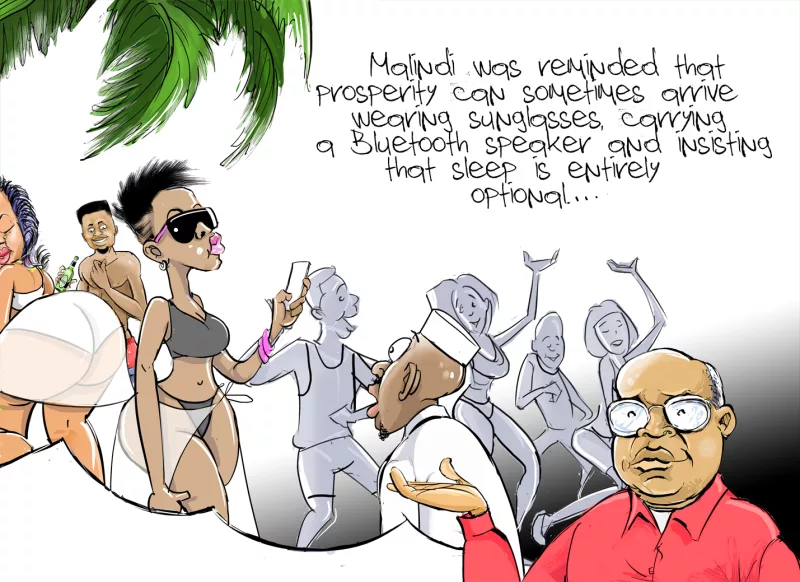
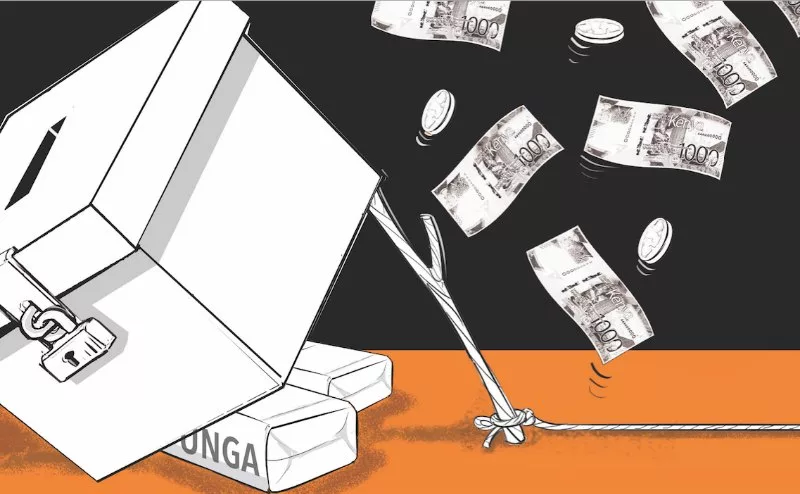
The death of collective conscience is the cause of the spread of social and political morasses in any society. The people do not know what they want, what is good for them and what they must do to get what they want. This has created a void that self-serving politicians usually exploit.
The celebrated Norwegian playwright, Henrik Ibsen, has very well illustrated the above in his book, An Enemy of the People. The protagonist, the town’s medical doctor discovered serious contamination of the public baths after a case of typhoid fever was reported.
He found that the contamination was caused by industries channelling hazardous wastes to the only source of water in the town. The mayor, who was an elder brother of the doctor, and the industry owners were not happy with the latter’s revelation.
The exposé would jeopardise their political and business interests. Apparently, the only hope for the doctor was the use of media and the people to expose the rot and provide the pressure to the authorities to fix it.
The mayor, a politician, schemed against the doctor’s plan by compromising the media and manipulating the people. He sold the narrative that if the doctor’s report is implemented it would result in closure of the public baths and kill the economy of the town.
The people, naïve as always, sided with the mayor and declared the doctor an enemy of the people. The protagonist was humiliated and ostracised for standing for the best interest of his people.
The writer poses pertinent questions: do the masses know what is good for them? Who are the enemies of the people’s interest? The only reasonable answer is that the people are the true enemies of themselves. In the story, the mayor, a politician, serves his interest to retain his position.
The industry owners protect their interest too at the expense of the health of the town.
It is pitiful to find that the same people that Ibsen lamented about centuries ago are still present today. The level of naivety is appalling. The blind following of the politician is sickening.
Though the constitution gives sovereign power to the people, this has been a fallacy in reality. The people do not know or use the very power in serving common interests. The people have totally surrendered their power to the eccentric politicians.
It is the new norm in our society, that the people hardly use reason in exercise their very rights.
We vote along tribal lines; we celebrate corrupt leaders as our own thieves; we hate, rob, kill and maim our neighbours because of politics; we buy everything our politicians say wholesale without questioning.
We have long lost our sense of right and wrong and we swing with every unsavoury songs scripted and sung to us those in authority. When shall the people can stand firm for that which is right and demand for accountability?
Good people, you should disabuse the notion that political leaders are the panacea to our problems. Most politicians serve their interests. They cannot fix people’s challenges, not when they themselves caused those problems through unsound policies.
It is not the business of most leaders to be accountable. In fact, they fret accountability. It is we, the people, who should demand for accountability.
Even when people delegate their powers to those in public offices, that does not imply a complete surrender. People should be at the centre of shaping public policy through meaning participation.
We should wakeup to the reality that the political institutions that we create through our vote will hardly shape the governance systems and institutions in our country. It is only after we diligently and responsibly discharge our roles, that we can make those in power to service our interest.
The people retain the residual power to seek accountability from those in authority. However, people — ignorant and uninformed — cannot effectively participate in public policy. This has understandably resulted in waning support for common interest.
To enhance active and collective public involvement in governance, the government, through its relevant agencies, should conduct rigorous and widespread public education and awareness creation programmes.
It is through an informed society that a serious government can easily provide public goods. Other non-state actors like the civil society organisations should also prioritise the promotion of collective action initiatives against bad governance.
The public needs to be talked to about the use of social audit tools to keep the duty bearers in check.
We, the people, should drop the temptations that the country will change for the better while we remain ignorant of the public policy decisions. We should refuse to accept the notion that our incessant gloating and complaining would solve our challenges.
We should jettison the feeling that our politicians are our God-sent saviours of the day. It is through active and deliberate involvement in governance matters that we can decipher the deceptive tactics of those in power from the serious and people-driven policies.
The writer is a lawyer and governance analyst