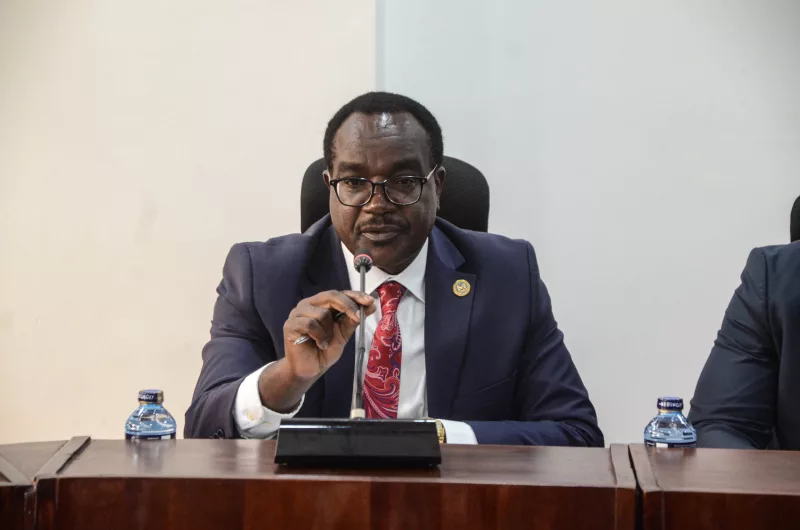
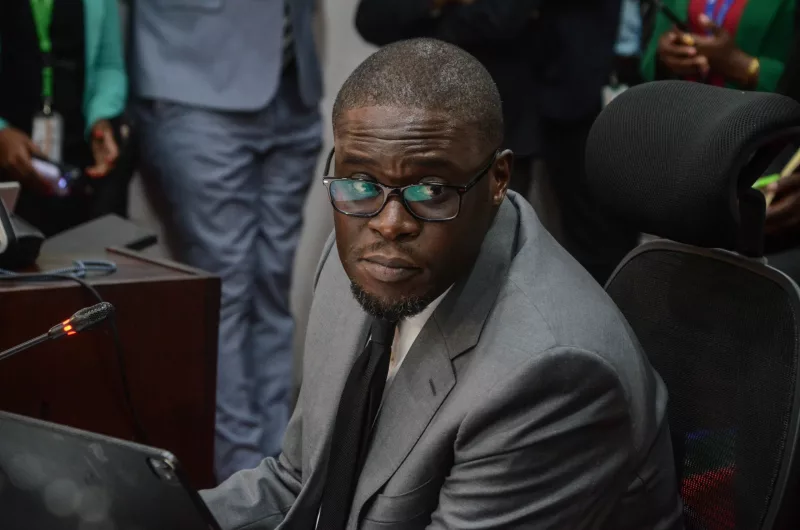
The summit is not the creation of the Constitution but it does help to achieve a constitutional principle: “The governments at the national and county levels … shall conduct their mutual relations on the basis of consultation and cooperation” (Article 6).
Officially named the National and County Government Co-ordinating Summit, it is created by the Intergovernmental Relations Act. It owes a good deal to South African law, although their Act is more detailed, (and rather different because their devolution structure is rather different).
This was apparently only the ninth meeting of the Kenyan Summit – so a bit less than once a year since devolution came into being. This would not seem to be enough. And in South Africa, under their Act, national government ministers can set up national intergovernmental forums. It could be done here.
Let’s look at the governors’ “gains” from the Summit.
COMMUNITY HEALTH WORKERS CONDITIONAL GRANTS
The Constitution allows the national government to allocate money to the counties in addition to the equitable share. They can make it conditional – “this money is to be spent only for a specific purpose.”
This does give the national government more control over counties than increasing the equitable share, which comes without strings attached.
A county that already has enough community health workers is presumably free to use its regular money for other purposes, if it gets more for this purpose from the national government.
TRANSFER OF ASSETS AND FUNCTIONS
It is high time transfer of assets and functions was done. The Transition Authority was supposed to assess the assets for sharing between the levels of government, and finalise the division of responsibilities. This was even if they were not necessarily to be all transferred straight away. But it could not complete its work before it was wound up in 2016. A few things went to court (like Level 5 hospitals), but much was left unresolved.
A prime example of things left in the hands of the national system was roads. The Rural Roads Authority most obviously deals with many roads that ought to be county responsibilities. And a number of other parastatals have continued in existence that arguably - although they are national bodies, owned by the national government – are doing things that are the responsibility of the counties under the Constitution.
Various laws were passed that did not deal properly with devolution. The Water Act was controversial from this point of view. Last week, I questioned the current Preservation of Human Dignity Bill from this point of view.
When functions are transferred, enough money must also be allocated to the counties —“finance follows function” is a common principle of devolved systems of government and certainly in ours.
COUNTY POLICING AUTHORITIES
This is an odd story. We are told the President has promised that these would be set up. In fact he said this on January 11. And now he has said within six months.
This is a good thing. The National Police Service Act provided for these authorities in 2012. Nothing happened throughout the two governments in which Ruto was Deputy President.
In 2019, Katiba Institute took the governments to court to get the CPAs set up. The national government argued the law was unconstitutional because it gave a national government responsibility to the counties.
On January 26 this year, Justice Joel Ngugi’s judgment was delivered in Nakuru, ordering the government (the CS, and the Council of Governors) to implement the Act – which is not unconstitutional. And he gave them six months to do it.
What a great deal of time and then money in going to court and defending the case has been wasted!
NO COURT CASES
Court cases between governments will be withdrawn. This move by Ruto seems to be part of a general plan that any government agency that decides to take it another to court will pay with their “own money” – presumably the Treasury is not to help out with extra funds.
In fact, there should be no such cases at all – if they really involve governments – at least until “every reasonable effort” has been made to settle the dispute out of court (Article 189(3)). Kenyan courts have actually refused to deal with cases between governments because of this provision.
EQUITABLE SHARE
No gain yet here. This aspect has attracted the most attention – and is of the most interest to governors. It also raises the most doubt about whether – at least in theory – this is something that can be decided on a bargaining basis between State House and the CoG.
The whole process of deciding is set out in the Constitution. The Commission on Revenue Allocation makes the first move: A recommendation on the share of money between the national and county governments.
In doing that it has to take into account of a long list of criteria laid down in Article 203. It also has to remember that the total equitable share of the counties must be equal to not less than 15 per cent of the total of all revenue collected by the national government. But not 15 per cent of the next year’s revenue (which is as yet unknown of course) but of the most recent year for which Parliament has approved the accounts. Parliament is usually a few years behind on this exercise.
For 2023-24 – the next financial year that begins on July 1 this year – the CRA announced its recommendation in December 2022. And it was for Sh2,150.3 billion for the national government and Sh407 billion for the counties. (in other words 15.9 per cent of the anticipated allocation to the two levels of government). It is a higher percentage for the last year for which accounts had been approved, because each year the total money raised and allocated increases.
The first response from the government came in the Budget Policy Statement of which a draft was produced (by the Treasury) in the middle of last month. The proposals in that statement were for Sh2,178.5 billion for the national government and Sh380.0 billion for the counties. This is 13.85 per cent to the counties.
This statement says the last approved accounts were as long ago as 2017-18 and Sh380 billion equals 26.8 per cent of the revenue in the audited accounts for that year. This shows how beneficial it is for the national government to use those old accounts – and how much of an incentive for Parliament not to deal with the Auditor General’s accounts in good time.
The way the amounts get finally fixed is by an Act of Parliament. And that Bill has to go through both Houses of Parliament. The National Assembly does not like this but this is the law as laid down by the courts. The Senate’s responsibility is to protect the interests of the counties, and they always push for more money. The governors want Sh425 billion. The Senate does not have to agree.
The constitutional design is that Parliament resolves this issue. In 2019, it could not do so, and things were held up for months – from March to September, including two references to a mediation committee.
The issues went to the Supreme Court, which clarified various issues, including the roles of CRA and the Senate, and what could not be done before the Act on Division of Revenue was passed.
The court said very clearly that the CRA recommendation is just that - a recommendation. But it is one that “is to be given serious consideration by both Houses.”
By Parliament, note. One thing that was very clear from the Supreme Court’s advisory opinion is “the intention of the makers of the Constitution to [confirm] the legislative authority of Parliament in matters Finance”.
If the President decides this will mean that Parliament – and especially the guardian of the counties’ interests, the Senate – will have abandoned their constitutional role in favour of the President.