On returning home, the little one said to its mother, “Would you believe it, the humans whose blood I was trying to suck were clapping for me!” In shock, the mother offered the best education she could, “Son, that was not clapping, they were trying to finish you!”
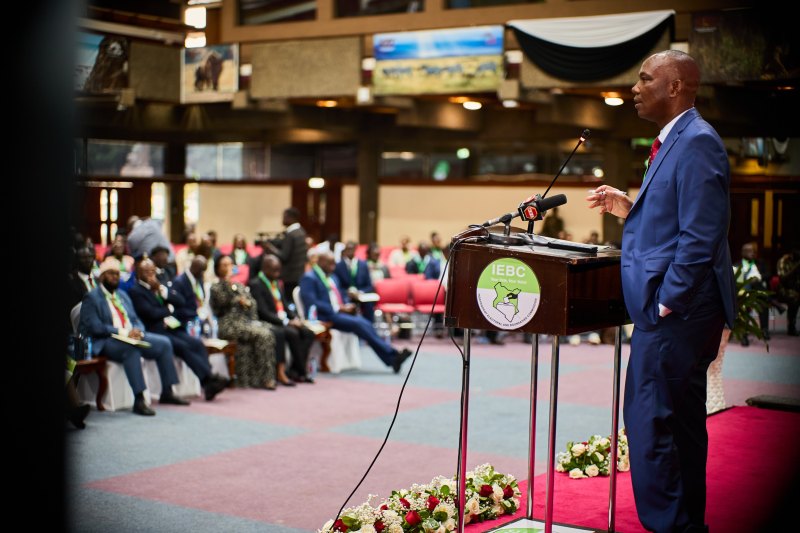
Every time I see the ruling Kenya Kwanza brigade feting the now former IEBC chairman, Wafula Chebukati, like a king, I remember this anecdote from local folklore.
I am in no way suggesting that the ruling class has any intention of finishing Chebukati like the little mosquito in that story, but in Machiavellian politics, kingmakers and human ladders used to ascend to power become surplus to requirements once the throne is secure, either because they now know too much or because their knowledge of the route to power makes them too powerful to have running around.
The hero-worship of an electoral agency chief is quite suspicious, to say the least. They even honoured him with the Order of the Elder of the Golden Heart, the second highest in the country after the Chief of the Golden Heart, usually reserved for the President.
In a country that loves football like ours — albeit the foreign variety, since we can hardly manage our own —, a football analogy would suffice. The behaviour of the regime in showering Chebukati with praises and awards is akin to a winning team from a football match holding extravagant ceremonies to reward the referee for their victory, rather than marveling at their own tactical prowess. It makes no sense. It lends credence to accusations of match fixing.
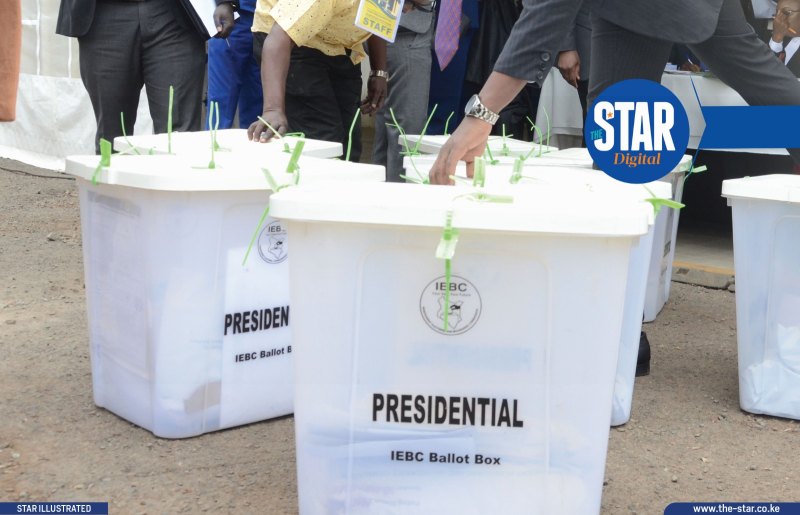
The Constitution may not say it explicitly, but a credible election is not a favour extended to anyone by the election overseer. In fact, the IEBC is merely a vessel for relaying the mandate of the people. When and after it does its work, it cannot expect the winner to become its praise choir. By the same standard, the winner of the election should not behave in a manner suggesting that the electoral agency helped in any way.
The independence of the IEBC is set out in the Constitution. It does not need a favourable regime to function. Indeed, where its commissioners and secretariat staff feel they can no longer expedite their mandate, we expect them to resign.
Since the 2022 general election, Chebukati, in tandem with his newfound buddies in government, has made grave allegations against the former regime, or more precisely, against investigative and security agencies at that time. Among them was that there were plans to either kidnap him and some commissioners or to harm them, in an attempt to influence the result of the election.
It reminds me of an incident from 2003. In the heat of the quarrel over the infamous MoU, then Kisumu East MP Gor Sungu, of the LDP faction, accused some unnamed people within President Kibaki’s NAK faction of plotting to assassinate then Roads Minister and LDP supremo Raila Odinga.
National Security Minister Chris Murungaru was constrained to reply, and made it known that nobody was interested in killing the Minister for Roads. But with a massive sneer, Murungaru added that even if anyone had such intentions, “it wouldn’t be so pedestrian that a mere Gor Sungu would get wind of it!”
I do not know if the DCI, or other security agencies had intentions of kidnapping or harming Chebukati ahead of the release of election results in August 2022, but I know any such plans would never have been so pedestrian that the intended victim would know about them. At any rate, the IEBC chairman never made a report at any police stations so that these fears would be investigated.
Let me rain on the Chebukati parade for a moment. In 2017, he conducted a presidential election that the Supreme Court later nullified, and whose repeat version the man he had declared runners up boycotted. The subsequent violence and deaths divided the country right down the middle (which ultimately led to the Handshake, as we are made to believe). But before that election, the electoral agency’s ICT chief was kidnapped and murdered.
For all intents and purposes, the election lacked credibility from that moment, before polls even opened. The IEBC chairman opted to proceed, regardless of all concerns raised. More tellingly, he didn’t engage in as much protestations about the death of IT boss Chris Msando, as he has done recently over allegations of his own “planned kidnapping”.
There can never be a more tragic attack on the independence of the electoral agency than the murder of Msando, and it is important to let Chebukati know that history cannot be whitewashed by short-term adoration from Kenya Kwanza bosses.
The tag of 2017 will not go away. At individual level, I doubt that anyone has a problem with Chebukati basking in praise and glory of the hero-worship from the new government. But given what elections are in this country, he carries a heavier responsibility, having presided over the IEBC for six years.
Elections in the past 20 years in this country have become the biggest agents of division in a nation already grappling with deep ethnic fault lines. Part of the problem, or perhaps the whole problem, is that after 2002, no election has been acknowledged by all sides as free and fair.
When he became chairman, Chebukati inherited this legacy of infamy, but since he is as inspiring as a banana stem, didn’t do much to set sail on a different course. The result is that even as he leaves, he hasn’t done enough to win trust for the election agency, or at the very least, for himself.
I shudder at the long-term effect of this growing belief in Kenya that the IEBC may never be a fair arbiter in election matters, because when the population no longer trusts elections as avenues for change, then we firmly hit the road to banana republic.
Be that as it may, it should disturb Chebukati that he is the first election boss to seem to demand and enjoy this public adulation from the winners of an election he has conducted. It almost feels like it is being done to hide something. But if he is statesman enough and believes that he undertook a fair constitutional duty as he declared at Bomas in August 2022, he has to know that subsequently hobnobbing with one side of the contest blots the credibility of the election and erodes the confidence of Kenyans in future contests run by the IEBC.
I have seen top military generals serve their country with dedication before being sent quietly to civilian jobs after retirement. Chebukati can surely transition to another state appointment without needing to bombard our ears with conspiracy theories and kidnap plots, or the public attention parades.
I just pray that the Kenya Kwanza regime doesn’t get tempted to hold a ceremony declaring Chebukati a living saint. At the rate they are moving, you may never know!


![[PHOTOS] Raila Odinga Stadium construction enters home stretch](https://cdn.radioafrica.digital/image/2026/06/45f6990c-4882-4cd2-b83c-8fc730dcdce5.jpg)