As the apex court considers yet again another petition challenging a declaration by the IEBC, the circumstances and facts in this round of hearings are vastly different from those in the past though all have a common denominator.
The common denominator in the petitions filed in 2013, 2017 and this current one is the body charged with conducting credible elections has yet again delivered an outcome at the presidential level that few disagree meets the constitutional requirements for conducting elections.
In 2013, ODM party leader Raila Odinga and then Cord presidential candidate and AfriCog filed a petition to challenge that year’s declaration of now President Uhuru Kenyatta as President-elect. In a decision that goes down as the worst in our country’s history, the Supreme Court led by then Chief Justice Willy Mutunga tossed out Raila and AfriCog’s petition, citing lack of evidence.
This when Raila submitted a lengthy and comprehensive affidavit detailing the illegalities that denied him victory. But the Court tossed out the affidavit, citing technical grounds that had to do with the timing of the filing of the petition.
In 2017, Raila once again filed a petition challenging the declaration of Uhuru as President-elect on virtually the same grounds, namely, he won but was promptly rigged out yet again. This time the Supreme Court, led by Mutunga’s successor and now retired Chief Justice David Maraga, agreed and nullified the presidential election in what became a historic decision in Kenya and the whole of Africa.
No presidential election had been nullified by any court in Africa prior to this and few have in the whole world.
When the Supreme Court took up and rendered decisions in both of those cases, namely, in 2013 and 2017, most of the country was in a foul mood and one could cut the tension with a pair of scissors.
Fortunately, the worst that was feared did not come to pass, in the case of 2013 because Raila urged his supporters to accept the decision and move on much as he disagreed with it. I have repeatedly said no one won the 2013 presidential election and Raila’s campaign did not perform nearly as good as it did in 2007.
We had it from credible sources that the Uhuru campaign had resigned to losing in Round I, but was confident they would win in Round II. This is because all the polling done both internally and publicly did not show either candidate getting the threshold 50%+1, so Round II was inevitable.
I have also said had the election gone to Round II, Uhuru would have cleanly won because TNA had a better-managed campaign, had the resources and, of course, the benefits of incumbency.
It is just that the powers that be decided to do away with Round II because Raila did not perform at nearly a level which would have made that an impossible task, or one with greater risks than ensued.
In 2017, Raila boycotted the Supreme Court-ordered repeat election because he said the same body and system that rigged him out was still in place. This led to the country remaining tense and on the verge of total collapse until tensions were defused by the now famous handshake of March 9, 2018.
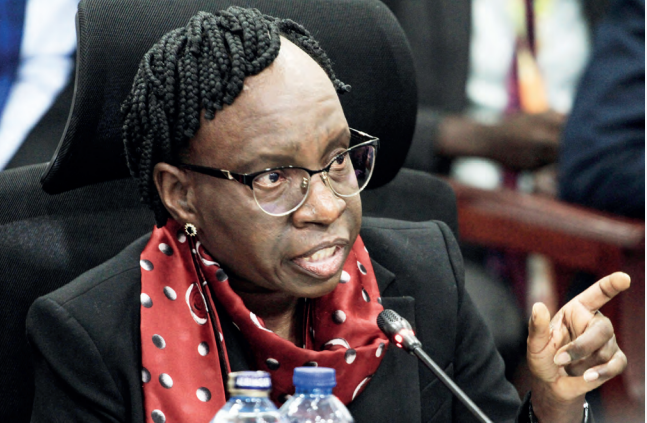
Chief Justice Martha Koome now takes up another petition but under very calm circumstances across the country. The calmness can be explained in part because most Kenyans have resolved not ever again to return to the days of the past where violence and death became synonymous with general elections.
It is also true more Kenyans, especially voters, are more informed and understand the electoral processes and, especially the critical importance of the rule of law which was made possible by the 2017 Supreme Court decision nullifying the presidential election.
It was only after that did most Kenyans come to understand and believe electoral theft and other illegalities can be dealt with by the apex court.
“WATCH: The latest videos from the Star”