WARIO: Is a degree necessary for effective political leadership?
Leadership at the highest level encapsulates the ideas of country first, peace, service, honour, honesty, duty, truthfulness.
by The Star
Audio By Vocalize
KU Chancellor Dr Benson Wairegi awards Chief of Defence Forces general Robert Kibochi with a Doctor of Philosophy (Peace and Conflict Management) degree under the watch of the VC Prof Waceke Wanjohi at Kenyatta University on July 22, 2022.
Leadership is those activities that help a nation solve political, social, and economic problems it could not solve before the intervention of a visionary leader.
Leadership at the highest level encapsulates the ideas of country first, peace, service, honour, honesty, duty, truthfulness, accountability, transparency, integrity, decision making through consultation and consensus and the participation of the people.
It involves two-way communication between the leader and the led, empathy, compassion, responsibility, trust, knowledge, vision, development, transformation, change management, succession planning, stewardship of the public purse and the supremacy of the rule of law.
The leader must be conscious of all these to be seen to lead efficiently and effectively.
I shall review selected political leaders who have provided visionary and transformational leadership with measurable impact. This should reveal whether their performance is related to their degrees, levels of education and experience.
Mwai Kibaki, President of Kenya, 2002-2013, BA Makerere 1955, BSc economics, 1959, London School of Economics. Kibaki inspired respect and exuded confidence. He introduced Vision 2030 that sought to transform Kenya into a middle-income country. He increased revenue collection, reduced crippling debt stress and dependence on borrowing and donor aid.
He led the country to adopt the Constitution of Kenya in 2010, that ushered in devolution. He revamped the country’s road infrastructure, notably the 50 km Sh32 billion Thika Superhighway. He started the $24.5 billion Lamu Port Southern Sudan-Ethiopia Transport project, which includes highways, railways and an oil pipeline.
Uhuru Kenyatta, President of Kenya from 2013 to present, graduated with a degree in political science, economics and government from Amherst College, Boston Massachusetts in 1985. He continues to implement Vision 2030 projects. He introduced the Big 4 agenda—affordable housing, food security, universal health coverage and expanded manufacturing.
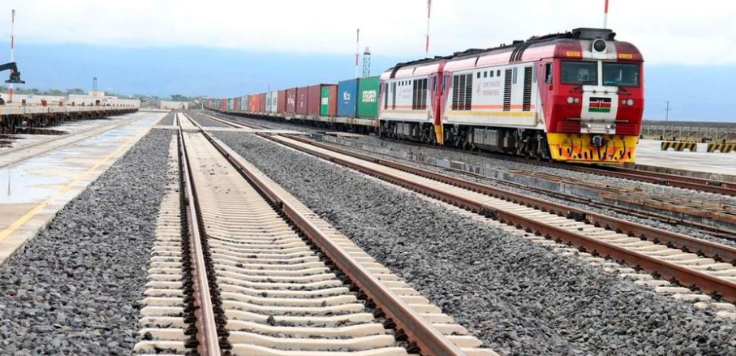
Large infrastructural projects completed include the $3.6 billion standard gauge railway, Lamu port, and the Sh97 billion Nairobi Expressway. He continued building the Lapsset project. Large road projects run across the country, including bypasses around the capital city, Nairobi.
The electricity grid was doubled from 1,300 to 2,600 megawatts. He introduced an internationalised value-based and competency-based curriculum and increased Technical and Vocational Education and Training institutions from 705 in 2012 to more than 2,400 in 2022, among other accomplishments.
Former Ethiopian PM Hailemariam Desalegn tours a maize farm in Githunguri with Governor James Nyoro.
Hailemariam Desalegn, Prime Minister, Ethiopia (2012-2018), BSc in civil engineering - Addis Ababa University, 1988, MSc in water and environmental engineering, Tampere University of Applied Technology, Finland, 1992, MA in organisational leadership, Azusa Pacific University, California, 2006 and worked with Arba Minch Water Technology Institute, Arba Minch University Ethiopia, 1989-2000 and served as Professor, 1992-1993.
He oversaw the completion of the Ethiopian economic blueprint, Growth and Transformation Plan I (GTP I), and started GTP II. He partnered with Kenya in the Lapsset project, a boon to landlocked Ethiopia. He oversaw the construction of Addis city rail transit network, the 550 km Addis-Djibouti rail line and signed the $1.55 billion Djibouti Port-Central Ethiopia oil pipeline.
The Grand Ethiopian Renaissance Dam started in 2011 on the Blue Nile by predecessor Meles Zenawi, costing $4.8 billion with a capacity of 5.15 gigawatts, holding 7 billion cubic metres of water when filled over a seven-year period, with a reservoir lake covering 1,600 sq km will be the largest hydroelectric power plant in Africa.
Elsewhere, four series of dams, Gilgel Gibe I (184MW), Gibe II (420MW), Gibe III (1870MW and Gibe 1V(1472MW), have been built on the Omo River, draining into Kenya’s Lake Turkana. This gives Ethiopia power self-sufficiency and the ability to export power to regional states, including Kenya.
John Pombe Magufuli, President of Tanzania (2015-2021), BSc, education, chemistry and maths, University of Dar es Salam, 1988; MSc, Chemistry, Dar 1994, PhD, Chemistry, Dar 2009.
On becoming President, he reduced his own salary from $15,000 (Sh1,782,300) to $4,000 (Sh475,280) per month, reduced the number of ministers from 50 to 19 and cut down on foreign travel by government officials to tame expenditure. In 2017, he banned the export of unprocessed ores to encourage domestic smelting and value addition.
Dr Magufuli pitched economic growth to 5.8 per cent in 2018, he reviewed laws on mining contracts to reduce fraudulent deals, invested $10 billion to enlarge the Port of Bagamoyo and expanded road and rail networks. He cracked the whip on corruption; in 2015, two ministers were each given a three-year prison sentence, without the option of a fine, on corruption-related charges.
Lee Kuan Yew, Prime Minister of Singapore from 1959 to 1990, enrolled at the London School of Economics and Political Science, and later earned a law degree from Cambridge in 1949. Lee changed Singapore from a backwater, mosquito swamp outpost of Malaysia into a bustling and thriving metropolis, and one of the wealthiest and least corrupt nations, in only three decades.
In his view, a leader is someone who must get people to solve their problems. He invested in quality education for all and exploited the geostrategic location of Singapore, by opening the economy and making Singapore a global financial centre, developed its port to be the busiest in the world and the airport into the most efficient.
A father of transformational leadership, and a pragmatist visionary and consummate diplomat on the world stage, he created one of the most harmonious societies, one that even Confucius would envy. Singapore’s GDP per capita jumped from $500 (Sh59,410) in 1965 to $55,182.48 (Sh6,556,725) in 2013, growing on Lee’s economic leadership model and making Singaporeans score high on the global happiness index.
President Uhuru Kenyatta with Japan's former Prime Minister Shinzo Abe.
Consider Shinzo Abe, assassinated on July 8, 2022 in Nara, Japan, while addressing a campaign rally for a party member; twice Prime Minister of Japan, from 2006 to 2007 and from 2012 to 2020 and the longest-serving post-war PM.
He graduated with a BA in political science, 1977, from Seikei University, Tokyo and studied public policy at the University of Southern California. He stimulated an otherwise moribund Japanese economy through a monetary easing policy by increasing money supply to bolster government spending on, among others, public works projects.
He adopted monetary policy with negative short-term interest rates to make borrowing cheaper; he started structural reforms adding more women to the workforce and allowed migrants in to ease pressure on the ageing labour force.
He dealt with the aftermath of the earthquake and tsunami and the accident at the nuclear power plant at Fukushima in 2011. He adopted more assertive foreign and defence policies and sought to amend Article 9 of Japan’s post war pacifist constitution to bolster Japanese defence capability.
Xi Jinping President of China (2013-) graduated from Beijing’s Tsinghua University with a degree in chemical engineering in 1979 and a PhD in Law in 2002 from Tsinghua University in Beijing. Hu Jintao, President of China from 2003 to 2013, graduated in hydro-electric engineering from Tsinghua in 1965; Jiang Zemin, President from 1993 to 2003, graduated from Shanghai’s Jiao Tong University in electrical engineering in 1947. Zhu Rongji, Premier from 1998 to 2003, has a degree in electrical engineering from Tsinghua and Wen Jiabao, Premier from 2003 to 2013, holds a BSc in structural geology in 1968 from the Beijing Institute of Geology.
It seems if you have no degree in engineering, you are not likely to rise to the echelons of modern-day Chinese leadership.
What is the impact of these engineers on Chinese leadership? The Three Gorges Dam on the Yangtze River in Hubei Province is the largest hydro-electric power plant in the world. Built over 18 years from 1994 to 2012, it cost over $60 billion and produces 22,500 MW of electricity, the energy equivalent of 15 nuclear power plants.
In 2013, President Xi Jinping launched the Belt and Road Initiative, called yi dai yi lu in Chinese. Born out of a global geostrategic vision, it is the largest infrastructure project in the history of the world. It’s a plan for a global network of ports, roads, railways, shipping routes and other infrastructure to connect China to the world.
It comprises 2,600 projects across more than 100 countries, affecting 60 per cent of the world’s population. The cost could well reach $1.3 trillion by 2027, and growing, and could increase global trade by 6.2 per cent and lift 7 million people out of extreme poverty. This global interconnectedness gives China access to resource countries for her imports and markets for her exports.
Conclusion. A high level of education, whose evidence is usually one or more university degrees, is necessary for a visionary, impactful and transformational leadership. If citizens vote in leaders with no or mediocre education or those who forge degree certificates to get into leadership, they have only themselves to blame for corruption, conflict, poverty and underdevelopment.
Chair of Council, Egerton University
The views expressed in this article are the author’s and do not necessarily reflect those of the institutions or organisations he is associated with.
WATCH: The latest videos from the Star
This is premium content
Subscribe to Continue Reading
Help us continue bringing you unbiased news, in-depth investigations, and diverse perspectives. Your subscription keeps our mission alive and empowers us to provide high-quality, trustworthy journalism. Join us today to make a difference!