Recent opinion polls have cast doubt on a mass turnout, pushing both Raila and Ruto into a campaign frenzy as the presidential race enters the homestretch.
At least 22,120,458 voters are eligible to vote, meaning with a projected turnout of 70 per cent, the winner must get more than 7.7 million votes.
Candidates' teams are expected to take elderly and disabled voters to cast their votes. There's even talk of special vehicles to take discharged patients from hospitals to polling stations and then home.
In addition, the registration of youth has been very low, another big problem, despite their eagerness for handouts.
Apathy is cited as many people don't think much will change and jobs won't be forthcoming, no matter who gets to State House.
Aware that low voter turnout, especially in their bastions, would jolt their State House bids, the protagonists are pulling out all the stops. They are stretching and escalating their rhetoric to convince the voters they have a big stake in the outcome.
The Star has learnt both the Kenya Kwanza and Azimio teams are deploying regional stalwarts to psych up their regions to vote in high numbers.
Ruto’s camp, for instance, will dispatch his running mate Rigathi Gachagua (Mathira MP) and a host of Kenya Kwanza bigwigs to whip up Mt Kenya in the last days to the campaign.
What they need for a first-round win is 50 per cent plus one and 25 per cent in 24 counties.
A rerun would be a nightmare, showing neither candidate is overwhelmingly popular. But then the peripheral candidates wouldn't be around to drain votes in a second round.
Ruto’s strategists' teams are educating and mobilise voters in Rift Valley. The aim is a 99 per cent turnout, Uasin Gishu Governor Jackson Mandago said.
The battle for Mt Kenya is at the centre of competition. Raila is banking on President Uhuru Kenyatta's support, running mate Martha Karua and pro-Jubilee MPs to get out the vote.
Some observers predict a low Mt Kenya turnout, as the region doesn’t have a presidential candidate in the race, only deputy president candidates.
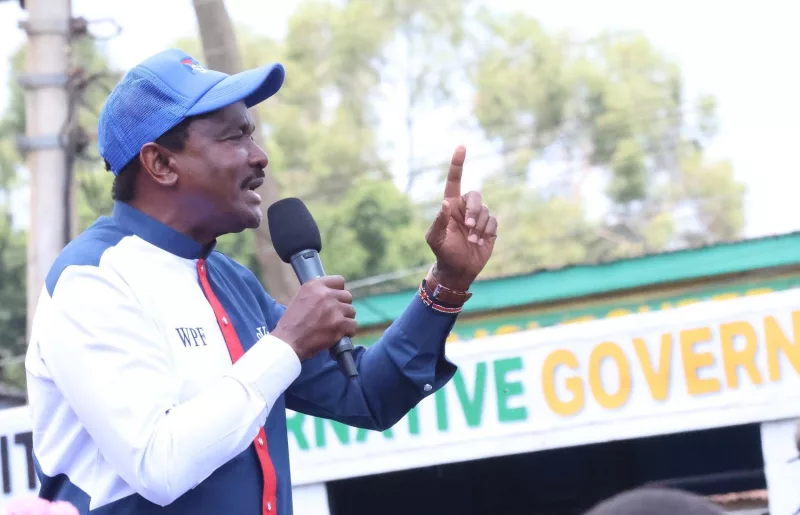
“I want you to turn out in large numbers and vote for me and my soldiers [Azimio candidates]. If you don’t give me soldiers to work with, my rivals will squeeze me hard,” Raila said in Nakuru on Wednesday.
He repeated this message in Turkana and elsewhere.
President Kenyatta’s Jubilee Party roared to victory with historic voter turnouts in the 2013 and 2017 elections, vanquishing Raila’s presidential bids. Raila contested the wins in courts.
In August 2017, the turnout in the presidential election across the country was 78 per cent, lower compared to 2013, which recorded a turnout of 86 per cent.
After the opposition Nasa boycotted the repeat election following the Supreme Court's nullification of Uhuru’s win for widespread irregularities, 34 per cent of voters turned out. Raila boycotted the rerun.
In 2013, Uhuru and Ruto whipped up their supporters to turn out in massive numbers when they were facing charges at the International Criminal Court in connection with the 2007-08 post-election violence. The cases collapsed as witnesses recanted or disappeared.
In 2017, Mt Kenya turnout averaged 86 per cent, which was the highest, followed by Ruto’s Rift Valley backyard at 80 per cent.
Among Raila's strongholds, Nyanza was the fourth at 78 per cent, lower by a point than Ukambani’s 79 per cent, and 76 per cent in Western.
At least 75 per cent turned out in Northeastern and 73 per cent in Nairobi, whereas Coast posted 65 per cent turnout in the hotly contested.
In the recent past, three opinion polls by credible pollsters, including Radio Africa Group, have projected a low turnout of not more than 70 per cent, including in the rival camps’ strongholds.
A Tifa poll released on July 11 showed among all registered voters, more than two-thirds — 70 per cent — indicated they “will definitely vote”.
The poll suggested about 10 per cent were certain they would not vote “for whatever reasons.
“These figures are statistically identical with those obtained from those stating that they will vote for either of the main two presidential contenders, Raila and Ruto, suggesting further the potential voter turnout for each of them is likely to be very similar,” Tifa said.
Political analysts are watching keenly as events unfold. They are united in agreement that low turnout would be a problem.
They also say neither of the competitors is doing enough to drive home new and tailored messages among the undecided bloc, hence, cutting down their chances.
Prof Gitile Naituli, a former NCIC commissioner and now a don at Multimedia University, said, “Voter apathy is going to be real this time.
“That energy Kenyans used to have in the elections has been killed by Jubilee. Uhuru and Ruto made huge promises but delivered none. They brought misery instead of progress,” he said.
Naituli said the disappointment and apathy stands to lower the turnout to 60 per cent and is likely to play out countrywide for different age sets.
“The young ones are the most unlikely to vote as they feel they have been cheated the most. The older ones may vote because they know the consequences of not voting,” he added.
“Since Ruto appears to be ahead, the older folks will turn out in large numbers to offset that perceived gap, so the turnout will be more depressed in the youth stratum,” Naituli said.
For him, turnout will be lowered by disappointments over food and fuel shortages, inflation and public debt weighing down the Kenya Shilling.
Political analyst Martin Andati projects a turnout of 72 per cent on the high side, with Mt Kenya likely to record 69 per cent.
He attributed this to the fact that no native of the heartland is running for president. “Voter turnout is going to be an issue,” Andati said.
Dr Charles Nyambuga of Maseno University agreed voter turnout in Mt Kenya will be low.
President Kenyatta has not campaigned with Raila in his critical home region, leaving that to Martha Karua. It is said his appearance could reinforce the idea that Raila is his 'project'.
Nyambuga observed there is high voter mobilisation “which is coupled with good motivation in most parts of the country but more concentrated in the backyards of the main presidential candidates.
“The messaging by both parties will mostly revolve around phrases such as, ‘We have won this campaign! Come out in large numbers and vote'," Dr Nyambuga told the Star.
He said the Azimio team would be keen on urging their backers to “defend your [their] nation against open looting.”
“They are expected to compare themselves with Kenya Kwanza in terms of integrity and ability to fight corruption,” the don said.
Kenya Kwanza, he said, would want to position themselves as the saviours of the economy and livelihoods.
“The ‘us versus them’ narrative is going to be more dominant in the campaigns. How they treat Uhuru's pronouncements shall be critical in Mt Kenya,” Dr Nyambuga said.
Ugunja MP Opiyo Wandayi, who is Azimio la Umoja's deputy secretary general, said they have laid out strategies to ensure a larger turnout than in the most recent polls.
“We're working on a minimum of 95 per cent turnout. We want to win this election in the first round with at least 65 per cent of votes cast,” Wandayi said.
Lawyer Ahmednasir Abdullahi said that with 18 days to go, "one cannot fail but notice the competing dialectical narratives pushed by Ruto and Raila on their endgame.
"Ruto is confident he has the people, the voters, on his side. Raila is arrogantly cocky that the 'deep state' and Uhuru will deliver for him," the lawyer, a fierce Ruto defender, said.
(Edited by V. Graham)
“WATCH: The latest videos from the Star”