The reason for this is simple. Perception of popularity has a serious, irrefutable bearing on actual popularity in politics. If you listen carefully, during political rallies, politicians on either side campaigning in one side of the country will attempt to allude to the acceptance, support, endorsement and popularity of their candidate in various other parts of the country.
This way, undecided or unconverted voters are supposed to be swayed by the idea that the particular candidate has been accepted and is enjoying the support of many other people. Who would not be tempted to love somebody who is loved by other people?
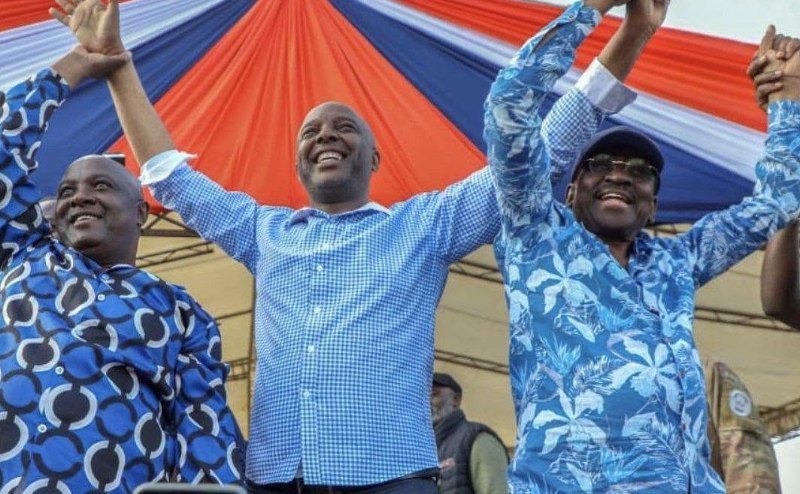
As campaigns gain heat, drawing nearer to the election, the politics of optical appeal have also become intense. One of the tactics in use, as even major politicians have admitted, is the ferrying of crowds from areas perceived to be supportive of various political camps to other parts.
This is aimed at giving the impression of popularity in such areas, and in effect, impress upon voters the need for support. Politicians have adopted this method, which is complemented with some level of financial tokenism to psyche up the ferried crowds to cheer every breathe, word and exclamation made at these rallies.
Understandably, it would be a bad display, with undesirable political impact nationally, for a leading candidate to have their campaign caravan being bigger than the people who turn up to engage with them. Smart and unharmful as it is, it is plain optical deception.
If one has to apply deception tactics to advance their mission, it might be a mission bound to fail. It is also appropriate to expect that such politicians may have a problem dealing with reality, including the actual outcome of polling itself. It is in order to pose, will these attempts to create a false show of popularity stop at the campaigns?
A politician reputably believes in two ways to get to the top of the political contest. To convince voters that they are the best choice available, they either show how good they are, or how bad the opponent is. The former is partly achieved through the ferrying of political cheering squads as we have discussed.
The other option is to attack the image and decency of the opponent. To achieve this, politicians and their camps opt to organise acts of hooliganism by people who are instructed to pose as supporters of the opponents. These hired goons are commissioned to attack the political events of the masterminding political camp and cause mayhem, injure, possibly kill some people and destroy property.
Effectively, the disapproval that this barbarism attracts is supposed to rally the public against the other political camp. The mastermind ends up fooling the public, who support him/her out of sympathy. This is a tactic that has been described as politicking of “sympathy addiction”.
The unfortunate chaos that happened in Jacaranda on Saturday, June 18, was one most unfortunate. In the event, DP Ruto’s motorcade is pelted with stones by youth who had been waiting along the road leading to the Jacaranda grounds in Nairobi's Embakasi East constituency.
The youth, some in uniform, are later seen peacefully escorting DP Ruto’s car to the grounds. Ruto’s camp soon thereafter took to all media platforms to point accusing fingers at the camp of Raila Odinga, calling him all manner of names, such as the “lord of violence”.
In a quick rejoinder, Raila refuted that his camp was responsible or even capable of orchestrating such acts. He counter accused Ruto’s camp of stage-managing the violence to earn sympathy from voters.
A memory tease, in his wild outbursts earlier, former Nairobi Governor Mike Sonko once intimated that they used to dress youths in ODM branded T-shirts with instructions to burn vehicles and blame that on opponents.
It is not alien, therefore, to be tempted to believe that the Jacaranda chaos was staged managed to diminish the decency of the Azimio camp in the eyes of the public and gain sympathy for Kenya Kwanza, with the hope that gullible Kenyans will support them in solidarity.
Otherwise, why not allow the police, the principal handlers of security matters, to probe the matter and report?
Another pointer that Kenya Kwanza is employing tactics of sympathy mining is the latest gimmick by UDA Nairobi governor candidate Johnson Sakaja. He drags the name of President Uhuru Kenyatta into his degree saga, claiming the President is out to frustrate him.
For someone in political infancy like Sakaja to claim that President Kenyatta seeks to frustrate him, he is clearly trying to keep his name in the company of political big boys, while at the same time trying to tap some sympathy from it.
Politics of optical deception to either give false impression of popularity or to seek sympathy by hiring “opponents” goons to disrupt one's rallies is a threat to the peace and stability of the country and should not be allowed to go unchecked.
“WATCH: The latest videos from the Star”



![[PHOTOS] Uhuru graces commissioning mass of Catholic Women](https://cdn.radioafrica.digital/image/2026/06/0bbd7e96-f180-4e02-966f-97c3fb201478.jpg)