 AI generated
What does it take for a country to develop a nuclear power plant?
For Kenyan officials who recently spent a week studying Canada’s nuclear sector, the answer goes far beyond constructing a reactor.
It requires trained workers, strong regulators, long-term waste management plans and public confidence in a technology that Kenya hopes will one day help meet its growing energy needs.
Those were among the lessons a Kenyan delegation took away from a study mission to Canada as the country pursues plans for its first nuclear power plant.
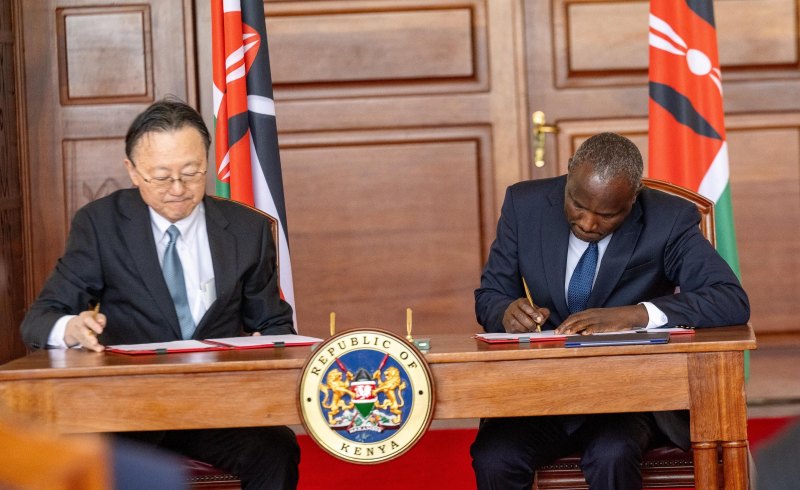
The delegation, which included representatives from the Kenya Electricity Generating Company (KenGen), the Nuclear Power and Energy Agency (NuPEA) and other institutions, toured nuclear facilities and organizations in Ontario to gain insight into reactor operations, safety systems, workforce development and waste management.
Kenya has previously indicated that it is considering an initial nuclear power project capable of generating about 2,000 megawatts of electricity as part of efforts to diversify the country’s energy mix and meet rising demand.
“This trip is very strategic to us, and it has helped us deepen our understanding on our role going forward. We had a first-hand experience to learn from an established nuclear market, understand the owner-operator model and translate that knowledge into a long-term plan for Kenya’s energy system,” KenGen Managing Director Peter Njenga said.
One lesson stood out throughout the visit: a successful nuclear programme depends as much on people and institutions as it does on technology.
“Building a nuclear program is not only about technology; it is also about people, institutions and long-term capability,” said Sophie Price, Head of Cooperation at the High Commission of Canada to Kenya.
“For every engineer in nuclear, many more diverse professionals are needed across operations, safety, regulation and community engagement.”
The delegation also examined how countries prepare for one of the most scrutinised aspects of nuclear energy—what happens after electricity is generated.
During a visit to Canada’s Nuclear Waste Management Organisation, officials learned how used nuclear fuel is managed and how oversight systems are designed to operate over decades.
“For Kenya, this level of safety preparedness offered us a concrete example of how public confidence in nuclear energy is built not only through safety and regulation, but through visible, durable commitments to stewardship over decades,” said NuPEA official Eric Ohaga.
Kenya is yet to develop a nuclear power plant, and any future project would require years of planning, regulatory approvals, financing and public engagement before construction can begin.
For Njenga, the mission provided a clearer picture of what would be required to turn the country’s ambitions into reality.
“Kenya’s nuclear journey is not beginning from zero, but it will demand discipline, continuity and institutional depth to turn this national dream into a reality for the good of our people,” he said.
The Canada mission offered a glimpse of what lies behind nuclear power: not just reactors and electricity, but the institutions, expertise and long-term planning needed to make it work.