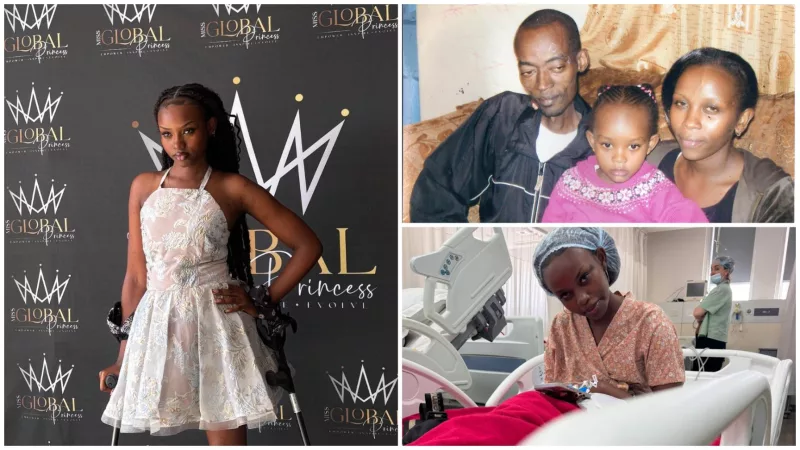
As the world marks Bone Cancer Awareness Month, a young girl who has battled a rare form of the disease from a tender age is in Medanta Hospital Gurgaon, India, continuing her gallant fight against it.
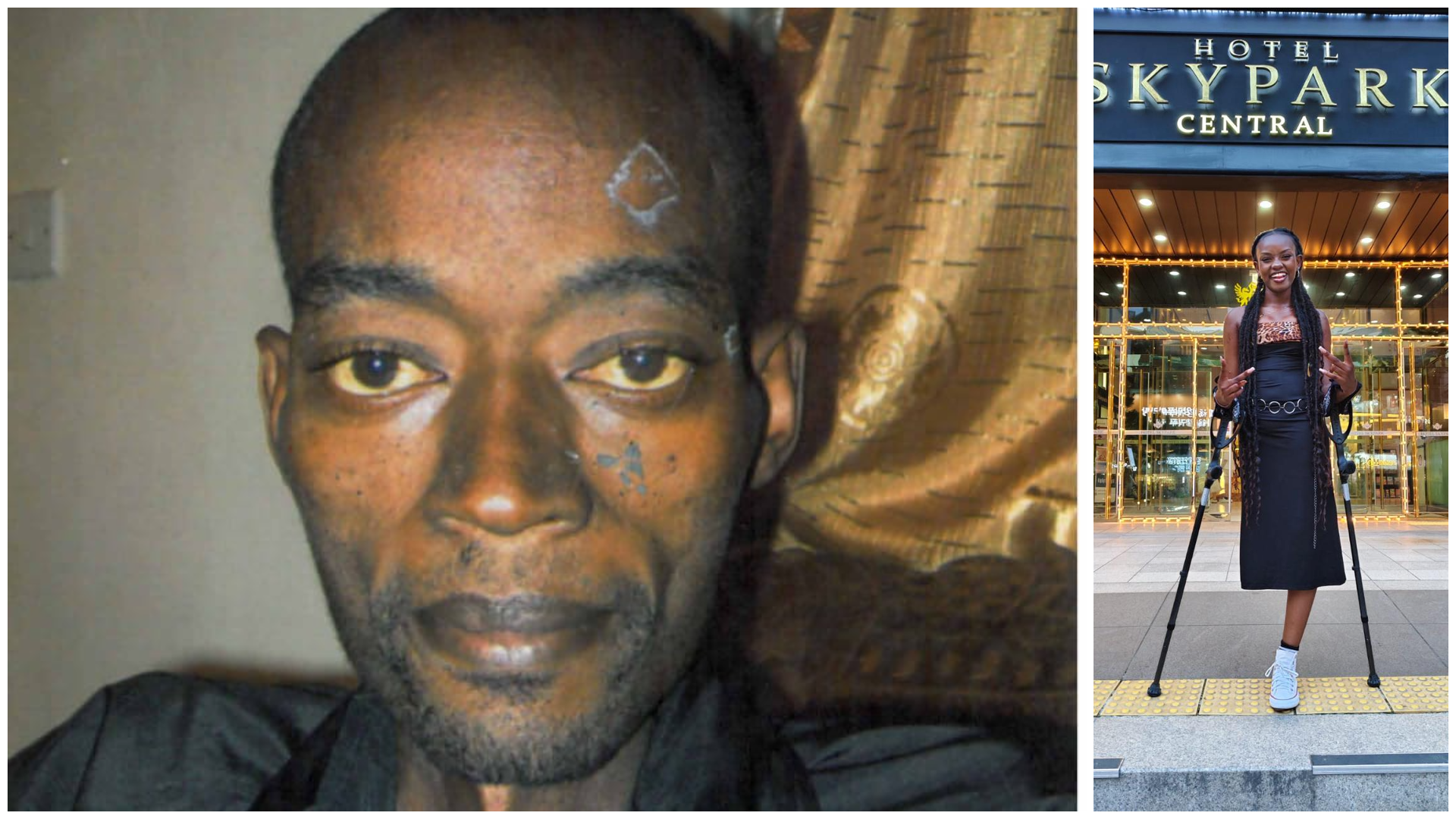
Frida Lakita was diagnosed with osteosarcoma (cancer of the bones) in 2017, in the form of a tumour in her knee. Subsequently, she had had her right leg amputated after doctors discovered it might spread to other parts of the body.
The cancer has since relapsed and she had to return to India for further treatment. Doctors were convinced that the condition was caused by Li-Fraumeni Syndrome (LFS), a hereditary genetic disorder.
In Lakita’s case, the cancer trait was inherited from her late father, Elly Abong’o, a former Citizen TV sports journalist who succumbed to colon cancer in May 2010.
Although she underwent chemotherapy, she developed Myelodysplastic Syndrome, characterised by the development of abnormalities in the blood-forming cells. The American Cancer Society explains that in cases of the condition, “many of the blood cells formed by these bone marrow cells are defective. As these defective cells build up in the bone marrow, they can crowd out normal blood cells”.
LFS has played a significant part in the development of new cancers in the body even after successful treatment of previous conditions.
After years of treatment, surgeries and two transplants of the bone marrow, Lakita was declared free of cancer in 2022. Unfortunately, a few years later, the cancer returned and she had to go back to India for treatment. Currently, Lakita is still fighting osteosarcoma in the Asian country, undergoing chemotherapy.
Her mother, Joyce Abong’o, says immunotherapy has not provided promising results, and doctors have resorted to chemotherapy as the only weapon against the disease.While Lakita and her family have bravely fought the disease and have every hope and conviction that they will emerge victorious, the battle has drained them emotionally, psychologically and financially. Mother and daughter have previously had to stay in India to try and reduce travelling expenses.
Additionally, chemotherapy and other medical procedures are painful for the teenager. Still, treatment has dug a deep hole in the family’s pocket and they are now turning to everyone to help sustain the battle against the ailment until it is won.
“We are not sure how many cycles we will do, but we had to deposit $5,000 (Sh647,400) for five days’ admission,” her mother, Joyce, said recently.
“The doctor said Lakita will need many cycles since immunotherapy hasn’t responded well. Our family is humbly seeking support to help continue her care. Every contribution, no matter the amount, brings Lakita one step closer to healing. The family needs about Sh9 million for the 18-year-old to complete her treatment, which will be done for a longer time in phases.”
HIGHLY STIGMATISED
As Lakita and her family appeal for funds to meet treatment expenses, many other Kenyans are silently going through pain caused by cancer as a result of late diagnosis.
A rare condition, Li-Fraumeni syndrome is the culprit of inexplicable health conditions, which have mistakenly been associated with family curses. Joyce explained in a past interview that some people believe that LFS is a curse, courtesy of lack of awareness or education about the condition.
“There is a lot of stigmatisation for many patients if they happen to experience LFS disorders within the family set-up, thereby causing a lot of trauma for the families,” she said.
In the past, there was no LFS TP53 gene testing in the country, and Kenyans had to go out of the country for diagnosis and treatment. The result was late diagnosis, and in many cases, LFS went undetected, hiding under supposed curses and other outdated cultural beliefs.
Fortunately, Kenyans can now be tested without having to go out of the country or meeting the high costs of the procedure, courtesy of funding provided by the Li-Fraumeni Syndrome Association (LFSA).
Samuel Omolo, PhD researcher and the LFSA Africa president, implores Kenyans to seek Early LFS testing at the Pan African Institute of Genomic Science (PAIGS) core laboratories in Karen, Nairobi to ensure early diagnosis and commencement of medical intervention.
The medical history of the patients as well as that of their families is examined to determine whether they are at risk of LFS. For instance, the condition was diagnosed in Lakita after it was revealed that her late father, his parents and siblings succumbed to cancer.
After doctors ascertain the existence of LFS through DNA sequencing, patients must undergo regular screening to ensure that the cancer predisposition is detected early and appropriate medical intervention is taken.
Omolo says Li-Fraumeni syndrome is not cancer but a highly penetrant cancer pre-disposing syndrome to all types of cancer.
“To the people of my continent Africa: LFS is not witchcraft but a genetic disorder. We need to embrace these families and support them,” he says.
“Lakita’s tumour recurrence is typical of LFS as it is the only syndrome that predisposes a patient to multiple types of cancer. She is a strong-willed champion and will conquer this new challenge.”
FUNDING APPEAL
Apart from providing funding for the LFS TP53 gene testing in the country, LFSA organises international events for people with LFS to come together and share their experiences.
Lakita and her mother, together with Omolo, attended such an event in the United States in 2023, but they were unable to attend subsequent gatherings since Lakita has been in and out of hospital in India.
Last year, the organisation held the event in Boston, Massachusetts, United States, bringing together young people and their families, from all over the world to celebrate their victories, share hope and receive invaluable education on the management of the condition from health experts.
Omolo says there is every hope that Lakita will attend this year’s event scheduled for October. Titled ‘Eighth Biennial Scientific Symposium On Li Fraumeni Syndrome’, it will be hosted by MD Anderson Cancer Center in Houston, Texas, USA.
So much is dependent on her family’s ability to meet the expenses for chemotherapy cycles to treat the cancer that has now spread to her shoulders.
Faraja Cancer Support Trust CEO David Makumi says Kenya is working to improve survival to at least 60 per cent by 2030. It is part of the World Health Organisation-Global Initiative for Childhood Cancer.
“The country must, therefore, act with speed and urgency to deploy resources that ensure patients like Lakita get treatment without catastrophic spending,” he says.
“Let us all come together to honour her appeal and bring hope to the young girl by contributing through business number 4816429. The Account Number is the contributor’s name.”
You can also call her mother Joyce Abong’o on 0720482252 to encourage her or ask any question in relation to her daughters’ treatment.
(The Star published an earlier version of Frida Lakita’s article on September 17 last year (https://www.the-star.co.ke/news/big-read/2025-09-17-rare-genetic-disorder-that-helps-cancer-run-in-families). This is an updated version to highlight Lakita’s continuing fight against this rare type of inheritance cancer, for the purposes of awareness but also to mobilise funds to cater for her medical expenses)