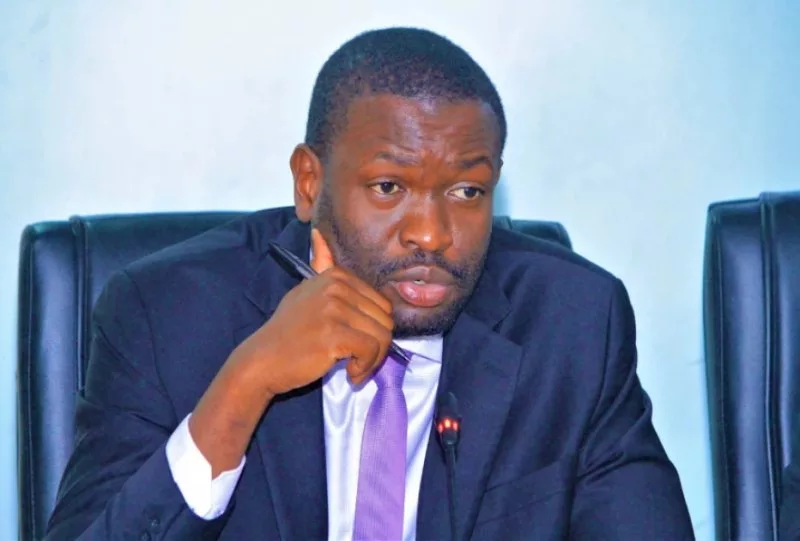
Auditor General Nancy Gathungu has called out the exchequer, saying it has failed to punish errant accounting officers.
The auditor made the observations in a report tabled in Parliament detailing her verdict on the national government books of accounts as of June 30, 2023.
The auditor said the book managers roam freely, despite her office flagging instances where the officers have broken the law and failed to account for public funds.
“Failure to apply the requisite sanctions and consequences has resulted in some accounting officers not adequately accounting for the management and use of public resources with impunity,” Gathungu said.
As a result of the Treasury’s ineptness, the officers have failed to support the legality and effectiveness of the use of public resources.
“Lack of action and sanctions has also led to fiscal indiscipline, including misallocations, wastage of resources, loss of public funds and lack of value for money in the implementation of projects,” Gathungu said.
The infractions and the lack of sanctions have undermined development programmes.
“This in turn threatens economic growth and sustainability of quality service delivery to citizens,” the auditor said.
She revealed instances in which accounting officers failed to prepare for audits.
“This is exhibited by numerous inaccuracies in financial statements presented for audit and lack of requisite supporting documents,” Gathungu said.
The Auditor General cited revisions of financial statements, adding that accounting officers have in some cases refused to cooperate with auditors.
Public finance law provides for a Sh5 million fine or imprisonment for three years, or both, to such officers, upon conviction.
While Gathungu has singled out the Treasury, she said the lack of decisive action cuts across all ministries, state departments and agencies.
Many reports by MPs recommending punishment for named accounting officers by anti-corruption authorities are gathering dust on shelves.
While lawmakers have recommended prosecution in some cases with punishment as an administrative action, nothing significant has happened. Earlier, the auditor warned of a loophole in the financial management law, which has emboldened accounting officers to misuse emergency funds.
Gathungu said it is not clear what would happen because the Public Finance Management Act, 2012, does not provide specifics steps to be taken in such an event.
“There is no guideline in place on how unapproved withdrawals from the Consolidated Fund under Article 223 should be dealt with,” the Auditor General said. As such, most audit queries recur in subsequent years, she said, adding that Treasury Cabinet Secretary Njuguna Ndung’u has yet to apply the powers he has been granted by law.
“Section 204( 1 )(g) of the Public Finance Management Act, 2012 provides that the Cabinet secretary for matters relating to finance may apply sanctions to a national government entity that fails to address issues raised by the Auditor General, to the satisfaction of the Auditor General,” the report reads.
It revealed President William Ruto’s administration failed to account for about Sh82 billion spent in the last financial year.
Of that amount, Sh79 billion was in respect of MDAs and Sh2 billion in respect of donor projects.
A large chunk of the unsupported expenditure was at the State Department for Petroleum, which failed to explain how it spent Sh62 billion.
It included an unsupported stabilisation of petroleum pump prices amounting to Sh62,495,828,161 as compensation for lower prices charged at the pump.
The department failed to explain Sh68.7 million, which it said was transferred to the National Oil Corporation of Kenya (Nock) for purposes of refilling cylinders for the rollout of Mwananchi LPG in Nairobi county.
The National Treasury also failed to support spending of Sh16 billion, including a Sh10 billion loan to Kenya Airways. Gathungu reported the amount was disbursed before the loan agreements were signed between Kenya Airways and the government.
Also flagged was the Sh6 billion the Treasury spent to acquire shares in Telkom Kenya, without a corresponding budget estimate.
State Department for Lands was also called out after it could not explain Sh711 million expenditure, which was described as legal costs in a court case.
There were no documents or case files to support the claims that the money went to the purported court case.
A tree planting expenditure of Sh140 million by the Environment department is also in doubt, as is Sh59 million the Higher Education department it said was disbursed to Bomet University College.
“Failure by the entities to fully support payments casts doubt on the authenticity of the reported expenditure,” Gathungu said.
“It is also an indication of weak internal controls and governance in the affected entities. Similarly, lack of accountability could lead to losses, wastage and theft of public resources,” the auditor said.
The State Department for Mining failed to support Sh31 million spending on goods and services. The Department of Administrative Justice (the Ombudsman) did not support the Sh16.9 million it said went to the use of goods and services.
For donor projects, accounting officers at Kenya National Highways Authority (Kenha) failed to explain an over-expenditure of Sh525 million in the Nuno-Modogashe road project.
The Ministry of Health was grilled over an unexplained Sh473 million Covid-19 emergency response cash, which it said went to employee costs and goods.
Gathungu said the audit revealed the employees purported to have been paid were not on the payroll, while goods worth Sh439 million had no supporting documents.
The Health ministry also failed to support the spending of Sh244 million under the Danida Primary Healthcare support programme.
The amount included grants for technical assistance to counties of Sh213 million and programme activities implemented directly by the donor.
The Higher Education department did not explain Sh393 million it said was spent in the hiring of staff, salaries and employee benefits, imprest and advances.
At the Technical Vocational Education and Training (TVET) department, a payment of Sh120 million to a contractor was not supported with an invoice and a valid tax compliance certificate.
More than 20 donor projects had audit queries over unsupported expenditures, cutting across operating expenses to unsupported remittances. The National Treasury has been in the news lately for cases of delayed release of funds to counties, CDF and allegedly ‘punitive’ tax laws.