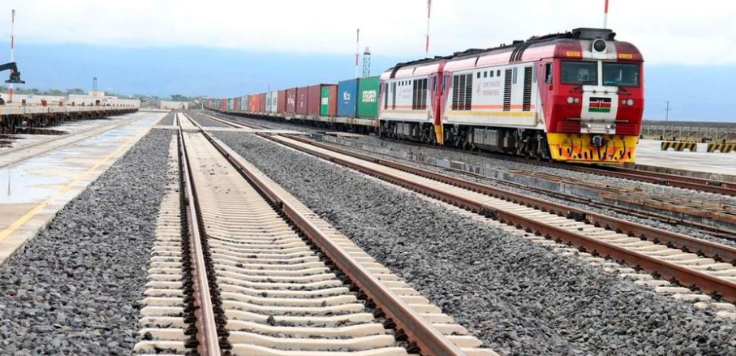
More shipping lines have pledged to use the Lamu port following its launch and operationalisation by President Uhuru on March 20.
Hapag-Lloyd, one of the top 10 shipping lines in the world in terms of volume said though it is still too early to determine, they will be looking to use the new port.
Hapag-Lloyd country manager Prashant Sindhwani said the Lamu port is new and more focussed on the transhipment cargo towards Ethiopia and South Sudan.
“Yes, eventually,” said Sindhwani when asked if they will be using the Lamu port at some point.
“I’m sure it will pave way for us to relook at the market demands and change our services. At this moment we are only with Mombasa. Of course, that gives us an opportunity to serve the other countries in the hinterland,” said Sindhawni.
He spoke on board the MV Northern Valence which made its maiden call at the Mombasa port on Saturday.
Kenya Ports Authority acting managing director Rashid Salim said the maiden call shows confidence in the services offered by the port facility.
“The new service line by Hapag-Lyod is timely and shows a continued positive trajectory towards increased operational performance,” said Salim, whose speech was read on his behalf by KPA principal operations officer in charge of ships Evans Akunava.
Earlier, EAC Cabinet Secretary Adan Mohammed had said the Lamu port would not necessarily deny business to the Mombasa port.
Mohammed said the Mombasa port will in the near future not be able to sufficiently serve the growing economies that it is currently serving including the EAC countries, the DRC and the targeted countries for attraction.
“These economies are growing. The space we have in the Port of Mombasa is limited. Despite the expansions, it will not be sufficient in the future. We can’t even attract bigger ships that could reduce the cost of transportation,” said Mohammed.
“I don’t see this as a competition to the port Mombasa. It is going to complement the port instead. Some space will be created in Mombasa.”
Initially, the CS said, the Lamu port is expected to attract big ships, after which smaller and medium-size vessels will pick cargo from there into places along the Somali coast, up to Salala, and Comoros, Dar es Salaam and as far down as Durban, South Africa.
The end game, Mohammed said, is to connect the East Coast of Africa (Indian Ocean) to the West Coast (Atlantic Ocean).
“That would entail nearly 40,000km of road from Lamu to the West Coast of Africa which will include electricity, fibre optic capabilities, water that will be running through, rail, pipeline,” Mohammed said.
He called on the private sector to step in and develop some of the berths at the new Lamu port facility, expected to have 23 berths once complete.
One of the first three berths is complete and operational while the other two are expected to be complete by August.
“Now the private sector needs to find how to plan and capitalise on this significant infrastructure project,” he said.
Salim said there will be no competition between Mombasa Port and the brand new Lamu port since each will in the long run have its own trade routes to serve.
He said KPA is also making the Mombasa port to be more competitive by continually upgrading its infrastructure, constructing more storage facilities, enhancing security and improving the efficiencies of port operations to accommodate the increase in freight.
Salim said KPA is working closely with the Kenya Revenue Authority and other relevant state agencies on modalities of offering incentives to shipping lines docking at the new facility.
“For example, as KPA we assure investors targeting the new facility that we will be offering a free storage period of over 30 days and tax rebates to woo shipping lines,” he said.
Lamu Port general manager Abdullahi Samatar said the new port is expected to attract transhipment business from Ethiopia, South Sudan and beyond.
He said the strategic Lamu port has the capacity to handle jumbo-sized ships with a carrying capacity of between 12,000 to 18,000 twenty-foot equivalent unit ships.
He said soon KPA will send a high-level delegation to South Sudan and Ethiopia to market the ultra-modern state-of-the-art facility.