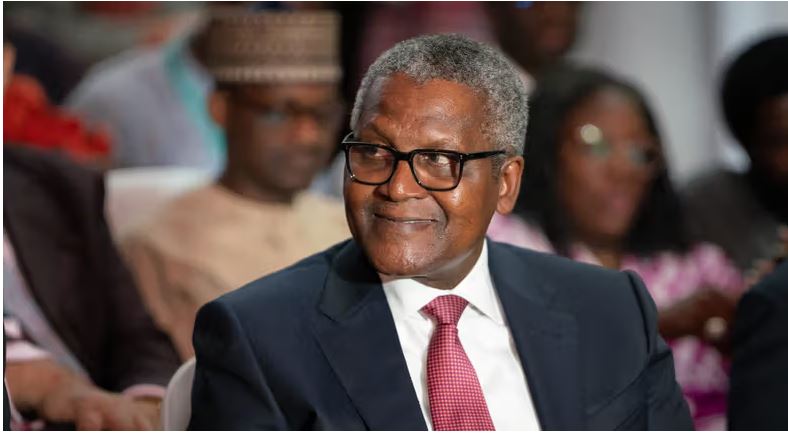
 Dennis Wendo Governance and Public Policy Analyst Integrated Development Network–Kenya (IDN–Kenya)./HANDOUT
Every by-election is more than a contest for political representation.
As the country gradually shifts its attention towards the 2027 General Election, the unfolding events surrounding the Ol Kalou by-election present an opportunity to reflect on whether our electoral systems, political actors and public institutions are adequately prepared to safeguard the constitutional values that underpin our democracy.
The newly constituted Independent Electoral and Boundaries Commission (IEBC) assumed office at a defining moment in Kenya's democratic journey. It inherits not only the constitutional mandate to conduct free, fair and credible elections but also the responsibility of rebuilding and sustaining public confidence in the electoral process.
Every decision the Commission makes, from voter registration and election planning to dispute resolution and communication, is inevitably measured against the principles of transparency, impartiality and accountability.
Public confidence remains the currency upon which every electoral management body depends. It is not enough for the Commission to be impartial; it must also be seen to be impartial. In today's information environment, where perceptions spread as rapidly as facts, clear communication, timely decision-making and consistent application of the law are indispensable in strengthening public trust.
The significance of the Ol Kalou by-election therefore extends beyond the boundaries of Nyandarua County. It serves as an early indicator of Kenya's preparedness for the 2027 General Election.
Every campaign activity, every security deployment, every electoral decision and every institutional response contributes to a broader national assessment of whether our democracy continues to mature or risks sliding backwards.
Equally important is the conduct of political parties and their supporters. Competitive elections are the hallmark of democratic societies, but competition should never come at the expense of constitutional order or public safety.
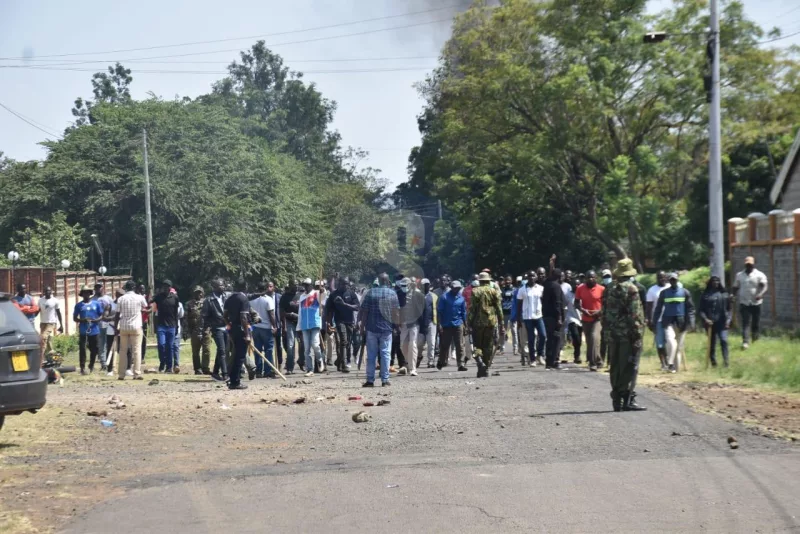
Political leaders bear a heightened responsibility to promote peaceful campaigns, respect opposing viewpoints and discourage conduct that incites hostility or undermines public confidence in democratic institutions. Of growing concern is the apparent resurgence of organised groups that disrupt political activities, intimidate opponents or create an atmosphere of fear during electioneering periods.
Such acts, whether perpetrated by politically affiliated groups, criminal gangs or opportunistic individuals, threaten not only the integrity of elections but also the rule of law. Violence and intimidation have no legitimate place in a constitutional democracy.
The National Crime Research Centre has previously documented the growth of organised criminal groups across several counties, highlighting how unemployment, economic hardship, social exclusion and political manipulation create fertile ground for their expansion.
These findings underscore the need to treat electoral violence not merely as a security challenge but as a governance issue requiring long-term, preventive interventions. Young people often find themselves at the centre of election-related unrest. Yet they should not be viewed simply as perpetrators of political violence.
Many are victims of economic vulnerability, unemployment and manipulation by individuals seeking short-term political advantage. Kenya's youth constitute one of the country's greatest national assets. They deserve opportunities for meaningful civic participation, decent employment and leadership development rather than exploitation as instruments of political confrontation. Security agencies likewise play a pivotal role in preserving electoral integrity.
Their constitutional duty is to protect every citizen equally, irrespective of political affiliation. Professionalism, restraint and impartial enforcement of the law are essential in preventing isolated incidents from escalating into broader security challenges. Public confidence in elections depends not only on credible electoral management but also on confidence that security institutions operate fairly and independently.
The media and digital platforms present both opportunities and risks. Technology has transformed political communication by enabling greater citizen engagement and faster dissemination of information. However, it has also accelerated the spread of misinformation, manipulated content, hate speech and inflammatory rhetoric capable of heightening political tensions.
Political leaders, media practitioners, technology companies and citizens all share a collective responsibility to promote factual discourse and reject communication that undermines peaceful democratic participation. The credibility of the 2027 General Election will not be determined solely by events on polling day.
It will be shaped by every decision taken between now and then, every by-election conducted professionally, every electoral dispute resolved fairly, every allegation investigated impartially, every act of political violence prevented and every citizen reassured that constitutional institutions remain stronger than partisan interests. Kenya has made significant democratic progress over the past three decades.
The promulgation of the Constitution of Kenya, 2010 strengthened institutions, expanded political rights and established important safeguards for electoral justice.
While challenges remain, these gains should never be taken for granted. Democratic resilience requires continuous investment in institutional integrity, civic responsibility and constitutional fidelity. Ultimately, electoral integrity is a shared national responsibility.
The IEBC must discharge its mandate with unwavering independence and professionalism. Political parties must compete responsibly and place national cohesion above partisan interests. Security agencies must remain impartial guardians of public order. Civil society, faith-based organisations, the media and ordinary citizens must continue to hold institutions accountable while promoting peaceful democratic participation.
The road to 2027 does not begin on election day. It begins with every decision, every institution and every citizen who chooses to uphold the Constitution today. The lessons drawn from Ol Kalou should therefore not divide the nation along political lines but unite us around a common commitment to credible elections, peaceful competition and accountable governance.
Kenya's democratic future will ultimately be defined not by the intensity of our political contests, but by the integrity with which we choose to conduct them.
The writer is Governance and Public Policy Analyst at the Integrated Development Network–Kenya (IDN–Kenya)
Email: [email protected]
Website: www.idnkenya.org