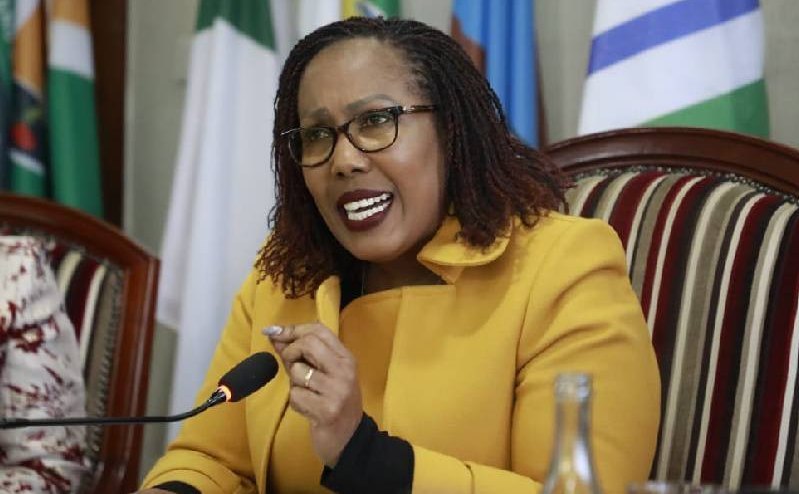
 Chief Executive Officer, Council of Governors Mary Mwiti /SCREENSHOT
The adoption of Kenya’s Constitution in the historic referendum of August 4, 2010 and its subsequent promulgation on August 27 marked a defining moment in the country’s democratic journey.
The overwhelming support for the Constitution reflected the aspirations of Kenyans for a governance system that would bring services closer to the people, promote equitable development across all regions, ensure fair distribution of resources and strengthen accountability in leadership and public administration.
At the heart of these aspirations was the recognition that sustainable development and effective governance can only be achieved when citizens are empowered to actively shape decisions that affect their lives.
Devolution was conceived not merely as an administrative restructuring of the state, but as a fundamental shift in governance, from a highly centralized system of power to one that places citizens at the centre of decision-making.
The Constitution affirms that all sovereign power belongs to the people and underpins a key principle of the devolved system: To give powers of self-governance to the people and enhance their participation in the exercise of the powers of the state and in making decisions affecting them.
The success of a devolved system of Government relies on informed citizens who can participate effectively in planning, budgeting, monitoring and oversight processes.
Consequently, direct engagement of citizens through public participation forums, stakeholder consultations, citizen feedback mechanisms, public hearings and community development planning processes is paramount.
Active and meaningful engagement of citizens in governance depends, to a large extent, on effective strategic communication.
Strategic communication is no longer a supporting activity or operational tool on the margins of public administration, it has become part of how governance itself is understood, experienced and evaluated.
Within Counties, every policy decision, investment or service delivery intervention only fully translates into tangible impact when citizens clearly understand what has been done, why it matters and how it fits into the broader development agenda.
Strategic communication acts as the bridge between citizens and the Government, shaping how governance is perceived by citizens, promoting transparency, public trust, accountability and creating avenues through which public feedback can inform decision-making.
At the local level, strategic communication ensures residents remain aware of the mandates of the County Government, understand the development priorities and opportunities for participation and are engaged throughout project or program design, implementation monitoring and evaluation.
The gains realized through Devolution across various sectors such as health, education, agriculture, urban development, infrastructure and natural resource management are undeniable.
However, these gains have not been achieved through adequate resource allocation and administrative support alone, but equally through effective communication, citizen engagement and a shared understanding of development goals.
While the communication environment in which Counties now operate has evolved rapidly, persistent challenges continue to undermine the integral role of strategic communication in devolved governance.
Inconsistencies such as dissemination of information through fragmented platforms, ad hoc public barazas, lack of clarity and timeliness in updating information across various platforms and underutilized digital tools, lead to misinterpretation, hinder public understanding and reduce public trust.
Similarly, the County Budget Transparency Survey (CBTS) 2025 released in June this year reveals that although Counties have made significant progress in strengthening good governance and promoting budget transparency, disparities still exist in ensuring timely publication of budget information and how effectively budget information is communicated to residents. Citizen budgets, which remain critical for meaningful public participation and public understanding of County finances, continue to be both the least published and the least comprehensive budget documents and are sometimes, either not accessible or published in a manner that citizens can’t easily understand.
Additionally, in some Counties, official communication is heavily focused on personalities and social events rather than development activities and outcomes.
This reactive, event driven approach limits Counties’ ability to build sustained engagement with citizens and weakens the visibility of ongoing development projects. Strategic communication, on the other hand, offers a systematic and citizen-centered framework for aligning communication channels, improving message consistency and strengthening the relationship between County Governments and the public.
Such a reality reinforces the need for more structured communication approaches that are proactive rather than reactive.
Ultimately, strategic communication supports a core objective of Devolution, bringing governance closer to the people not only in physical service delivery, but also in understanding and engagement.
It is a strategic resource that ensures development efforts are visible and legitimate, builds public confidence promotes participatory governance.
Written by Mary Mwiti, EBS – Chief
Executive Officer, Council of Governors