The government has repeatedly declared its commitment to transforming mining into a major pillar of Kenya’s economic growth.
Kenya has significant mineral potential, a modern legal framework and growing investor interest.
Yet one fundamental obstacle continues to undermine this ambition, the administration of mineral rights through the online cadastre and licensing system.
At the core of any successful mining sector is a licensing regime that is transparent, efficient and predictable. A mineral cadastre should provide investors with confidence that applications will be processed fairly, consistently and within clear timelines.
In Kenya, however, the licensing system has increasingly become the weakest link in the sector.
Today, investors face prolonged delays, inconsistent decisions and widespread uncertainty. Some applications remain pending for years despite meeting all legal requirements, while others move from submission to approval in a matter of months.
In a capital-intensive industry where financing depends on regulatory certainty, this unpredictability significantly increases project risk and discourages investment.
The Mining Act, 2016 is not the problem; in fact, it established one of the most progressive mining frameworks in the region, with clear procedures, timelines and technical standards intended to ensure that only qualified applicants receive mineral rights. On paper, the law compares favourably with modern mining legislation globally.
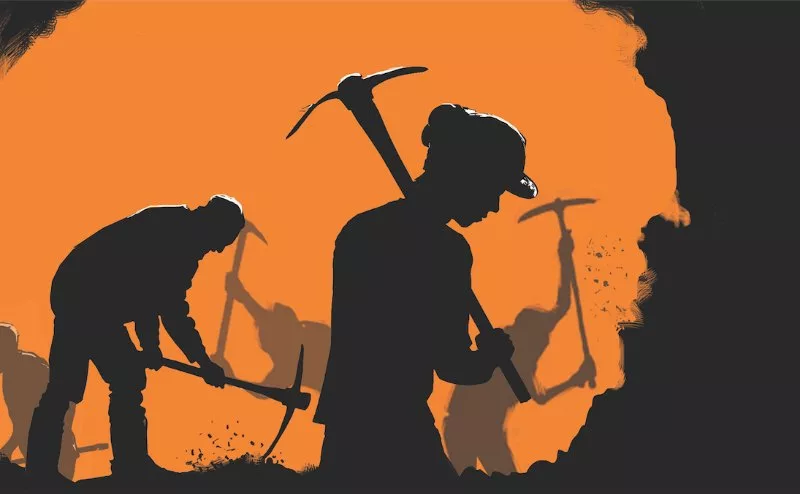
The challenge lies in implementation. Perhaps the clearest example of imbalance in the current system is the treatment of artisanal miners. Since the enactment of the Mining Act in 2016, numerous large-scale licences have been granted. Yet, to the best of industry knowledge, not a single artisanal mining permit has been formally issued under the current legal regime; this contradiction is difficult to justify.
Artisanal and small-scale mining supports thousands of Kenyan livelihoods and forms the backbone of mining activity in many rural communities. Excluding this segment from the formal licensing system undermines the government’s own policy objective of formalising and supporting small-scale miners.
Another growing concern is the presence of numerous government applications within the online cadastre. Under the Mining Act, the government’s role is primarily regulatory, not commercial.
Yet large areas remain reserved under government applications, some reportedly exceeding the maximum sizes permitted by law. The effect is that substantial tracts of prospective ground are effectively locked away from private investment.
This creates an uncomfortable paradox: the same government seeking to attract mining investment is simultaneously restricting access to mineral opportunities.
Equally troubling is the increasing use of mining licences as speculative instruments. A mining licence is intended to represent the final stage of a rigorous exploration process involving drilling, resource estimation, metallurgical testing and feasibility studies confirming an economically viable deposit.
In some cases, however, mining licences appear to have been sought and granted over areas with little meaningful exploration. Instead of proceeding directly to mine development, licence holders are forced to return to basic prospecting activities. This undermines the distinction between prospecting rights and mining rights and weakens the integrity of the licensing framework.
The consequences extend beyond individual investors. Delayed and inconsistent licensing discourages exploration spending, slows mineral discoveries, reduces government revenue, limits job creation, and deprives local communities of economic opportunities. Most importantly, it erodes confidence in the rule of law and in the credibility of public institutions.
Kenya does not need a new mining law; the Mining Act, 2016 already provides a strong legislative foundation. What is urgently required is faithful and transparent implementation.
Licensing decisions must strictly adhere to statutory timelines, and administrative decisions should be communicated promptly and supported by written reasons.
Government-held applications that are inconsistent with the law should be reviewed and, where necessary, relinquished. The distinction between prospecting and mining licences must be rigorously enforced. Above all, artisanal miners must be given meaningful access to formal permits.
A mineral cadastre should function as a neutral gateway to investment, not as a bottleneck shaped by discretion and influence.
Kenya’s mineral wealth has enormous potential to support industrialisation, create jobs and generate foreign exchange earnings. But that potential will remain unrealised for as long as the licensing system continues to frustrate rather than facilitate responsible investment.
If the government is serious about making mining a cornerstone of economic transformation, reforming the mineral licensing process is not optional, it is imperative.
Chairman, Mining Engineers Society of Kenya