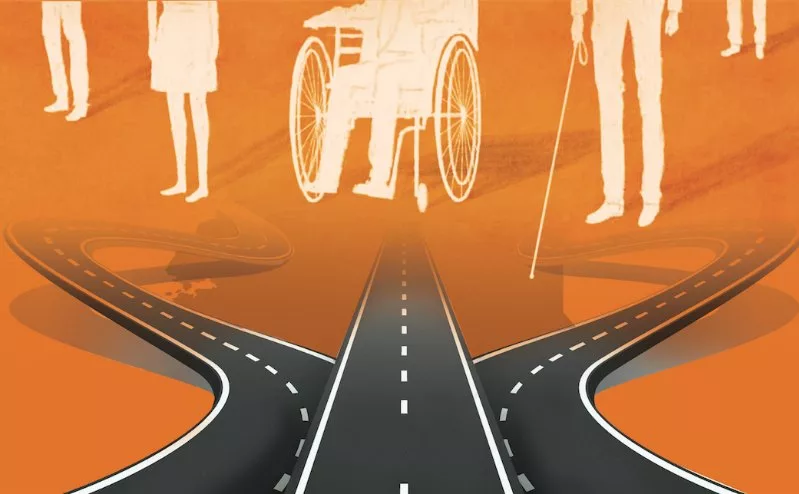
Across Kenya, from Nairobi's informal settlements to the highlands of Rift Valley to fishing communities along Lake Victoria's shores, there are millions of individuals living with disabilities. Many of them share the common experience of exclusion.
Whether it be as children from classrooms, individuals from health clinics or adults from opportunities to earn a livelihood, they are left out of the decisions that shape their lives. This is the result of a historical systemic failure that Kenya has now committed, formally and collectively, to fix.
On June 23, 2026, the Government of Kenya, through the Ministry of Labour and Social Protection, officially launched the Community-Based Inclusive Development (CBID) Manual, Kenya's first comprehensive national guide for implementing disability-inclusive development at the community level.
Alongside it, the CBID Awareness Booklet and the Strategic Framework 2025–2030 were also launched, providing Kenya with an integrated toolkit for embedding inclusion into the fabric of public life.
This is a moment worth marking.
"CBID seeks to enhance the quality of life for persons with disabilities and their families as well as meeting their basic needs and ensuring their full inclusion and participation as useful members of the society." (CBID Disability Awareness Creation Booklet)
From charity to rights
For too long, disability in Kenya, as across much of Africa, has been treated as a welfare concern rather than a rights and development issue.
The dominant response has been through charitable organisations—ranging from large development entities to smaller grassroots organisations. This approach, however well-intentioned, locates the problem in the individual rather than in the systems that exclude them.
Consider George Gatiba, who was born in Kibera with delayed developmental milestones and, through early intervention at The Action Foundation, accessed therapy, corrective surgery, inclusive education and livelihood support, growing from a child on crutches to a young man studying technology at Strathmore University.
George’s story is not exceptional; it is what becomes possible when communities are equipped to include, rather than exclude.
CBID represents a fundamental departure from this thinking. It recognises that exclusion is created and sustained by barriers – physical, attitudinal, informational and economic – and that removing those barriers is a collective responsibility.
It insists that, as parents, as workers, as voters, as leaders, persons with disabilities are not passive recipients of services, but active participants in community life.
The shift from community-based rehabilitation, which Kenya’s system has historically relied upon, to the broader CBID framework is therefore significant.
It moves us from a narrow medical model toward a rights-based, development-centred approach that touches the education, health, livelihoods, governance, social protection and justice sectors.
A document born of collaboration
The CBID Manual and Strategic Framework were not written by officials behind closed doors. They emerged from a deliberately inclusive process, involving government ministries including the Ministry of Health, the Ministry of Education and the Kenya Institute for Special Education, alongside organisations of persons with disabilities (OPDs) such as the United Disabled Persons of Kenya, Deaf Empowerment Kenya, the Kenya Association for the Intellectually Handicapped and many others.
As a result, the framework and manual reflect not just theoretical concepts and evidence-based practices, but lived realities of individuals.
That process of co-creation is itself a demonstration of what CBID looks like in practice. As chair of the CBID sub-committee of the ministry's Inter-Agency Coordinating Advisory Committee (IACAC), The Action Foundation (TAF) supported the coordinated government, OPDs, service providers and communities to jointly shape the document, ensuring that the lived experiences and priorities of persons with disabilities informed every page. This is, in the truest sense, a product of partnership.
What this means for Kenya
The manual gives community social development officers, local leaders, OPDs, civil society organisations and front-line workers practical tools to implement inclusive programmes at the grassroots level. The Strategic Framework provides a clear national roadmap through 2028. Together, they demonstrate that Kenya is moving from intention to implementation.
But documents alone do not create inclusion. The launch must be followed by sustained investment: in training, in county-level adaptation, in community systems and in the funding that makes all of it possible. The government, development partners and civil society must remain committed and accountable to translating this framework into changed lives.
Kenya has ratified the UN Convention on the Rights of Persons with Disabilities. It has enshrined equality in its constitution. Today, with these tools in hand, the question is no longer whether we have the framework for inclusion. The question is whether we have the will to use it.
We believe we do.
Lynette Ochuma is acting secretary, Directorate of Social Development. Maria Omare is executive director, The Action Foundation