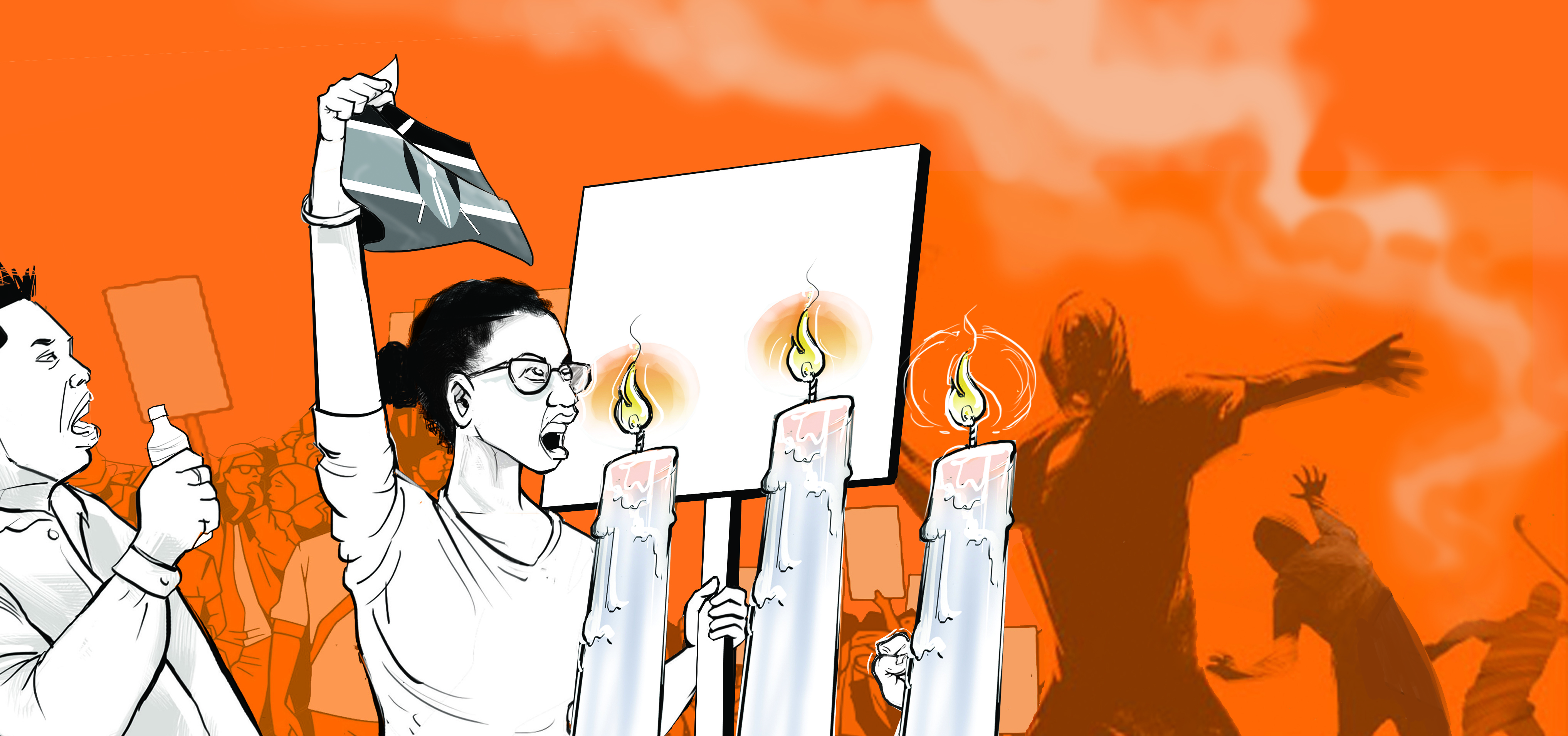
There are moments in a nation’s history that
divide time into ‘before’ and ‘after.’ For
Kenya, the Gen Z protests were undoubtedly one of those defining moments.
They disrupted long-held assumptions about political engagement, challenged those in leadership to listen more carefully and reminded us all that democracy is not a gift bestowed by governments but a living covenant between citizens and the state.
What distinguished those demonstrations was not
simply their scale, but their character. They emerged organically, without the
machinery of political parties, ethnic mobilisation or traditional civic
organisations. They were led by young Kenyans who had grown weary of
feeling unheard and who chose to assert themselves through collective action.
In doing so, they changed our country. The protests compelled leaders to appreciate that a new generation was no longer content to inherit decisions made on its behalf. It demanded accountability, transparency and a greater say in determining Kenya’s future.
Whether one agreed with every demand or every method employed is almost beside the point. Democracies are rarely strengthened by unanimity. They grow because citizens insist on being heard. And heard they were.
Since then, Kenya’s democratic space has expanded in meaningful ways. Citizens today speak more freely, public participation has become more robust, parliamentary debates receive unprecedented scrutiny and governments at both the national and county levels operate under greater public accountability.
Young Kenyans demonstrated that civic engagement is not reserved for seasoned politicians or established institutions. Every citizen has both the right and the responsibility to shape the national conversation.
That is not a sign of democratic decay. It is evidence of democratic maturity. Healthy democracies are not those without disagreement. They are societies where disagreement can be expressed freely, passionately and peacefully within the framework of constitutional order. Democracy demands conversation, not conformity.
The Gen Z moment belongs to no political party, no coalition and certainly no individual politician. It belongs to the young men and women who found the courage to stand up for what they believed was right. We should therefore be wary of those who now seek to appropriate that defining chapter of our democracy for personal political gain.
The movement was bigger than personalities, and its legacy should never be reduced to campaign rhetoric or partisan branding. Its true purpose was to expand democratic space for every Kenyan; not to create new political proprietors of a moment that was earned through the conviction and sacrifice of an entire generation.
Yet history also teaches us that every successful civic movement eventually reaches a point where it must answer a more difficult question.
What comes next?
Protest is an instrument of awakening. Governance is the instrument of transformation. One captures attention. The other delivers results.
Demonstrations can compel governments to listen. They cannot pass legislation. They cannot prepare budgets, negotiate treaties, supervise ministries or build schools and hospitals. Those responsibilities belong to institutions created through elections.
That is why the greatest opportunity now before Kenya’s youth is not another march. It is the ballot. The vote remains the single most powerful equaliser in any democracy. It neither recognises wealth nor social status. It asks only one question: have you participated?
Young people constitute the overwhelming majority of Kenya’s population. If that demographic strength were matched by consistent voter registration, voter turnout and participation within political parties, no government could ignore their priorities. They would become not merely the loudest voices in public discourse, but the decisive voices in determining public policy.
Unfortunately, our politics has often produced the opposite reality. Young people dominate conversations but remain underrepresented where decisions are ultimately made. They mobilise in extraordinary numbers during moments of national significance, yet too many disengage when the quieter work of democracy begins.
That imbalance must change.
The future belongs not simply to those willing to criticise power, but to those prepared to exercise it responsibly. This also requires vigilance.
Young Kenyans must resist becoming instruments in political contests whose primary beneficiaries are ambitious individuals rather than the country itself.
Every election cycle presents leaders eager to ride
the energy of young people without genuinely investing in their aspirations.
The responsibility of this generation is therefore to interrogate ideas instead
of personalities, policies instead of slogans and substance instead of
spectacle.
Political leaders, ourselves included, have
responsibilities too.
We must recognise that respect can no longer be demanded merely because one occupies office. It must be earned continuously through competence, integrity, transparency and openness.
Leadership today exists under unprecedented public scrutiny, and rightly so. Citizens are informed, connected and increasingly unwilling to accept rhetoric in place of results.
This should not intimidate leaders. It should inspire better leadership. Kenya’s democratic journey has always advanced when institutions become stronger than individuals. The constitution gave us the architecture. The Gen Z reminded us that citizens must remain its vigilant custodians.
The challenge before us now is to convert civic awakening into democratic permanence.
That means registering to vote.
Joining political parties and influencing them
from within. Seeking elective office. Participating in public forums. Holding
leaders accountable between elections, not merely during campaigns.
Building institutions that outlive personalities.
This is how nations are transformed not through
moments of outrage alone, but through generations that remain consistently
engaged in shaping public life.
The Gen Z protests awakened the conscience of our republic. They reminded us that the people are the ultimate custodians of our democracy.
Now comes the harder task. To prove that the same generation capable of filling our streets can also fill our polling stations.
For while protest can change the national conversation, only the ballot can determine who writes the next chapter of Kenya’s story. The future of Kenya will not be secured by those who shout the loudest or claim ownership of defining moments.
It will be secured by citizens, especially young citizens, who understand that lasting change is achieved by participating in the institutions of democracy, protecting them and using them to build the country they wish to inherit.
![[PHOTOS] The new Ngong –Naivasha Road viaduct](https://cdn.radioafrica.digital/image/2026/06/64d4f771-4432-4aee-ba3c-2f304c4436ec.jpg)