 Medical Doctor and
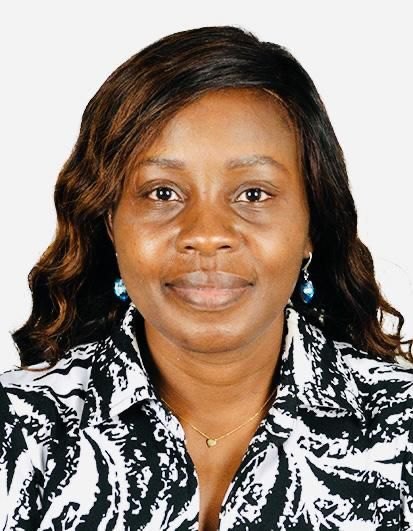
Lecturer in Radiology at JKUAT School of Medicine Laura Naliaka Ochieng
Medical Doctor and
Lecturer in Radiology at JKUAT School of Medicine Laura Naliaka Ochieng
When your doctor asks for a CT scan report, have you ever stopped to wonder who actually produced it? Was it a machine that captured the images, a technician who operated it, or a doctor whose expertise turned those images into a diagnosis? The truth is, there are few doctors more important to modern medicine, and fewer still less understood, than the radiologist.
A joke was doing rounds recently mistakenly referring to a radiologist as a radio journalist. Long before an operation is scheduled, a cancer is staged, a stroke is confirmed or a treatment plan is changed, a radiologist has often already shaped the course of care.
Yet because this work is done largely out of the public view, in reports, scans and urgent consultations rather than at the bedside, radiologists are too often mistaken for technicians or overlooked entirely. Yet, medicine depends on them every day and treatment may be extremely expensive and lengthy if we did not have them.
This misunderstanding would be funny and something to laugh off if it were not so consequential. Did you know that Kenya with over 55 million people, has only about 200 registered radiologists? This means that one radiologist will be serving between 270,000 to 550,000 Kenyans. In advanced economies, situations are different. In the US for instance 1 radiologist serves about 6,000 people.
Modern medicine runs on imaging. From stroke to trauma, cancer to pregnancy, appendicitis to pulmonary embolism, some of the most urgent and life-altering decisions in health care depend on radiologists.
They are doctors trained not merely to ‘read scans’ but to synthesize anatomy, pathology, clinical context and probability under intense pressure. They do not simply look at pictures. They make diagnoses, rule out catastrophes, guide procedures and, often, determine what happens next. Yet they remain, to many patients, invisible.
That invisibility has been described before, and memorably. Dr. Harry Z. Mellins, a respected radiologist and teacher, once wrote: “The radiologist perceives a shadow, sees a lesion, and imagines the man. The bedside physician sees the man, perceives the signs, and imagines the lesion.”
It is one of the finest descriptions of radiology ever written because it captures the moral imagination of the specialty. The radiologist does not see a detached image; the radiologist sees a human being through the image.
And yet the public story of medicine still favours what can be seen. We understand the surgeon because we can picture the operating room. We understand the consultant physician because we recognize the clinic visit. We understand the paediatrician because your children remember the stethoscope and the waiting room.
But radiology often happens elsewhere, in the dark reading room, behind the screen, between the scan and the treatment plan. Its influence is huge, but its visibility is low.
That distance has helped produce a strange fact among the genpop: many people have been helped, even saved, by a radiologist they never met and whose name they never learned. At least half of patients in one survey could not name their radiologist or did not realize the radiologist was a doctor.
The irony is that radiology may be the specialty that sees us most literally from the inside. They are the ones who have the privilege of watching a heart beating, fluid gathering in the lungs, a growing foetus, an invading tumour, and telling the body’s story before it speaks for itself.
Radiologists are often the first doctors to identify the hidden fracture, the silent bleed, the early mass, the missed obstruction - disease before the knife, disease before the crisis, disease before the patient has words for it.
Most doctors will take a detailed medical history, ask numerous questions, and conduct examinations, yet they may still struggle to pinpoint the exact problem. A radiologist, on the other hand, often relies on imaging studies to identify what is happening inside the body without needing to ask many questions.
When a radiologist provides a report, it is based on objective findings from those images, making it a critical piece of evidence that should be taken seriously and acted upon in consultation with your treating physician.
There is, however, a cost to being indispensable but unseen. Dr. Richard Duszak warned years ago that radiologic invisibility is a “fast track to commoditization.”
If patients and referring physicians experience radiologists only as anonymous report generators, the specialty becomes easier to undervalue, outsource or reduce to throughput. That is not merely a labour issue for radiologists, it is a care issue for patients. Medicine is poorer when one of its most intellectually demanding disciplines is mistaken for a back-office service.
Patients themselves may want something better. Research on radiologist-patient communication suggests a more complicated reality than the old model allows.
While many referring physicians still prefer to remain the primary communicators of results, studies cited in the literature show that many patients value direct communication from radiologists, especially when it is timely, clear and relevant. In some settings, patients would rather hear results sooner from the doctor who knows the images best than wait longer for the information to trickle through the system.
Some institutions are beginning to respond to that reality. At NYU Langone Health in the United States, radiologists have experimented with short video reports that explain imaging findings to patients in plain language while showing annotated images.
The premise is simple and long overdue: if radiologists are experts in visual diagnosis, why should they communicate only in opaque, jargon-laden prose? More than 18,000 such video reports had been produced at the time of the institution’s report, and patients described them as clarifying and reassuring.
This should not be controversial. No one is arguing that radiologists replace primary physicians, surgeons or paediatricians. Mellins himself rejected any false hierarchy: both bedside physicians and radiologists are clinicians, he wrote, “for in truth there is no other kind of doctor worthy of the name.” The point is not to compete for ownership of the patient, but to tell the truth about who already participates in the patient’s care.
When all is said and done, the radiologist is not a technician at the edge of medicine. The radiologist is one of medicine’s central interpreters. When a trauma scan is read in the middle of the night, when a mammogram detects a tiny asymmetry that changes a life, when a CT reveals the cause of a fever no one can explain, when an ultrasound turns uncertainty into a plan, that is not ancillary medicine. That is doctoring.
A health system that relies so heavily on radiologists should be honest about what they are, not background functionaries, not anonymous image readers, but physicians whose judgment alters lives at decisive moments.
The public may not always meet them. Patients
may not remember their names. But some of the most consequential acts of doctoring
now happen in rooms most people never enter, by doctors they were never taught
to notice. The radiologist is not medicine’s hidden helper. The radiologist is
one of its essential faces.
Dr. Laura Naliaka
Ochieng’, is a Medical Doctor and Lecturer in Radiology at JKUAT School of
Medicine. Email [email protected]


![[PHOTOS] Elderly brave cold to vote in Ol Kalou](https://cdn.radioafrica.digital/image/2026/07/d2345b9e-578f-45ff-9bb0-d7819671c165.webp)


![[PHOTOS] Ol Kalou residents turn out in large numbers to vote](https://cdn.radioafrica.digital/image/2026/07/fe42d51c-7f79-466e-94e8-59561f77bbe7.webp)