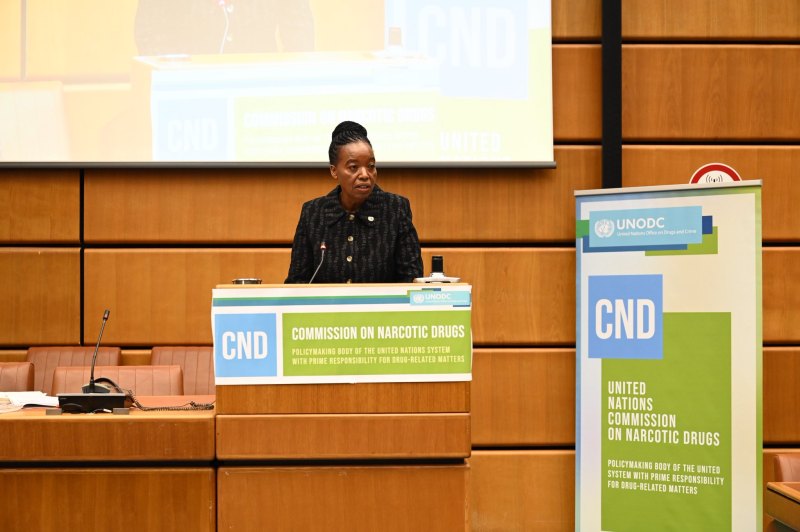
 Hon.Salah Maalim Alio-CECM Lands,Housing and Urban Development,
County Government of Mandera and Governance, Peace and Security Management
Specialist-Horn of Africa.
Hon.Salah Maalim Alio-CECM Lands,Housing and Urban Development,
County Government of Mandera and Governance, Peace and Security Management
Specialist-Horn of Africa.
For decades, Mandera has symbolised both the promise and paradox of Kenya's development. Rich in entrepreneurial spirit, strategic in location, and endowed with immense livestock resources, the county has nevertheless remained constrained by inadequate infrastructure.
Distance has not merely been measured in kilometres but in opportunity, investment, and access to essential public services.
Todays Cabinet approval of funding for the 67-kilometre Modogashe–Samatar road and the 76-kilometre Rhamu–Mandera road therefore marks far more than another budgetary allocation. It represents a significant milestone in correcting historical inequalities and integrating Northern Kenya into the country's mainstream economy.
The completion of these two critical sections effectively removes one of the last major obstacles to the realisation of the Isiolo–Mandera Highway, one of Kenya's most transformative infrastructure projects. It is a decision deserving of commendation, not simply because roads are being built, but because infrastructure remains one of the most powerful instruments of economic justice.
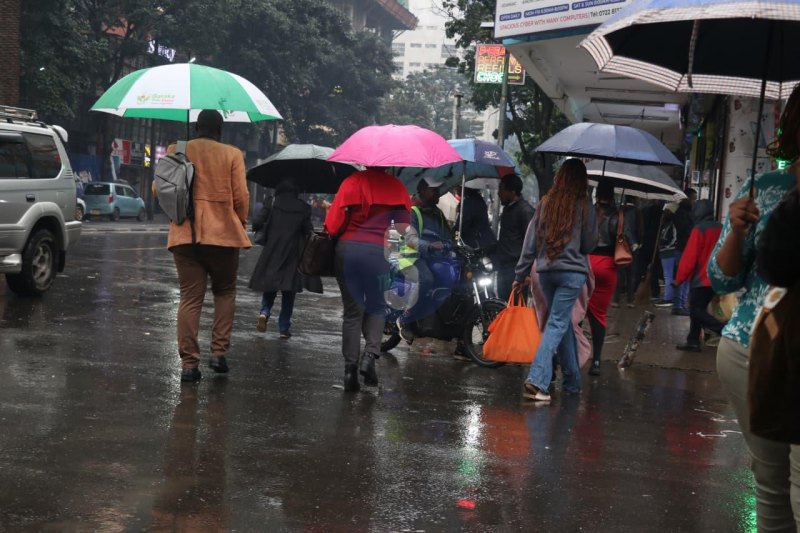
For many years, residents of Mandera have endured difficult journeys across impassable roads that become nearly unusable during the rainy season. Transporting goods has been costly and unreliable, emergency medical referrals have often become life-threatening races against time, and investors have hesitated to establish businesses because of logistical challenges. These realities have imposed hidden costs on citizens and slowed the pace of development.
Road infrastructure changes this equation.
The Isiolo–Mandera Highway promises to reduce travel times dramatically while lowering vehicle operating costs and improving the movement of people and goods. Livestock producers, who constitute the backbone of the regional economy, will have easier access to domestic and export markets. Agricultural produce from irrigation schemes along the corridor will reach consumers faster and with reduced post-harvest losses. Businesses will enjoy predictable supply chains, making investment in Northern Kenya increasingly attractive.
Yet the significance of this highway extends well beyond economics.
Mandera occupies one of Kenya's most strategic geopolitical locations, sharing borders with Somalia and Ethiopia. In today's interconnected world, border counties should not be viewed as peripheral regions but as gateways for regional trade and diplomacy. Efficient transport corridors strengthen Kenya's position within the Horn of Africa by facilitating commerce, enhancing customs operations, and supporting cross-border integration.
The African Continental Free Trade Area (AfCFTA) presents enormous opportunities for regions capable of connecting efficiently with neighbouring markets. Mandera is uniquely positioned to benefit from this continental vision, provided the supporting infrastructure is in place. The Isiolo–Mandera Highway therefore becomes part of a much larger story about regional competitiveness and economic transformation.
Infrastructure also contributes significantly to national security.
For security agencies operating in Northern Kenya, reliable roads improve mobility, reduce response times, and enhance surveillance capabilities. Communities that were once isolated become easier to reach with government services, humanitarian assistance, education, and healthcare. Development itself becomes an instrument of peace by addressing some of the socioeconomic conditions that have historically fuelled insecurity and marginalisation.
The government's commitment to completing the Modogashe–Samatar and Rhamu–Mandera sections demonstrates an appreciation that infrastructure is inseparable from national cohesion. Citizens should never feel disconnected from the state because geography has placed them at the country's margins.
The employment opportunities generated during construction are equally important. Local youth will benefit from direct jobs while numerous small enterprises supplying construction materials, accommodation, transport, catering, and other services will experience increased demand. Such multiplier effects inject much-needed income into local economies.
However, the true measure of success will not be the ribbon-cutting ceremony when the road is completed. Rather, it will be whether complementary investments follow.
Roads alone do not create prosperity. They must be accompanied by investments in industrial parks, livestock processing facilities, cold-chain logistics, modern markets, digital connectivity, financial services, tourism promotion, and quality education. County governments and the national government must therefore work together to ensure that economic opportunities emerge along the corridor.
Urban planning will also become increasingly important. Trading centres along the highway are likely to expand rapidly. Without proper physical planning, uncontrolled settlements could undermine future growth. This presents an opportunity for county governments to implement sustainable urban development that accommodates population growth while preserving environmental resources.
Equally important is the need to ensure that local communities benefit directly from this investment. Local contractors, suppliers, skilled artisans, and professionals should be integrated into the project wherever possible. Community engagement must remain continuous throughout implementation to foster ownership and minimise disputes.
The environmental dimension should not be overlooked either. Northern
Kenya's fragile ecosystems require careful management during construction.
Climate-resilient engineering, proper drainage systems, and environmental
restoration should form integral components of project implementation to ensure
that development remains sustainable.
The writer is the CECM Lands,Housing and Urban Development, County Government of Mandera and Governance, Peace and Security Management Specialist – Horn of Africa.
![[PHOTOS] The new Ngong –Naivasha Road viaduct](https://cdn.radioafrica.digital/image/2026/06/64d4f771-4432-4aee-ba3c-2f304c4436ec.jpg)